Germany Takes Delivery of Its First F-35A

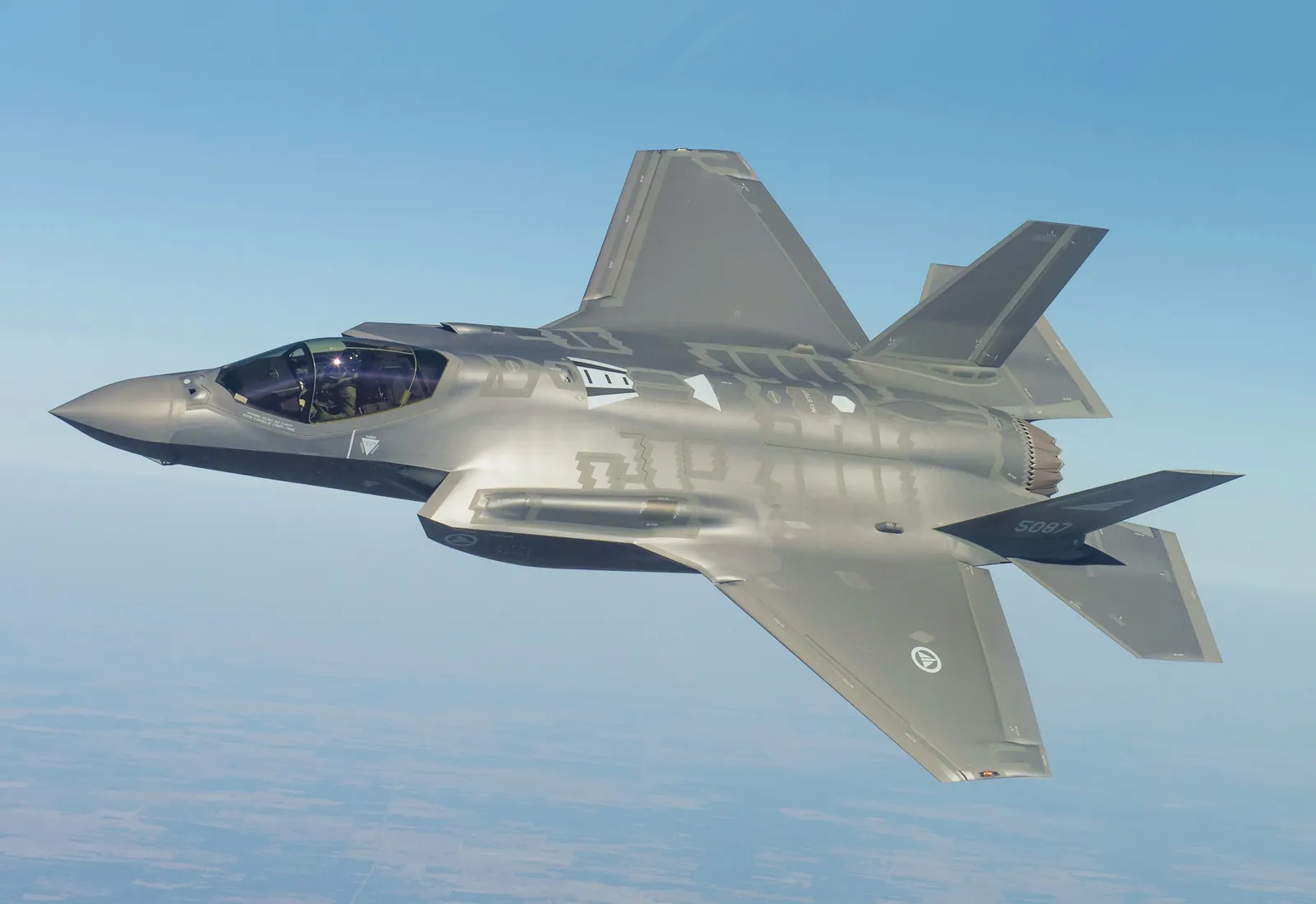
Germany has taken delivery of its first F-35A Lightning II, collecting the aircraft from Lockheed Martin’s Fort Worth plant on 19 September as part of a 35-jet, roughly 10-billion-euro order due to be completed by 2029. The type will eventually carry Germany’s share of NATO’s nuclear-sharing mission.
A first jet off the Fort Worth line
Lockheed Martin handed over the first F-35A built for the German Air Force at its Texas production facility on 19 September. The delivery opens a program under which Germany will receive 35 aircraft in total, with the full fleet expected in country by 2029. The German government has put the overall program cost at close to 10 billion euros, covering aircraft, training infrastructure and the initial support package. That figure places the F-35A purchase among the largest single acquisition programs in the modernization drive the Bundeswehr has pursued over the past several years.
German Defence Minister Boris Pistorius framed the aircraft’s value less around raw performance than around what it can do with information, saying the F-35A gathers and fuses large volumes of data quickly enough to build a real-time picture of the battlespace for the pilot and for the units around it. NATO Allied Air Command’s Brigadier General Frank Gräfe, addressing the growing number of F-35 operators across the alliance, said the expanding fleet strengthens the ability of allied air forces to train, deploy and fight together — a point the alliance has leaned on as more European air forces converge on the same jet, standardizing everything from mission planning software to maintenance procedures across borders.
Replacing Tornado, keeping the nuclear role
The F-35A will replace Germany’s ageing Tornado fleet, and with that replacement comes a specific mission: carrying the US B61 tactical nuclear bombs assigned under NATO’s nuclear-sharing arrangement. Germany has held that role since the Cold War, and the F-35A purchase amounts to a like-for-like technological refresh of a commitment that predates the aircraft by decades rather than a new policy departure. The Tornado fleet, in service since the 1980s, had been certified for the nuclear mission for years, but its airframes were approaching the point where continued certification and sustainment made less sense than a full replacement.
The order sits inside the broader “Zeitenwende” — the shift in German defence policy announced in 2022 after Russia’s invasion of Ukraine, which brought a sharp increase in German defence spending after decades of comparatively restrained budgets. The F-35A purchase is one of the largest single line items to come out of that reallocation, alongside investments in air defence, ammunition stockpiles and armoured vehicles that together mark the most significant expansion of German military capability since reunification.
German industry gets a seat in the supply chain
Germany’s involvement in the program extends beyond the purchase agreement. Rheinmetall has been brought into the F-35 production chain as a component supplier, giving German industry a direct industrial stake in the aircraft rather than a purely transactional buyer role — a pattern other European F-35 operators have followed as they built their own supply-chain participation into their purchase agreements. That industrial return is often as central to a European F-35 deal as the aircraft delivery schedule itself, since it determines how much of the program’s long-term value stays inside the buyer’s own economy.
Another entrant in Europe’s F-35 fleet
Germany’s delivery adds to a European F-35A user base that already includes the Netherlands, Norway, Denmark, Belgium, Italy, Poland, Finland and Romania. The steady growth of fifth-generation aircraft numbers on the continent has become a recurring reference point in discussions about NATO’s posture on its eastern flank, where planners increasingly talk about fleet interoperability — shared munitions, shared maintenance capacity and common software baselines — rather than simply counting airframes.
Where Turkey fits
Germany’s expanding F-35 fleet inevitably invites comparison with Turkey, which was removed from the F-35 program in 2019 over its purchase of the Russian S-400 air defence system. In the years since, Turkey has pursued its own fifth-generation fighter, KAAN, developed by Turkish Aerospace, with first serial-production deliveries to the Turkish Air Force planned from 2028. Germany’s move from Tornado to an imported fifth-generation jet integrated into NATO’s nuclear mission, and Turkey’s parallel move from F-4 toward a domestically built platform, represent two distinct modernization paths running on similar timelines — one built on integration into an allied nuclear role through a purchased aircraft, the other on an independently sourced airframe designed to remove exactly the kind of external dependency that ended Turkey’s own F-35 participation.
Sources
- Lockheed Martin — F-35A delivery announcement, 19 September 2026
- German Federal Ministry of Defence (Bundesministerium der Verteidigung) — statement by Boris Pistorius
- NATO Allied Air Command — statement by Brigadier General Frank Gräfe
- Defence Industry Europe, “Germany receives first F-35A,” 24 September 2026