France Awards $1.7 Billion IRIS Satellite Contract to Airbus and Thales, Replacing CSO by 2035

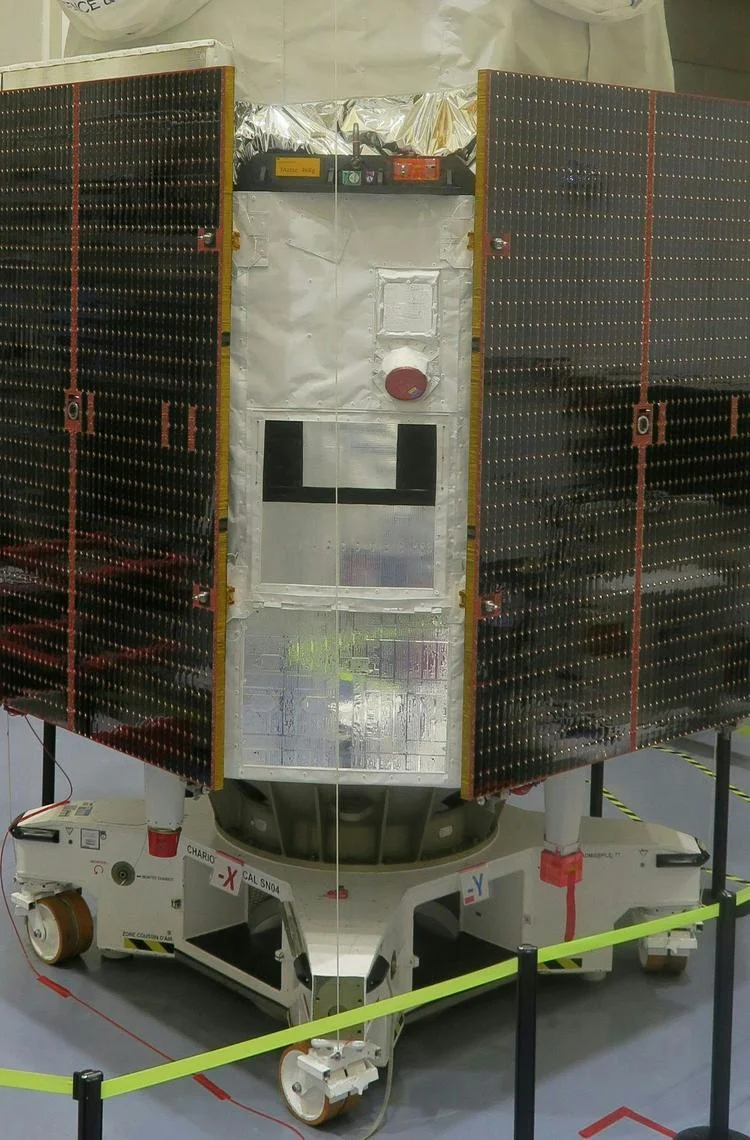
France’s defense procurement agency, the Direction générale de l’armement (DGA), has awarded Airbus Defence and Space and Thales Alenia Space a contract worth roughly €1.5 billion ($1.7 billion) to build IRIS, the country’s next-generation military optical reconnaissance satellite system. The two new high-resolution Earth-observation satellites will succeed the three CSO satellites currently in service, with the first IRIS satellite due to become operational in 2033 and the second in orbit by 2035.
Who builds what
Under the award, Airbus Defence and Space acts as prime contractor, supplying the platforms for both satellites, most of the first satellite’s payload, and overall responsibility for the ground segment. Thales Alenia Space is the principal subcontractor, providing the optical instruments, including an infrared capability intended for imaging in low-light and nighttime conditions.
Alain Fauré, who heads Airbus’s Space Systems business, said the contract shows how “Airbus Defence and Space is contributing to France’s sovereignty and strategic autonomy.” The DGA, for its part, said the new system will “guarantee France an operational space-based imagery intelligence capability.”
Replacing, not restarting, an optical constellation
IRIS inherits the legacy of the CSO (Composante Spatiale Optique) family, built under France’s MUSIS program to succeed the earlier Helios 2 satellites. The DGA awarded the initial CSO contract to Airbus in 2010, worth about €795 million for two satellites; a third was added once Germany joined the program as a partner in 2015.
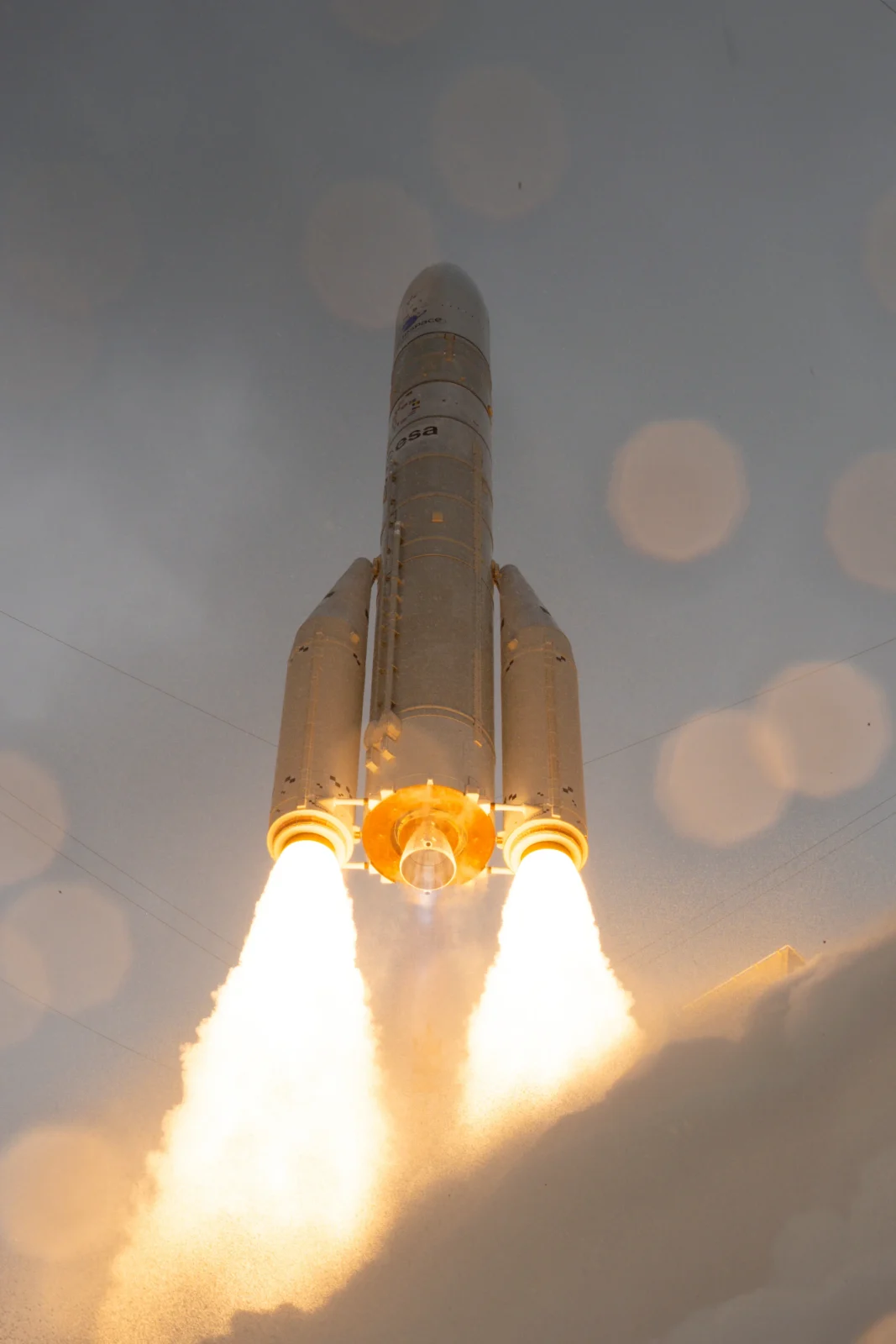
The three-satellite CSO constellation was completed with the March 2025 launch of CSO-3 aboard an Ariane 6 rocket (flight VA263) from the Guiana Space Centre in Kourou. IRIS is designed to improve on that baseline in resolution and in the speed with which captured imagery reaches analysts, positioning it as the next generation of an existing capability rather than a clean-sheet program.
A push toward night and low-light coverage
Thales Alenia Space says IRIS’s optical payload will be able to capture imagery “anywhere on Earth, even under low-light and nighttime conditions,” an area where the CSO generation has been more limited. For analysts tracking overnight troop or equipment movements in contested regions, that is a direct operational gain rather than a marginal upgrade.
A decade-long industrial pattern
The DGA’s target of an operational first satellite by 2033 and a second by 2035 mirrors the roughly fifteen-year development-to-launch cycle that defined the CSO program. The Airbus/Thales Alenia Space division of labor — platform versus optical payload — also matches the pattern used on other French military satellite programs, including Syracuse (secure communications) and CERES (signals intelligence), which together with IRIS form the layered architecture France describes as its sovereign space capability.
Not to be confused with IRIS²
The IRIS name should not be confused with IRIS², the European Union’s planned secure-connectivity constellation, which also involves Airbus and Thales Alenia Space but is a separate telecommunications project of at least 66 satellites. IRIS, the subject of this contract, is a purely French military program focused on optical imagery intelligence, funded and managed independently of the EU effort despite the shared contractors.
What it signals for NATO and Turkey
France’s decision to commit a new generation of national optical reconnaissance satellites, rather than leaning on commercial imagery providers, underscores how a leading NATO ally continues to prioritize sovereignty in space-based intelligence. Turkey is pursuing a comparable path with its GÖKTÜRK series, İMECE, and TÜRKSAT 6A satellites; the IRIS program’s industrial structure and decade-plus timeline offer a useful comparative benchmark for how long-horizon national satellite programs are financed and managed.
Sources
- Breaking Defense, “France awards IRIS satellite contract to Airbus and Thales,” November 10, 2026, breakingdefense.com — used for the contract value, program name, timeline and official statements.
- Airbus press release, “Ariane 6 Launches CSO-3: Double Success for France and Europe,” March 2025, airbus.com — used for the CSO program’s history and industrial division of labor.
- ESA press release, “Ariane 6 takes flight for the second time,” March 2025, esa.int — used for the CSO-3 launch date and MUSIS program context.