Military Power of Singapore: How Many Tanks, Aircraft and Ships Are in the Inventory? (2026)

Singapore’s military inventory shows how an island state smaller than many world cities makes one of the world’s highest defence investments relative to its population and geography. Singapore ranks 29th of 145 countries in the Global Firepower 2026 index with a PwrIndx score of 0.5272. The inventory counts 170 Leopard 2SG tanks, 235 aircraft and 101 naval platforms; the first 4 of 20 F-35s on order are being delivered from late 2026, and the TKMS-built Type 218SG submarine programme is growing towards six boats. The procurement map runs on a US-Europe-Israel axis, while the ST Engineering-centred domestic industry offers a production range stretching from the Hunter armoured vehicle to the construction of the Formidable frigates. This article covers the land, air, missile and naval inventory of the Singapore Armed Forces and the defence dimension of relations with Türkiye.
At a Glance
- Active personnel: Global Firepower gives 51,000 active personnel, 252,500 reserves and 12,000 paramilitary. Conscription, in place since 1967, lasts two years; the system’s real weight lies in the operationally ready reservists recalled for annual refresher training
- Main battle tanks: 170 (Global Firepower). All are Leopard 2SGs, Leopard 2A4 hulls bought from Germany and modernised in Singapore; open sources report about 196 vehicles delivered including spare hulls
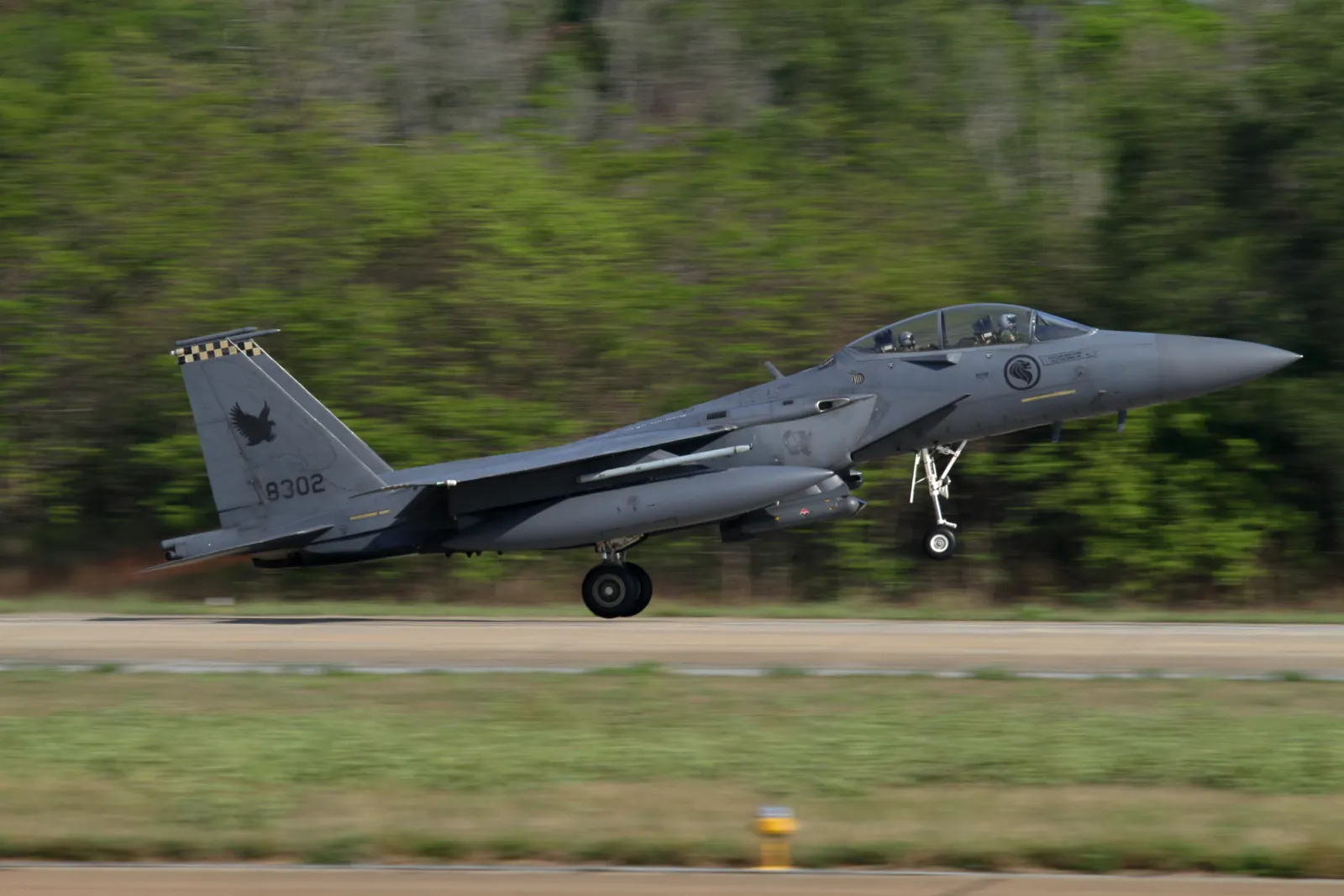
- Military aircraft: 235 (Global Firepower): 100 fighters (about 60 F-16C/Ds and 40 F-15SGs), 9 transports, 36 trainers and 75 helicopters including 20 attack. The first 4 F-35Bs of the 20 F-35s on order are being delivered from late 2026
- Artillery: Global Firepower counts 48 self-propelled guns (the domestically built SSPH Primus), 89 towed guns and 24 multiple rocket launchers. The towed side holds the local FH-88, FH-2000 and heli-portable Pegasus howitzers; the rocket backbone is the US-built HIMARS
- Naval platforms: 101 (Global Firepower): 6 Formidable-class frigates, 6 submarines (the 4-boat Invincible/Type 218SG programme plus 2 Archers), 8 Independence-class littoral mission vessels, 6 Victory-class corvettes and 4 Endurance-class landing ships. The main bases are Changi and Tuas
- Defence budget: The 2026 defence budget announced on 12 February 2026 is 24.93 billion Singapore dollars, about 19.5 billion US dollars, a 6.4 percent rise over 2025. Singapore ranks 29th of 145 countries in Global Firepower with a PwrIndx score of 0.5272
Note: The inventory figures below are approximate values drawn from open sources such as Global Firepower, the IISS Military Balance and SIPRI.
About the Singapore Armed Forces
The Singapore Armed Forces comprise the Army, the Air Force, the Navy and the Digital and Intelligence Service, established as the fourth service in October 2022. The defence doctrine pairs military deterrence with ‘Total Defence’, a concept extending across civil society: an island state without strategic depth aims to meet any conflict beyond its borders.
The Global Firepower 2026 count shows 51,000 active personnel, 252,500 reserves and 12,000 paramilitary elements. Conscription, in place since 1967, lasts two years, and the system’s real weight lies in the operationally ready reservists recalled for regular refresher training into their forties. The model lets a country of six million field hundreds of thousands of trained soldiers on mobilisation.
President Tharman Shanmugaratnam is head of state, with Prime Minister Lawrence Wong, who took office in May 2024, leading the government. The Ministry of Defence has been run since May 2025 by Chan Chun Sing, who replaced Ng Eng Hen after the latter’s two decades in the post.
The 2026 defence budget announced on 12 February 2026 is 24.93 billion Singapore dollars, about 19.5 billion US dollars, a 6.4 percent rise over the revised 2025 allocation. The budget equals roughly 3 percent of GDP and is by a clear margin the largest in Southeast Asia. The Global Firepower count gives a more conservative 18 billion dollars.
The backbone of external defence relations is the Five Power Defence Arrangements with the United Kingdom, Australia, New Zealand and Malaysia, running since 1971, alongside the US partnership. The 1990 memorandum was extended in 2019 to 2035, and Changi Naval Base is one of the main ports of call for US ships in the region. Training-space constraints keep part of the fleet based in detachments in the US, Australia and France; the F-35Bs will also spend their first years in the US.
The defence industry is organised around ST Engineering, one of Asia’s largest defence companies. The Hunter armoured vehicle, the Terrex family, the SSPH Primus howitzer and the Bronco carrier sit on its product line; five of the Formidable frigates and the entire Independence class were built in Singapore, and the six-ship MRCV programme is under way at the same yard. The DSTA procurement agency and DSO laboratories complete the chain.
Land Forces Inventory
| System type | Est. quantity |
|---|---|
| Main battle tanks (Leopard 2SG) | Global Firepower counts 170 tanks. The Leopard 2A4s acquired from Germany from 2006 were raised to Leopard 2SG standard in Singapore with a modular composite armour package; open sources report about 196 vehicles including spare hulls. The tanks replaced the light AMX-13SM1 fleet left over from the 1990s |
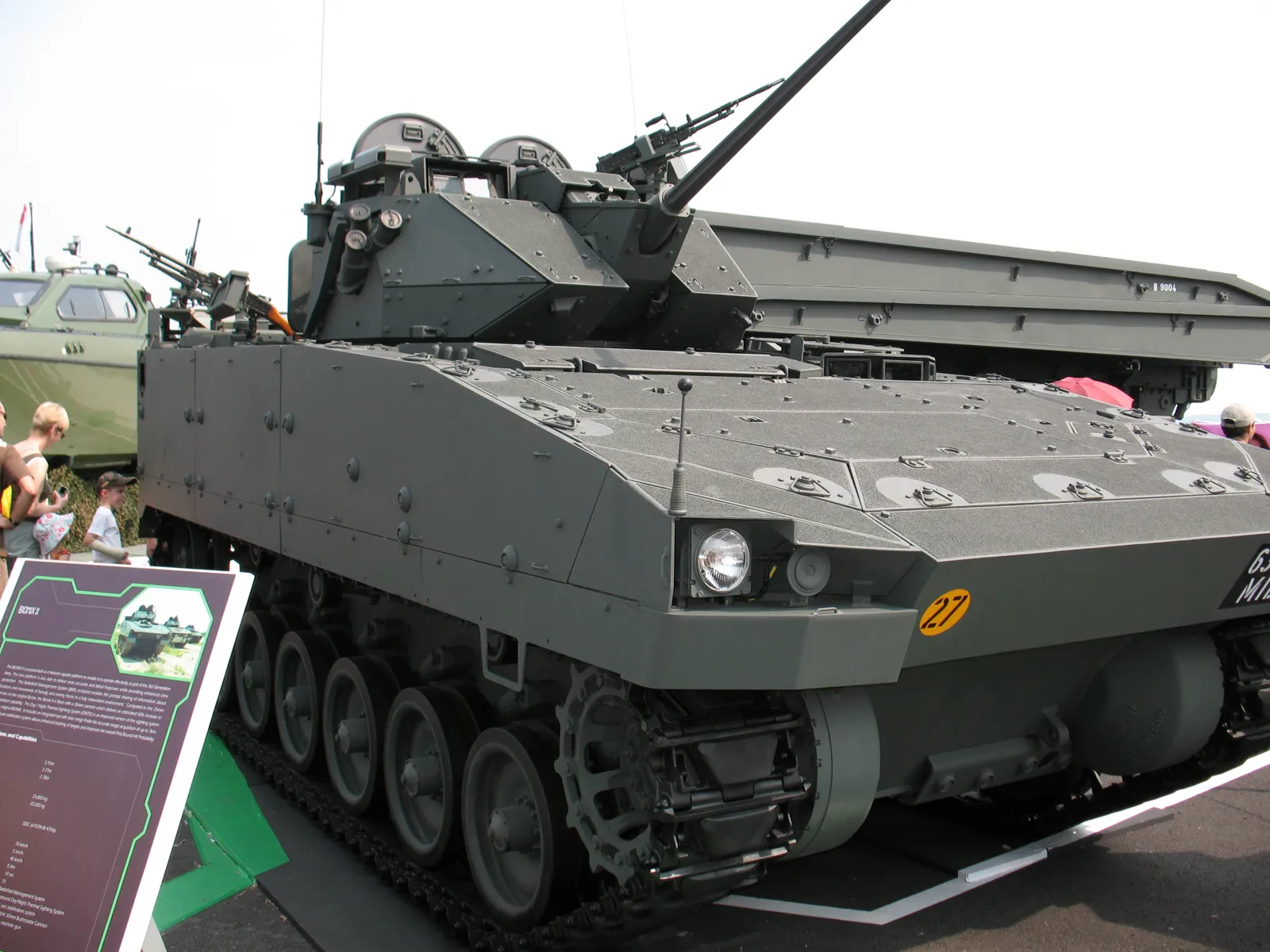
| Armoured fighting vehicles (Hunter) | The ST Engineering-built Hunter entered service in June 2019 and is gradually replacing the half-century-old M113 Ultra fleet. With a 30 mm unmanned turret and fully digital architecture, the vehicle is the showcase of Singapore’s land modernisation |
| Infantry fighting vehicles (Bionix) | The locally designed Bionix 25 and the 30 mm-gunned Bionix II form the backbone of the mechanised infantry. Global Firepower puts the armoured vehicle total at 17,244, a pool that includes large numbers of M113 Ultras, Bronco tracked carriers and protected vehicles |
| Wheeled armour (Terrex and Belrex) | The ST Engineering-built 8×8 Terrex infantry carrier has served in motorised infantry battalions since 2009, with the protected Belrex handling combat support duties. The Terrex family is also the main item of Singapore’s armoured vehicle exports |
| Self-propelled and towed artillery | 48 domestically built SSPH Primus 155 mm self-propelled howitzers. The towed side holds 89 barrels: the local FH-88 and FH-2000 plus the light Pegasus howitzer that can be carried by CH-47 helicopters. Bronco-mounted 120 mm SRAMS mortars round out the fire support |
| Rocket artillery (HIMARS) | Global Firepower counts 24 multiple rocket launchers; the core is the M142 HIMARS battery ordered in 2007 and delivered in 2010-2011. Singapore was the first country in Southeast Asia to operate the system |
Air Force Inventory
| Platform | Est. quantity |
|---|---|
| Total military aircraft | 235 (Global Firepower): 100 fighters, 9 transports, 36 trainers and 75 helicopters including 20 attack. The Republic of Singapore Air Force is regarded as Southeast Asia’s most modern air arm; part of the fleet is based in the US, Australia and France for training |
| Multirole fighters (F-15SG) | About 40 F-15SGs, with deliveries begun in 2009. One of the region’s hardest-hitting fighter fleets, the F-15SGs are the main platform for long-range precision strike |
| Multirole fighters (F-16C/D) | About 60 F-16C/D Block 52s; the fleet has been upgraded to the AESA-equipped F-16V standard and will serve into the 2030s until the F-35 deliveries are complete |
| Fifth generation (F-35B and F-35A) | A total of 20 aircraft are on order: 12 short take-off and vertical landing F-35Bs and 8 F-35As. The first 4 F-35Bs are being delivered from late 2026 and will initially be based at Ebbing base in Arkansas in the US for pilot training; 8 more F-35Bs are due in 2028 and the F-35As around 2030 |
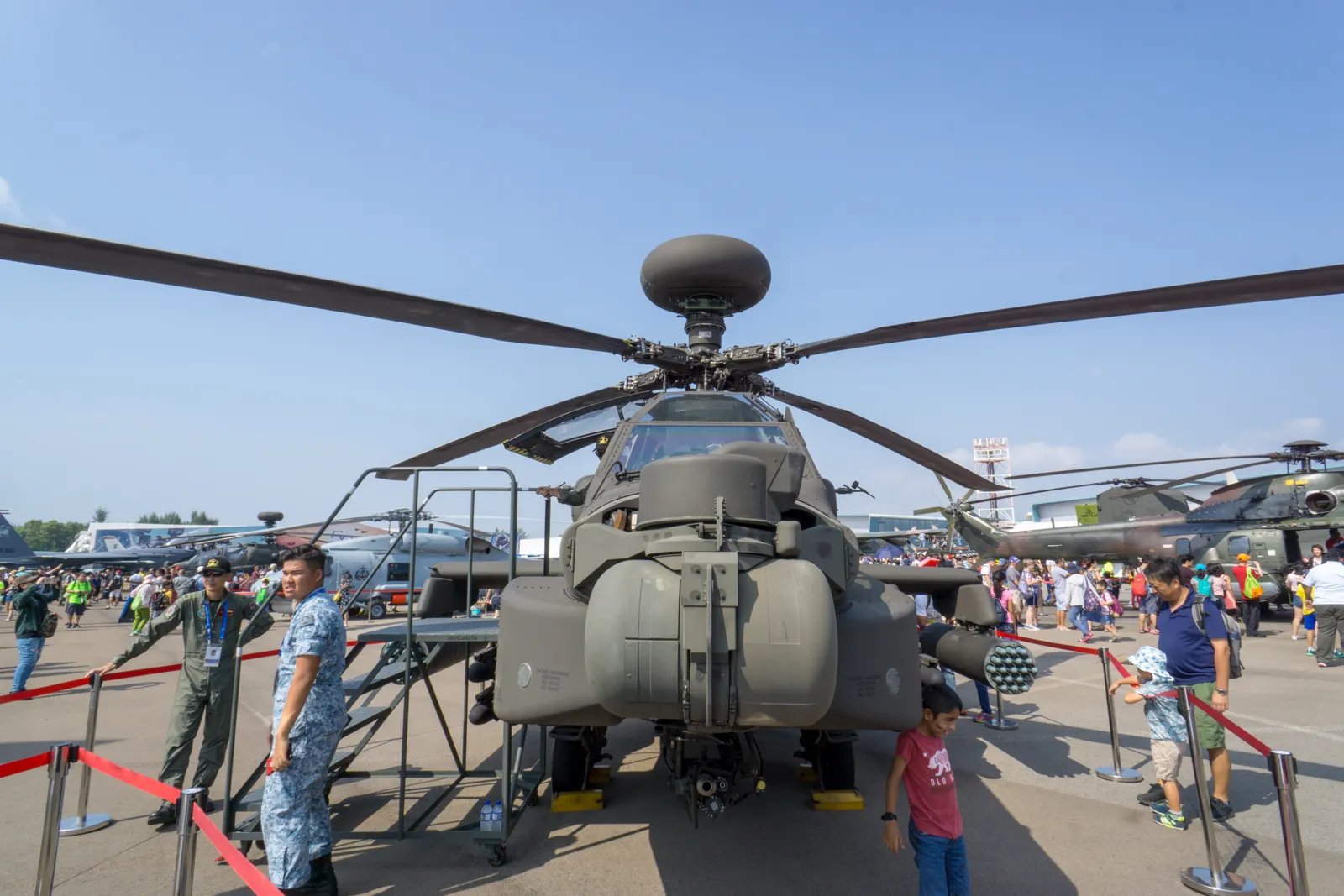
| Helicopters | 20 AH-64D Apache attack helicopters, a CH-47F Chinook heavy-lift fleet, H225Ms replacing the old Super Pumas, and S-70B naval helicopters serving aboard the Formidable frigates |
| Support fleet and UAVs | 6 A330 MRTT tankers, 4 G550 AEW aircraft on early-warning duty, M-346s and PC-21s in training. On the UAV side, the Israeli-built Heron 1 and Hermes 450 are operated; there is no armed MALE-class UAV in the inventory |
Missile and Air-Defence Systems
| System | Type / Note |
|---|---|
| Medium-to-long-range air defence (Aster 30) | The MBDA-built Aster 30 batteries were declared fully operational in 2020 and replaced the retired I-HAWKs; they are the longest-range element of the land-based layer |
| Short-to-medium range (SPYDER) | The Israeli-built SPYDER batteries were acquired to replace the retired British Rapier systems; armed with Python-5 and Derby missiles, they hold the low-to-medium altitude layer |
| Point defence | Swedish-built RBS 70 launchers, mechanised Iglas integrated on M113 chassis and Mistral missiles provide low-altitude point defence |
| Radar and early warning | 4 G550 AEW aircraft, a land-based radar network and the 55-metre tethered aerostat radar commissioned in 2016 feed the air picture; the data is fused in the network-centric Island Air Defence architecture |
| Anti-ship missiles (Blue Spear) | The navy selected the Blue Spear anti-ship missile, developed by the ST Engineering-Israel IAI partnership, to replace the Harpoons; the missile is being integrated on the Formidable-class frigates |
| Ballistic and cruise missiles | There are no ballistic or land-attack cruise missiles in the inventory; long-range striking power rests on the precision-guided munitions carried by the F-15SG and F-16 fleets |
Naval Power
| Class / Type | Est. quantity |
|---|---|
| Total naval platforms | 101 (Global Firepower); the count includes 55 patrol elements. The Republic of Singapore Navy’s main bases are Changi and Tuas; the fleet watches the approaches to the Strait of Malacca, the world’s busiest sea lane |
| Frigates (Formidable class) | 6 ships, developed from the French La Fayette design; the first was built in France and the rest in Singapore, entering service in 2007-2009. Carrying Aster 15/30 air defences, the ships are receiving the Blue Spear anti-ship missile, with S-70B helicopters operating from their decks |
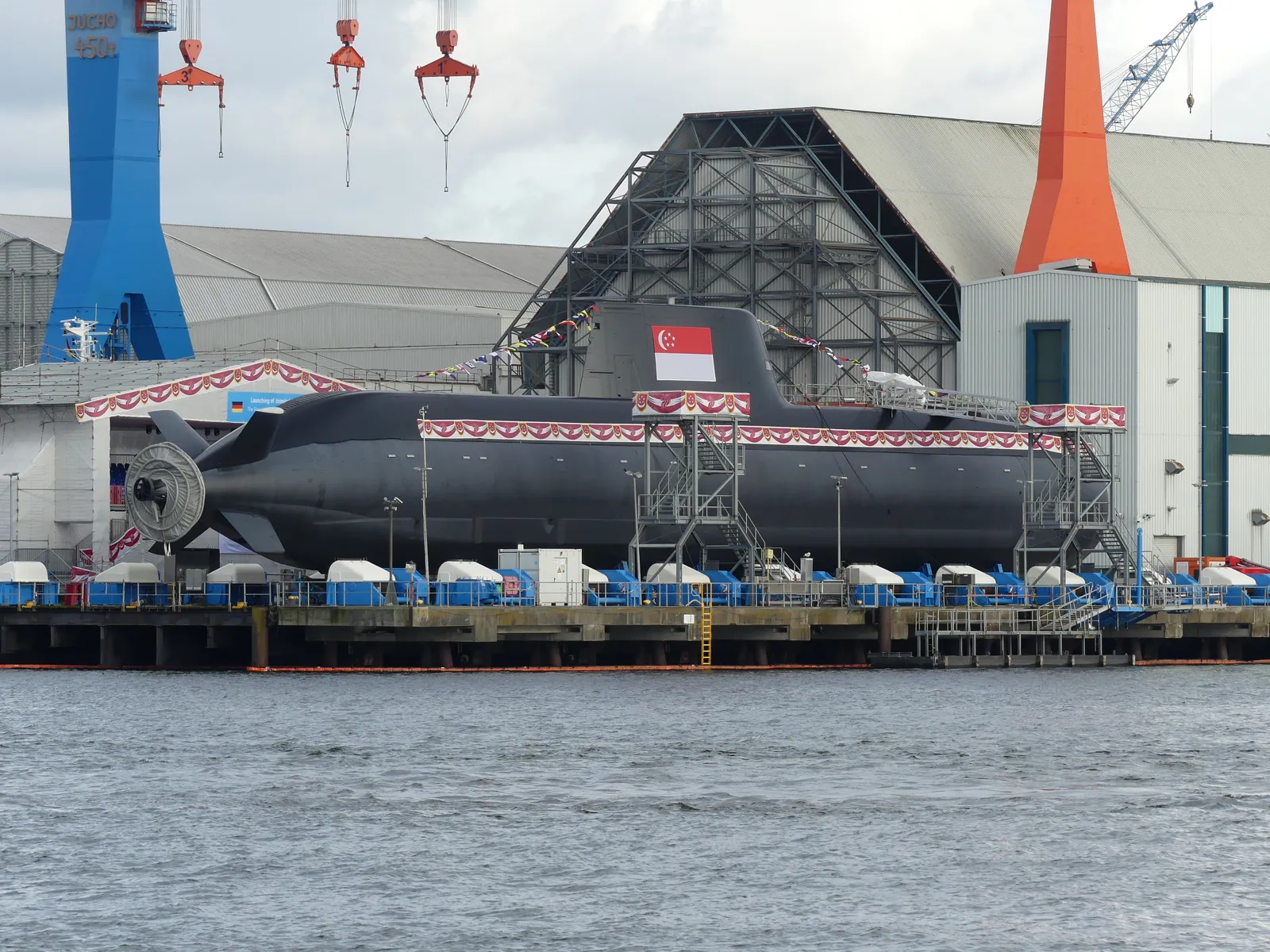
| Submarines (Invincible/Type 218SG) | The Type 218SG programme, custom-designed for Singapore by TKMS in Germany: the first two boats, Invincible and Impeccable, were commissioned at Changi on 24 September 2024, the third boat Illustrious reached Singapore on 9 April 2026 and the fourth is in Germany. Two additional boats were ordered on 7 May 2025; two Swedish-origin Archer-class boats also remain in service |
| Littoral mission vessels (Independence class) | 8 ships entered service in 2017-2020, replacing the Fearless-class patrol boats. The lean-crewed, modular vessels carry the main workload of strait transits and coastal security |
| Corvettes and next generation (Victory and MRCV) | The 6 Victory-class missile corvettes commissioned in 1990-1991 remain on duty. To replace them, 6 multi-role combat vessels (MRCV) have been ordered from ST Engineering, with deliveries planned from 2028 |
| Amphibious and mine warfare | 4 Endurance-class landing ships (locally built, 2000-2001) form the backbone of amphibious and humanitarian missions; 4 Bedok-class vessels serve in mine warfare |
The Turkey Angle: Turkish Defence Industry
There are no Turkish defence systems in Singapore’s inventory; procurement runs on a US-Europe-Israel axis, and domestic production dominates in areas such as armoured vehicles and ships. The bilateral relationship, however, advances on a strong diplomatic and commercial footing: the two countries established a strategic partnership in 2014, the free trade agreement signed in 2015 entered into force in October 2017, and bilateral trade reached 1.07 billion dollars in 2025.
The defence dimension has now entered the agenda. Foreign Minister Hakan Fidan met Prime Minister Lawrence Wong, Foreign Minister Vivian Balakrishnan and Coordinating Minister for National Security K. Shanmugam during his official visit to Singapore on 1-2 June 2026; the agenda items announced by Ankara included steps to deepen defence industry cooperation. After the defence-industrial ties Türkiye has built with Malaysia and Indonesia in Southeast Asia, adding Singapore to that map reads as the natural continuation of the regional push.
There is also a striking overlap in the two countries’ procurement choices: Singapore’s Invincible-class submarines and Türkiye’s Reis-class submarines are products of the same German school, TKMS. Singapore had its boats built in Kiel, while Türkiye builds the Type 214TN design under licence at Gölcük. Both countries also exemplify the state-scaled defence industry model: the path ST Engineering has taken with the Terrex and Hunter crosses the line FNSS and Otokar follow in armoured vehicle exports, and the two industries at times compete in third markets.
In the short term the realistic ground is dialogue and niche cooperation rather than sales: the Singapore market is one of the world’s hardest defence markets due to entrenched suppliers and a strong domestic industry. Even so, the free trade agreement infrastructure, the strategic partnership framework and the defence industry channel opened by the Fidan visit stand out as paths that could open doors for Turkish companies in subsystems, munitions and maintenance-modernisation.
Frequently Asked Questions
How many tanks does Singapore have? The Global Firepower 2026 count shows 170 tanks, all Leopard 2SGs, Leopard 2A4 hulls bought from Germany and modernised in Singapore. Open sources report about 196 vehicles delivered including spare hulls.
Is Singapore buying the F-35? Yes. A total of 20 aircraft are on order: 12 F-35Bs and 8 F-35As. The first 4 F-35Bs are being delivered from late 2026 and will initially be based at Ebbing base in the US for pilot training; 8 more F-35Bs are due in 2028 and the F-35As around 2030.
Does Singapore have submarines? Yes, Global Firepower counts 6. In the Type 218SG programme custom-designed by TKMS, Invincible and Impeccable were commissioned on 24 September 2024 and the third boat Illustrious reached Singapore in April 2026; two additional boats were ordered in May 2025. Two Swedish-origin Archer-class boats also remain in service.
What air defence systems does Singapore use? The MBDA-built Aster 30 tops the layered structure, the Israeli-built SPYDER holds the middle layer, and RBS 70, mechanised Igla and Mistral cover low altitude. The air picture is fed by 4 G550 early-warning aircraft, ground radars and a 55-metre tethered aerostat radar, all fused in the network-centric Island Air Defence architecture.
Is there defence cooperation between Türkiye and Singapore? There are no Turkish systems in the inventory, but the two countries have been strategic partners since 2014 and have a free trade agreement in force since 2017. The agenda of Foreign Minister Hakan Fidan’s June 2026 visit included steps to deepen defence industry cooperation. The two countries’ submarines also come from the same builder, Germany’s TKMS.
Bottom Line
Singapore’s inventory is the textbook example of what force design looks like when abundant resources meet a small geography. Quality trumps quantity: the region’s most modern fighter fleet, Southeast Asia’s first F-35Bs, custom-designed Type 218SG submarines and network-centric air defence make a country of six million one of the decisive actors in the regional military balance. The modernisation calendar runs with discipline: the F-35 deliveries, the MRCV programme, the submarine fleet growing to six and the Hunter spreading through the army already sketch the skeleton of the coming decade. For Türkiye the picture cuts both ways: Singapore is a hard market to sell into, but the strategic partnership framework and the defence industry channel opened by the Fidan visit offer a long-term dialogue track in subsystems and niche areas, while the competition between ST Engineering and Turkish companies in third markets mirrors the maturity both industries have reached.
Related Reading
Sources
- Global Firepower — Singapore
- IISS — The Military Balance
- SIPRI — Arms Transfers Database
- Wikipedia — Singapore Armed Forces
- Wikipedia — Republic of Singapore Air Force
- Wikipedia — Republic of Singapore Navy
- Janes — Singapore announces defence budget increase
- IDN Financials — F-35 deliveries from late 2026
- Janes — Singapore receives third Invincible-class submarine
- Australian Defence Magazine — Singapore commissions new submarines
- Anadolu Agency — Fidan’s visit to Singapore
- Türkiye Today — Fidan’s bilateral talks in Singapore