PrSM vs ATACMS: Range, Missiles per Pod and What Changes

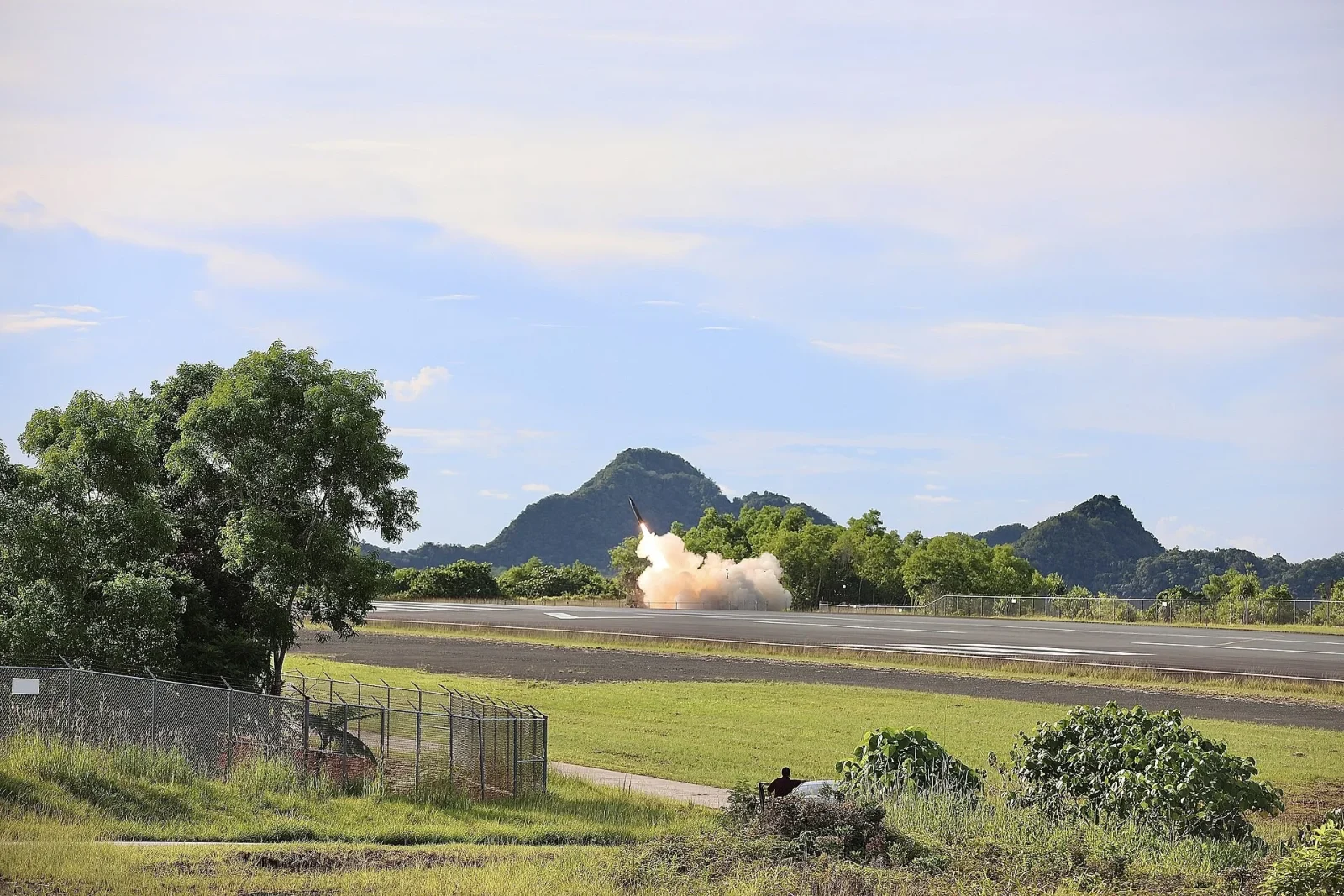
The Precision Strike Missile (PrSM) is the US Army’s replacement for the Army Tactical Missile System (ATACMS). It reaches more than 400 km (499 km+ according to Lockheed Martin), against roughly 300 km for ATACMS. It also carries two missiles in each launch pod instead of one, and it is built around an open architecture so that later “increments” can add a seeker to hit moving ships. Both are fired from the same launchers, the M142 HIMARS and the M270A2 MLRS. This article compares the two missiles side by side and explains what changes for armies switching from ATACMS to PrSM. For a profile of PrSM alone, see our Lockheed Martin PrSM explainer.
PrSM vs ATACMS: the short answer
- Range: PrSM Increment 1 exceeds 400 km (the Army figure) or 499 km+ (Lockheed Martin), with a 500 km nominal design range. ATACMS reaches about 300 km at maximum.
- Missiles per pod: PrSM carries 2; ATACMS carries 1.
- Launchers: both use HIMARS (one pod) and M270A2 MLRS (two pods).
- Guidance: both use INS/GPS. Later PrSM increments add a multi-mode seeker for moving maritime targets.
- Status: ATACMS is a legacy weapon being phased out. PrSM Increment 1 deliveries began in December 2023, and the Army’s Milestone C decision followed in July 2025.
Side-by-side comparison
| ATACMS | PrSM Increment 1 | |
|---|---|---|
| Role | Surface-to-surface tactical ballistic missile | Surface-to-surface long-range precision fires missile |
| Maximum range | About 300 km (US Army); earlier variants roughly 70–300 km | More than 400 km (US Army); 499 km+ (Lockheed Martin) |
| Missiles per pod | 1 | 2 |
| Missiles per HIMARS load | 1 | 2 |
| Missiles per M270A2 load | 2 | 4 |
| Guidance | Inertial/GPS | Inertial/GPS. Increment 2 onward adds a multi-mode seeker |
| Architecture | Closed, mature design | Open systems architecture designed for growth |
| Manufacturer | Lockheed Martin | Lockheed Martin |
| Status | Being replaced; stockpile reliability-tested | In production; deliveries since December 2023 |
Difference 1: range
The US Army says PrSM can engage targets at “standoffs greater than 400 kilometers”. Lockheed Martin’s fact sheet lists a range of “499 km+”, and the missile was designed for a nominal 500 km. ATACMS reaches about 300 km. According to Darrell Ames, a DoD public affairs officer quoted by the Army’s acquisition support centre (USAASC), PrSM “extends range by 50 percent”. In practice, that lets a launcher fire from deeper inside friendly territory, which improves crew and vehicle survivability. It also lets the launcher hold more distant targets at risk.
Difference 2: two missiles per pod
“The two major differences between the ATACMs and PrSM today are range and loadout quantities,” Ames said. An ATACMS pod holds a single missile; a PrSM pod holds two. A HIMARS, which carries one pod, can therefore fire two PrSMs before reloading, and an M270A2 with two pods can fire four. Doubling the magazine without new launchers is one of PrSM’s biggest operational gains.
Difference 3: room to grow
ATACMS is a mature design dating back to the late 1980s. PrSM was built with an open systems architecture and is being fielded in increments:
- Increment 1: long-range strike against fixed land targets with GPS/INS.
- Increment 2: adds a multi-mode seeker to hit moving targets, including ships. Lockheed Martin received a contract for it in 2026 (our report).
- Increments 3 and 4: aim at greater lethality and range. Australian officials describe ranges beyond 1,000 km for later increments. The Army selected five companies for Increment 4 work (details).
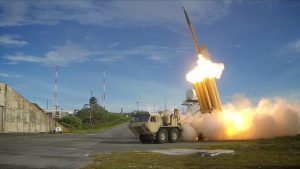
On 16 June 2024, during the Valiant Shield 24 sinking exercise (SINKEX) in Palau, the US Army’s 3rd Multi-Domain Task Force fired two PrSMs at a maritime target from an Autonomous Multi-Domain Launcher. That event is shown in this article’s cover photo.
Who uses PrSM and ATACMS?
PrSM
- United States: the US Army is the launch customer.
- Australia: a co-development partner for later increments; it fields HIMARS and plans local missile production.
- United Kingdom: buying PrSM for its M270A2 fleet (£780 million programme).
ATACMS
ATACMS is in service with many HIMARS and MLRS users, including Romania (see Romania’s 54 HIMARS), Poland and the Baltic states. It became widely known after the United States supplied it to Ukraine.
Will PrSM fully replace ATACMS?
Eventually, yes, but not overnight. The Army’s acquisition centre says older ATACMS were “carefully assessed and tested” while PrSM was developed. A stockpile reliability test of early ATACMS versions was carried out at White Sands Missile Range in December 2021, to make sure existing stocks remain usable during a phased transition.
Frequently asked questions
Is PrSM better than ATACMS?
On published figures, yes. It has more than 400 km of range against about 300 km, two missiles per pod instead of one, and a design built for upgrades such as anti-ship seekers.
Can HIMARS fire PrSM?
Yes. PrSM is fired from the M142 HIMARS and the M270A2 MLRS, the same launchers that fire ATACMS.
What is the range of PrSM?
The US Army says more than 400 km. Lockheed Martin lists 499 km+ for Increment 1. Later increments aim much further.
When did PrSM enter service?
The first Increment 1 early operational capability missiles were delivered to the Army in December 2023.
Sources
- US Army: “Army announces first Precision Strike Missiles delivery”, 8 December 2023.
- USAASC: “Then & Now: ATACMS to PrSM”.
- Lockheed Martin: PrSM Fast Facts (2025).
- Breaking Defense: “Lockheed begins delivering long-range PrSM Increment 1 to Army”, 8 December 2023.
- Australian Defence Magazine: “More on the GWEO Joint Statement”.