Peru Picks Its Electronic Armour: Viper Shield Goes on the F-16 Block 70
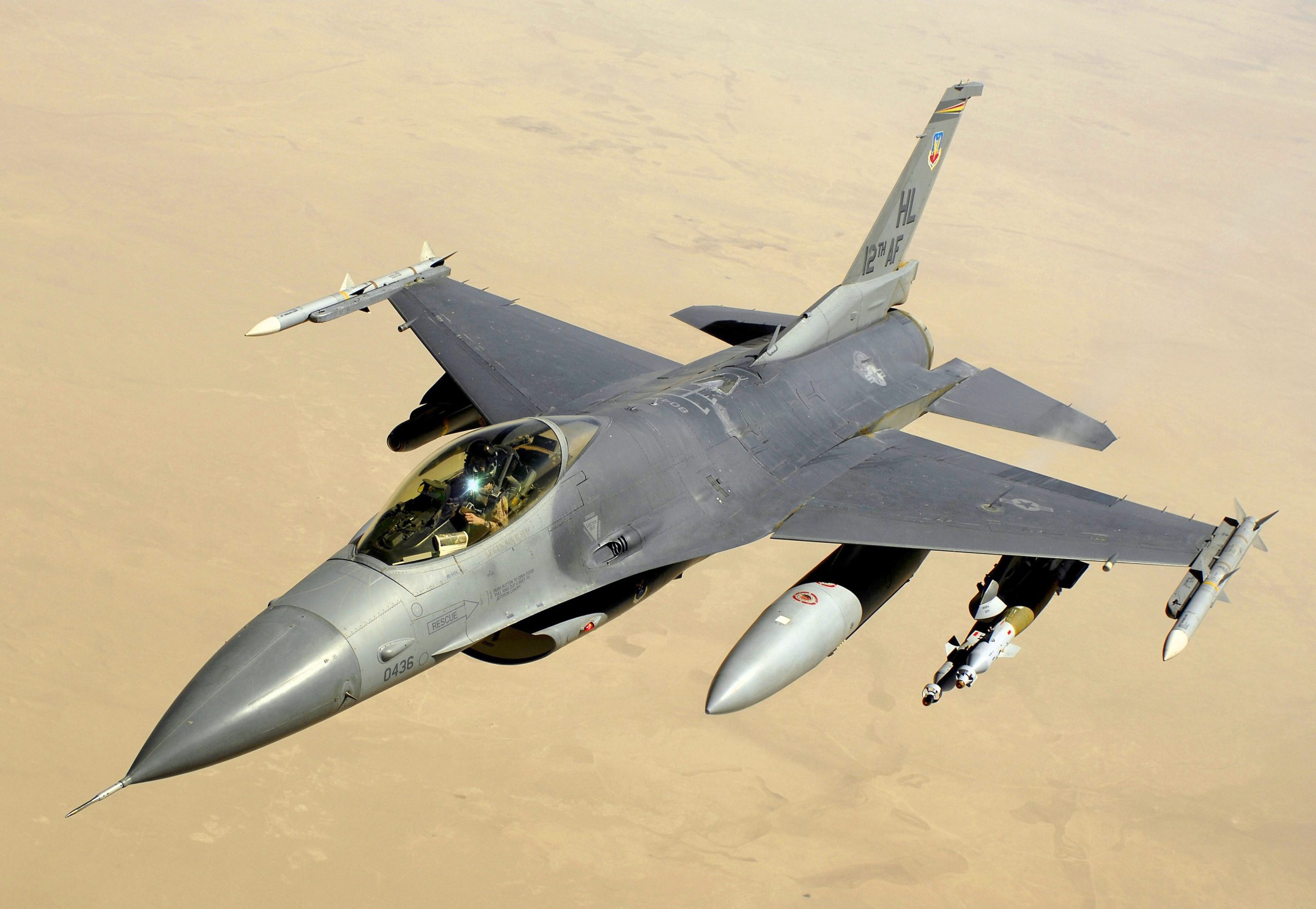
Fighter procurement stories are written about airframes. Fighter survivability is decided elsewhere. Peru has now made the choice that will shape how its new fleet actually fares against modern air defences: the government has selected L3Harris Technologies’ Viper Shield electronic warfare suite for its F-16 Block 70 fighters.
Where Peru’s F-16 program stands
Peru confirmed the Block 70 purchase with Lockheed Martin in April 2026 and transferred a first instalment of $462 million. The program is structured around an initial operational tranche of 12 aircraft, with the Peruvian Air Force’s stated objective at 24 aircraft in a mix of C and D variants. Total program value, including support and training, exceeds $3.4 billion.
The selection process survived political turbulence in Lima, including ministerial resignations. Locking down the electronic warfare configuration signals the program has moved from negotiation into definition.
What Viper Shield is
Viper Shield is an internal electronic warfare suite developed by L3Harris with Lockheed Martin and the US Air Force specifically for the F-16 Block 70/72. Its job is to detect, identify and counter radar-based threats — search radars, fire-control radars and radar-guided missiles.
Its defining characteristic is a software-defined architecture. Threat libraries and countermeasure techniques can be updated without touching hardware, which addresses the question that actually decides electronic warfare outcomes: the threat changed, how fast can the response change? L3Harris offers three configurations — factory-integrated internal for Block 70/72, a retrofit package for legacy F-16s, and an external pod.
Eight nations have now selected the system, and production is ramping toward a full rate of 233 systems. Viper Shield completed its first flight on an F-16 Block 70 earlier in the program.
Internal suite versus pod
Factory integration buys two things a pod cannot. Aerodynamically, a pod occupies a station and adds drag. Electromagnetically, an internal suite distributes its antennas around the airframe for spherical coverage, while a pod is geometrically constrained to what it can see from one hardpoint.
The trade is higher up-front cost and tighter coupling to one aircraft type. Offering the same system in three forms lets operators run a common threat library across a mixed fleet of new Block 70s and upgraded legacy jets — a meaningful logistics argument for the many air forces in exactly that position.
Why the EW box outlives the airframe
A modern fighter’s survivability is measured less in radar cross-section and turn rate than in how early it recognises a threat emitter and how quickly it applies the right technique. Contemporary air defence networks run multiple radars across separate frequency bands and hand tracks between them. The countermeasure has to adapt at the same tempo.
That is why, on a fourth-generation-plus platform, the electronic warfare decision is a longer-lived commitment than the radar or the weapons fit. The aircraft may stay the same for twenty years. The threat library changes every year.
The regional picture
South American fleet renewal has compressed into a narrow window. Colombia is reopening the terms of its Gripen deal, Brazil is expanding its Gripen E fleet, and Peru has committed to the F-16 Block 70. A decade of deferred recapitalisation is arriving at once.
Peru’s choice also broadens the Viper Shield user base at a moment when it is becoming the de facto standard for F-16 modernisation. For every operator in that queue, a wider base means cheaper library updates, deeper spares pooling and shared training infrastructure.
Sources
L3Harris Technologies statements; Lockheed Martin announcements on the Peru F-16 program.