Indonesia Unveils AI-Enabled Kamikaze USV With 55-Knot Speed and 150 kg Warhead

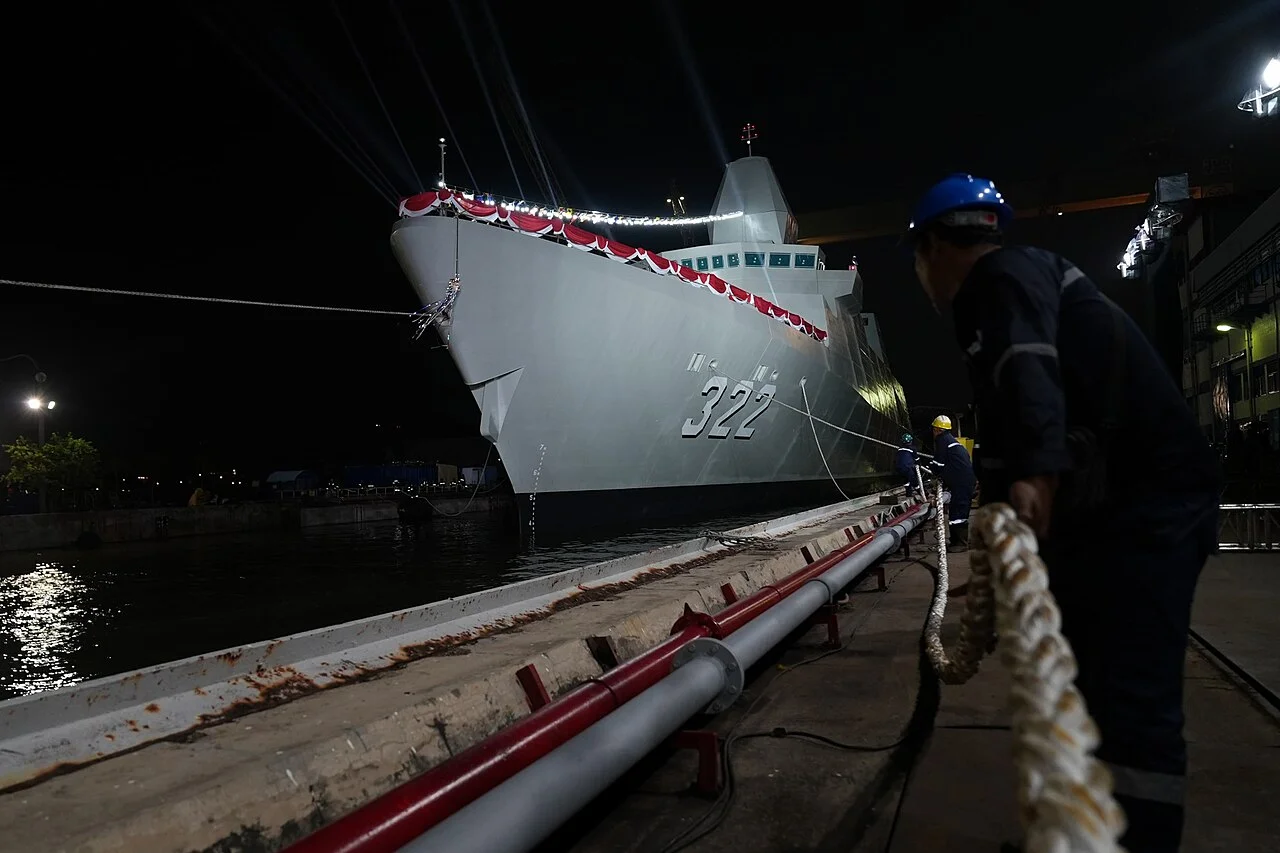
Indonesia is growing its maritime strike capability along an asymmetric axis. State shipbuilder PT PAL demonstrated an indigenous kamikaze unmanned surface vessel during combined naval exercises, a craft capable of 55 knots (about 102 km/h) and carrying a 150-kilogramme warhead.
Autonomy is the headline
The most consequential feature is not speed but classification. According to PT PAL, the vessel performs friend-or-foe identification autonomously and in real time using artificial intelligence, allowing it to distinguish potential targets without relying entirely on a remote operator.
That addresses the central vulnerability of attack USVs. The craft used in the Black Sea depend on satellite or radio links and are exposed to jamming. A vessel that can classify targets on board keeps working when the link drops. It also raises the obvious question of how rules of engagement apply when the classification decision moves off the operator’s console.
The builder
Surabaya-based PT PAL is Indonesia’s largest military shipbuilder, with a portfolio spanning South Korean-licensed submarines, Sigma-class corvettes, Makassar-class landing platform docks and next-generation frigates. It has also exported landing ships to the Philippines, giving it a regional supplier profile.
The kamikaze USV marks an attempt to move beyond hull production into autonomy and software, in line with the localisation targets Jakarta set for the decade.
Geography drives the choice
Indonesia is an archipelago of more than 17,000 islands straddling some of the world’s densest shipping lanes. The Malacca, Sunda and Lombok straits are chokepoints for global energy and container traffic, and policing that expanse with conventional surface combatants is neither affordable nor numerically realistic.
Cheap, fast, expendable craft are the economical way to generate deterrence in narrow waters. The same logic applies to friction in the South China Sea, where incidents around Indonesia’s exclusive economic zone near the Natuna Islands have pushed Jakarta towards faster-reacting assets.
A crowded field
Türkiye moved early in armed unmanned surface vessels, with the ULAQ family developed by Aselsan and Sefine and parallel work at Dearsan producing platforms able to carry guided missiles and electronic warfare payloads. Indonesia has been one of the more active markets for Turkish defence exports in recent years. PT PAL developing its own solution signals sharper competition ahead — though indigenous hulls still tend to source navigation, communications and image-processing subsystems abroad.
Sources
- PT PAL corporate statement, 13 August 2026
- The Defense Post, 13 August 2026