NATO’s Largest Land Deal: Five European Nations Buy 400+ BAE Systems CV90s for $6 Billion

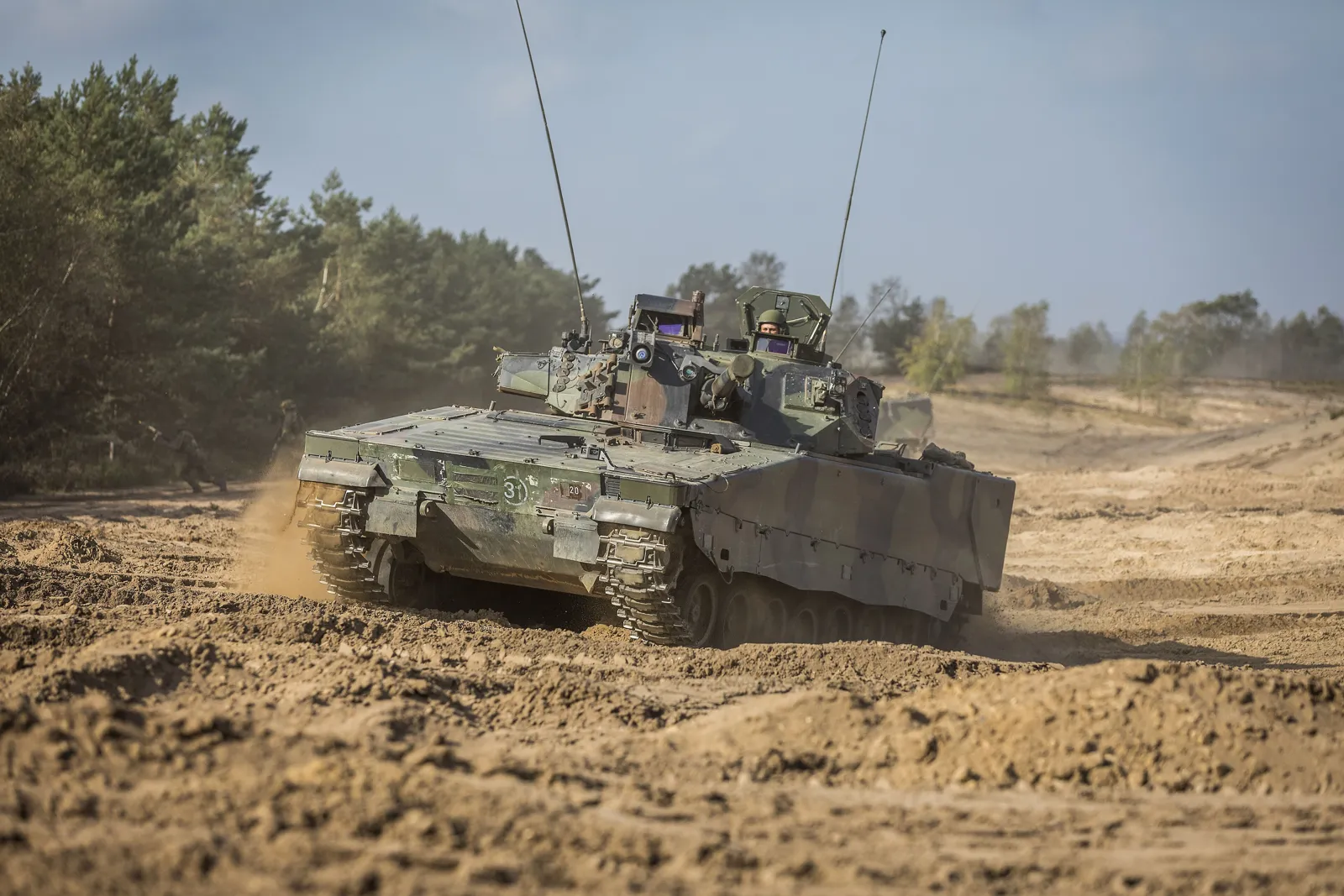
Five European governments have signed what officials in Helsinki describe as the largest joint purchase of land equipment inside NATO. On 27 November 2026 BAE Systems confirmed that Finland, Lithuania, the Netherlands, Norway and Sweden have placed orders for more than 400 CV90 infantry fighting vehicles, worth about $6 billion (€5.5 billion). Every vehicle will be built to a single configuration, the CV9035 MkIV Nordic Edition, under a framework agreement led by Sweden.
The signing closes a process that began in June 2025, when six countries issued a joint statement on a possible common buy at a NATO defence ministers’ meeting. Estonia later left the group in April 2026 to move its budget into drones and air defence, leaving five buyers. BAE Systems Hägglunds submitted its best and final offer at Eurosatory in June.
How the deal is structured
Each nation signed its own purchase order agreement, but all of them refer back to one framework that fixes the vehicle design. Finland’s defence ministry said the contract only enters into force once all five purchase orders are signed at the same time, which shows how tightly the partners tied their national programmes together.
The orders also cover technical publications, crew and maintenance training, spare parts, special tools and test equipment. BAE argues that a common fleet lets crews move between national vehicles with little retraining, shortens waits for spares and cuts the cost of instruction across the group.
Who is buying what
BAE did not publish a country-by-country breakdown. Finland, however, gave its own figures: 160 vehicles with an option for 100 more, at a base price of €1.955 billion before VAT inside a wider project budget of €2.835 billion. Lithuania joins the CV90 user community for the first time and is building an armoured division around Leopard 2A8 tanks and the new vehicles. Calibre Defence estimates that the 400-plus hulls could equip around ten mechanised battalions at 40 to 50 vehicles each.
| Item | Detail |
|---|---|
| Buyers | Finland, Lithuania, Netherlands, Norway, Sweden |
| Quantity | More than 400 vehicles (around 430 cited by Finland) |
| Value | About $6 billion / €5.5 billion |
| Variant | CV9035 MkIV Nordic Edition |
| Main gun | 35 mm Bushmaster III |
| Finnish share | 160 vehicles plus option for 100 |
What the Nordic Edition brings
According to BAE, the vehicle pairs the 35 mm Bushmaster III cannon with an option for precision missiles, ballistic and mine protection, a 4040MX cross-drive transmission, active damping and an engine of up to 1,000 horsepower. Its fourth-generation electronic architecture is designed to take future upgrades, and buyers can add an active protection system. Several partners have flagged improved resistance to drones as a driver for the choice.
Industrial footprint
Production will be spread across a supplier network in all five countries. BAE Systems Hägglunds has invested roughly $450 million in its plant at Örnsköldsvik in northern Sweden, and earlier plans called for assembly lines in Finland and Norway, with Lithuania gaining integration and testing work. In Finland, Patria Land is BAE’s partner, and more than ten local firms are lined up for subcontracts worth over 30 percent of the Finnish order.
Analysis: a template for European buying
The CV90 deal matters as much for its method as for its size. European ministries have long talked about pooling demand to drive down unit costs, yet most armoured vehicle programmes have remained national. Here, five governments accepted one design and one negotiating lead, and they used a framework that other countries can join later. With this order, BAE’s CV90 backlog moves past 1,000 vehicles and the type is selected by 11 European nations, nine of them NATO members.
For NATO’s northern flank the benefit is practical. Swedish, Finnish and Norwegian brigades already train together in the High North, and Dutch and Lithuanian units rotate through the Baltic. Shared vehicles mean shared ammunition, spares and repair work in a crisis. Deliveries to the first users are expected from 2028, with Finland planning service entry from 2030.
Why did Estonia leave the programme?
Tallinn ended talks with BAE in April 2026 and moved its €500 million budget to uncrewed systems, air defence and long-range fires, while upgrading its existing CV90 fleet.
Is this the first CV90 order for Lithuania?
Yes. Lithuania becomes a new CV90 operator through this framework.
Sources
- BAE Systems – Five-nation landmark agreement worth $6B for new CV90 combat vehicles
- Defence Industry Europe – BAE Systems awarded $6 billion in contracts to supply more than 400 CV90s
- Calibre Defence – BAE secures EUR 5.5 billion order for more than 400 CV90s
- EDR Magazine – Five nations sign the contract for 400 CV9035 MkIV
- Militarnyi – Finland to purchase 160 CV90 infantry fighting vehicles