T-155 Fırtına vs K9 Thunder: Same Family, Two Different Roads (2026)

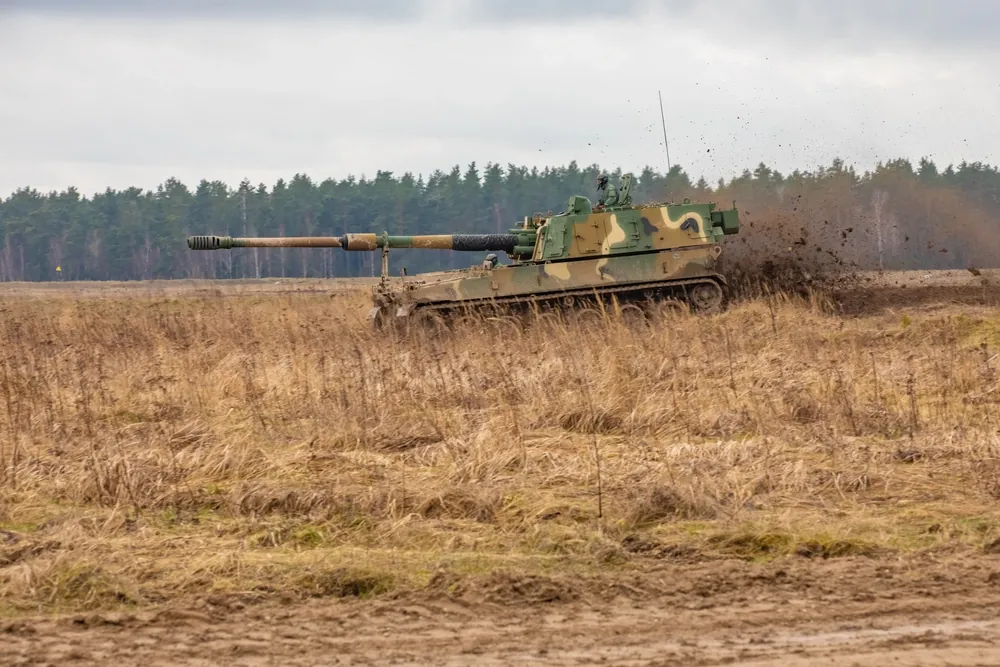
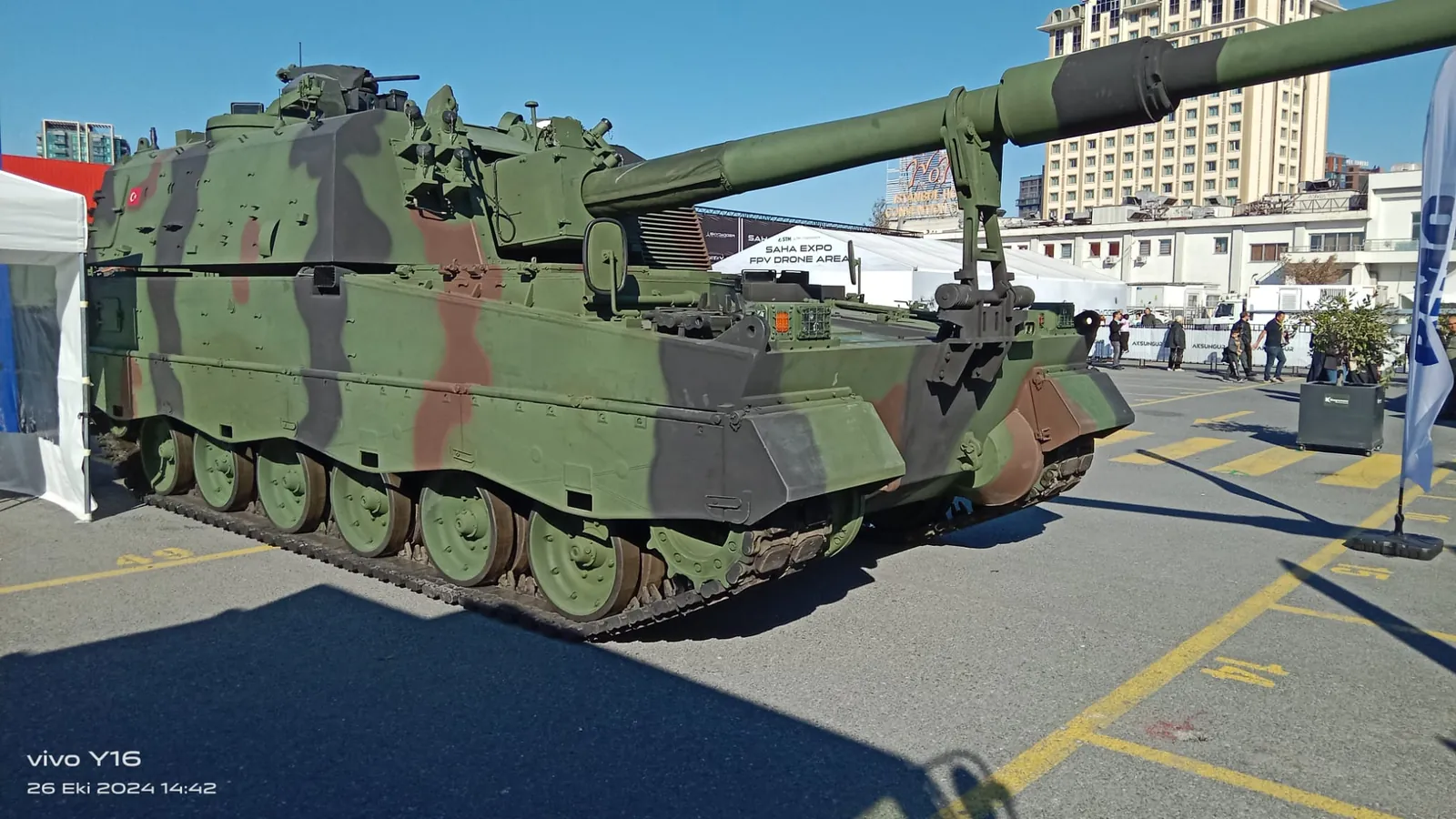
The T-155 Fırtına and the K9 Thunder are, in fact, two branches of the same family tree. The 1996 licensing agreement between Türkiye and South Korea gave Ankara the right to produce the K9 Thunder platform in Türkiye under the name “Fırtına” (Storm). From that point on, the two programmes went in different directions. K9 became the runaway export champion of the self-propelled howitzer segment (9 operator countries, thousands of units). Fırtına became the backbone of 155 mm self-propelled artillery in the Turkish Land Forces and, over time, was localised into Fırtına II. This piece lays out both systems side by side using publicly verifiable 2026 data — not to declare a winner, but to show how a shared origin produced two different doctrines.
At a glance
| Attribute | T-155 Fırtına / Fırtına II | Hanwha K9 Thunder |
|---|---|---|
| Manufacturer / Country | MKE + BMC Defence / Türkiye (Korean licence) | Hanwha Aerospace / South Korea |
| Programme start | 1996 licence; first delivery 2001 | 1999 entry into service (ROK Army) |
| Calibre / Barrel length | 155 mm / 52-calibre (MKE) | 155 mm / 52-calibre |
| Range (standard / ERFB-BB) | ≈ 30 km / ≈ 40 km; up to 56 km with new ammo | ≈ 30 km / ≈ 40 km (K9A1); K9A2 target ≈ 60 km |
| Rate of fire | 6 rpm max; 3 rounds per 15 sec burst | 6-8 rpm max; K9A2 targets 9-10 rpm |
| MRSI capability | Yes (2-3 rounds) | Yes (3-5 rounds; expanded in K9A2) |
| Crew | 5 (commander, driver, gunner, 2 loaders) | 5 (K9A1); K9A2 target 3 with automation |
| Combat weight | ≈ 47 t | ≈ 47 t (K9A1); ≈ 48.5 t (K9A2) |
| Engine / Speed | MTU MT881 Ka-500 diesel, 1,000 hp; 66 km/h | MTU MT881 Ka-500 diesel, 1,000 hp; 67 km/h |
| Operational range | ≈ 480 km | ≈ 480 km |
| Fleet (2026) | ≈ 281 (Turkish Land Forces) | ≈ 1,700+ across 9 countries — RoK 600+, Poland 400+, Egypt 200+, Romania 54, Norway 48, Finland 48, Australia 30, Estonia 24, Vietnam 108 on order |
| Status (2026) | Fırtına II in BMC Defence production; MKE ammo deliveries ongoing | K9A2 (target 2027) under test; wheeled K9 variant in production |
Dimension by dimension
Shared DNA, two divergent roads
The 1996 licensing deal between Türkiye and South Korea allowed the K9 Thunder — designed and manufactured by Samsung Techwin (today Hanwha Aerospace) — to be produced in Türkiye as Fırtına. The first batch (2001-2004) came from joint MKE + Korean production; Türkiye then steadily increased local content. In today’s Fırtına II, hull, transmission, electronics and ammunition are largely Turkish. K9, meanwhile, has kept evolving in Korea into the K9A1 (2018), K9A2 (2024-2027), and the newest wheeled variant (2025-2026) — the same platform, updated in a decade-long modernisation loop.
Range, rate of fire and ammunition
Because barrel length (52-cal) and platform are shared, range differences are largely a function of ammunition. Standard HE gets both systems to ~30 km; ERFB-BB rounds get them to ~40 km. New Roketsan-produced extended-range ammunition pushes Fırtına II to 56 km. K9A2 aims for ~60 km with a new barrel and ammunition. Rate of fire is where K9A1 already led (6-8 rpm thanks to automatic loading); K9A2 aims for 9-10 rpm. Fırtına II delivers 6 rpm max and 3 rounds in 15 seconds burst. Both use MRSI (Multiple Round Simultaneous Impact) fire modes.
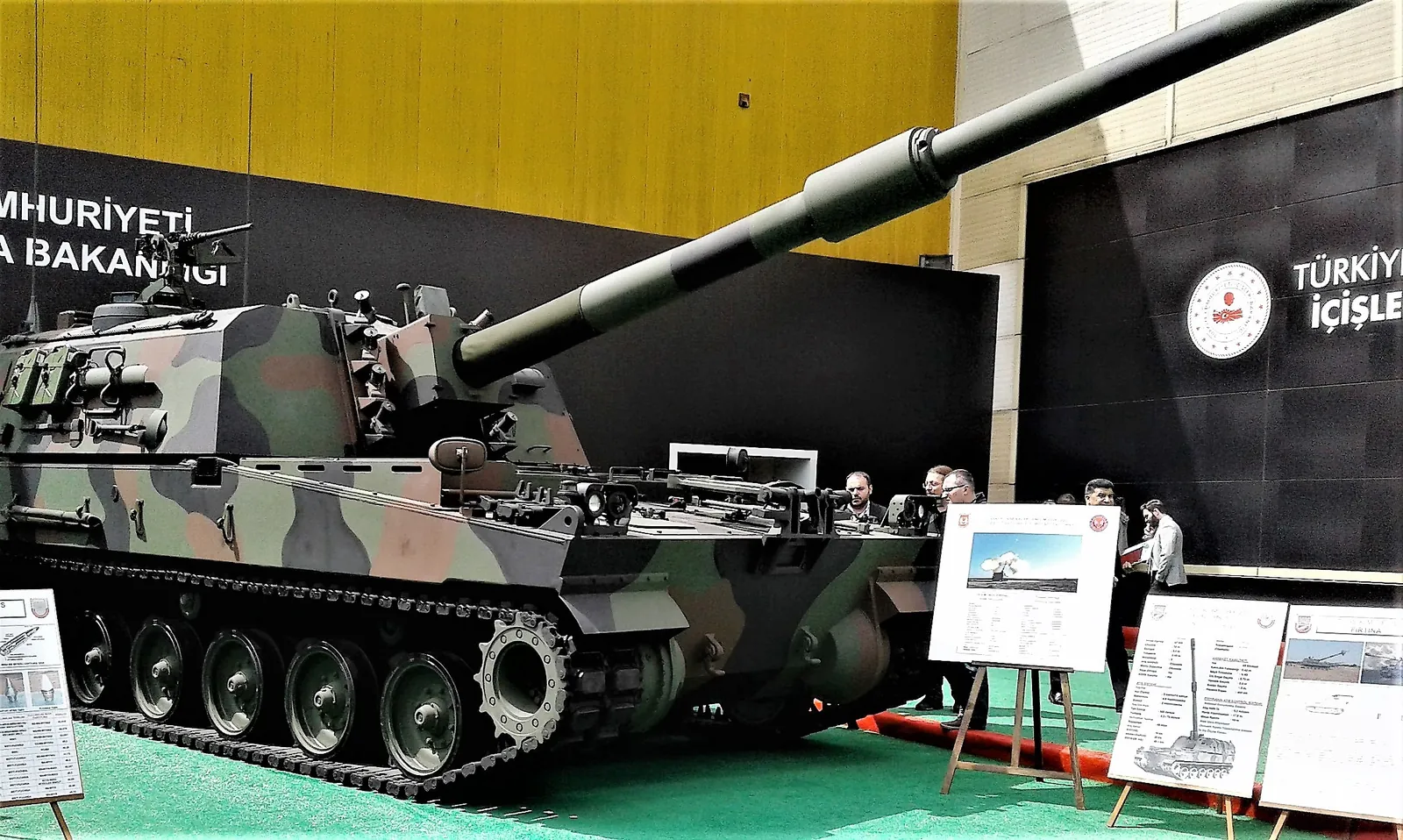
Crew and automation: 5 today, 3 tomorrow?
Both systems today are 5-crew. K9A2’s biggest claim is bringing that down to 3, courtesy of a fully automatic loader. That reduces crew fatigue on long missions and sets the stage for future unmanned turret concepts (already visible on the wheeled K9 variant). Türkiye has not publicly announced an automation programme on that scale for Fırtına II; the modernisation focus is more on a Turkish engine (BATU), a Turkish fire-control system, and Turkish ammunition.
Engine, mobility and endurance
Both use the MTU MT881 Ka-500 diesel (1,000 hp). The MTU engine on Fırtına historically raised German export-licence concerns during Türkiye-Germany tensions in 2015-2020. In response, Türkiye developed the BATU 1,000 hp indigenous diesel, which is being integrated into Fırtına II. On the K9 side, the MTU engine is produced under Korean licence with no export restrictions surfacing on customer nations.
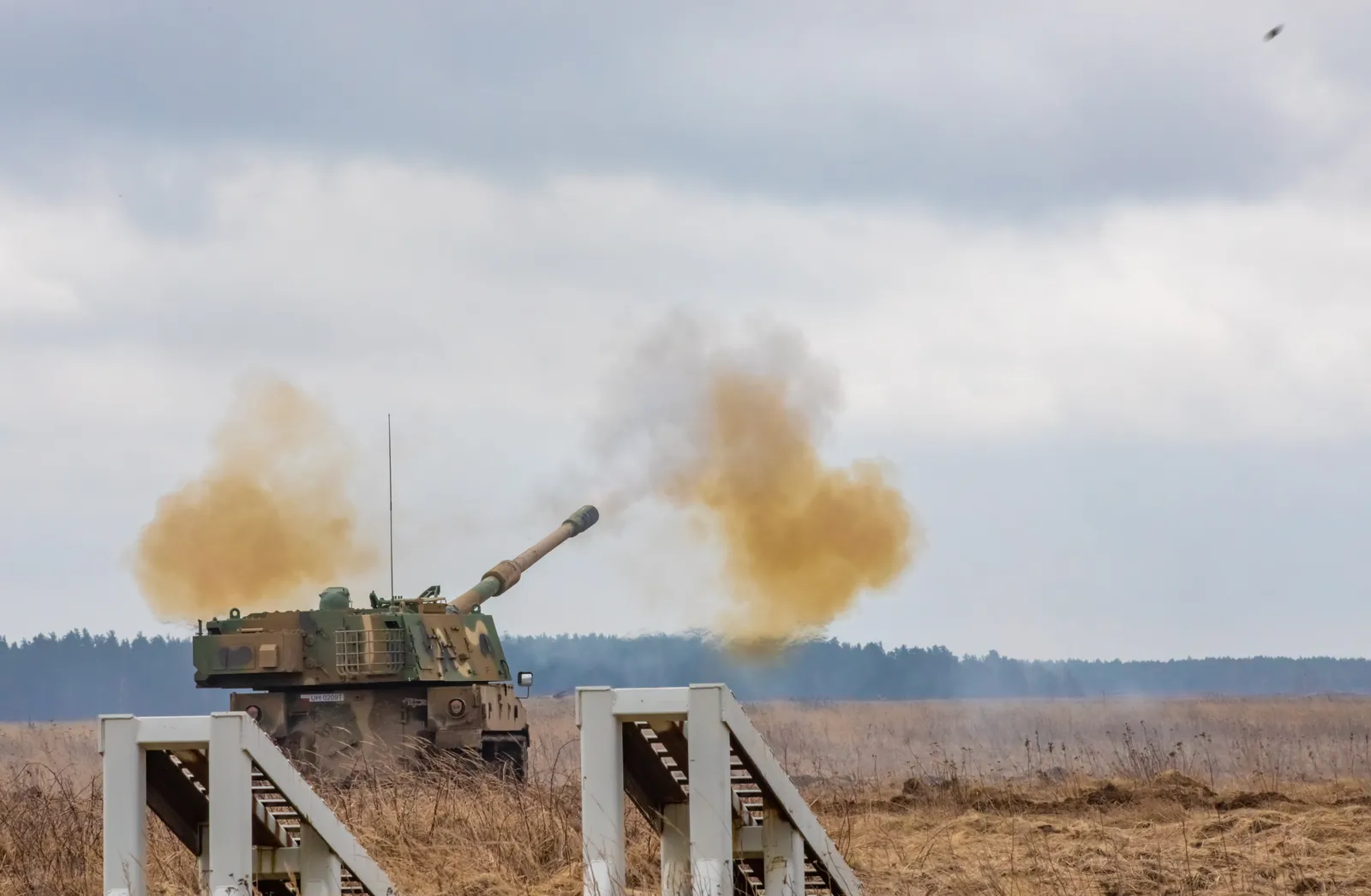
Exports: Korea’s global brand vs Türkiye’s regional strength
K9 Thunder is by far the global leader in the post-2000 SPH export market. 9 operator countries, thousands of units in service or on order: South Korea (600+), Poland (400+ and growing), Egypt (200+), India (100 K9 Vajra), Norway (48), Finland (48), Estonia (24), Australia (30), Romania (54), and Vietnam (108 on order). The multi-billion K9PL production line with Poland has become the poster child for Korean defence exports. Fırtına, in contrast, cannot be exported to third countries without Korean consent under the 1996 licence — that is why Türkiye is investing in new indigenous howitzers (Panter, new BMC platforms) to open up its own export channels. Türkiye is signalling in 2026 that it intends to challenge Korea in the coming decade.
Operational experience: PKK terror front vs the DMZ
Fırtına has been in continuous operational use since the early 2000s: artillery fire against PKK/YPG positions on the Syrian border, urban-adjacent counter-terror strikes, and internal-security operations. K9 Thunder is South Korea’s DMZ artillery backbone; its concept of operations was restructured after the 2010 Yeonpyeong shelling. Poland’s K9PL fleet has, since 2022, become one of NATO’s most consequential artillery levers on the eastern flank.
Which fits which scenario?
- Eastern-flank NATO buyer needing rapid delivery: K9 Thunder — Korean export line is warm.
- Indigenous industry build-up + full sovereignty: Fırtına II — MKE + BMC + Roketsan ecosystem.
- Crew reduction + future-proofing: K9A2 (2027) — 3-crew, automation, wheeled variant.
- Regional buyers with a Türkiye tilt: Fırtına — Azerbaijan, Turkic republics.
- Total cost of ownership per unit: Broadly comparable; Korean export pricing depends on batch size.
- Coalition interoperability: K9 Thunder — very large user base translates into shared training and logistics.
Timeline
- 1989 — Samsung Techwin begins K9 development.
- 1996 — Türkiye–Korea licence signed; Fırtına programme begins.
- 1999 — K9 Thunder enters ROK Army service.
- 2001 — First serial Fırtına deliveries to the Turkish Land Forces.
- 2019 — BMC Defence takes over Fırtına II production; modernisation begins.
- 2022 — Poland’s mega K9 Thunder contract (600+ units).
- 2024 — K9A2 design characteristics unveiled (3-crew, 60 km, 9-10 rpm).
- 2025–2026 — Hanwha wheeled K9 variant enters production.
- 2026 — Fırtına II modernisation continues in Turkish inventory with new indigenous ammunition.
FAQ
Are Fırtına and K9 the same howitzer?
Partly. Fırtına was derived from K9 under the 1996 licence but Türkiye has since taken the platform on a different road. Today’s Fırtına II is mostly Turkish content, and the A1/A2/wheeled updates applied to K9 do not one-to-one translate to Fırtına II.
Is the range difference real?
With standard HE, both systems reach ~30 km. ERFB-BB gets them to 40 km. K9A2 targets ~60 km with a new barrel and ammunition; Fırtına II with new Roketsan extended-range rounds can reach 56 km.
Can Türkiye export Fırtına?
No — the 1996 licence limits third-country exports without Korean consent. That is why Türkiye is developing indigenous howitzers like Panter and opening export channels through BMC and MKE.
Is Türkiye buying more K9?
Not currently. Türkiye already fields 281 Fırtına units and is focused on indigenous production. Importing K9A2 is technically possible but not politically or economically expected.
Which is exported more?
K9 Thunder — 9 operator countries, 1,700+ units in service or on order, including Western buyers such as Poland, Norway, Finland and Australia. Fırtína is only in the Turkish Land Forces (~281).
Was K9 sent to Ukraine?
Not directly from Korea; however, Poland’s rapid K9PL deliveries enabled Warsaw to transfer its older systems to Ukraine. Direct K9 use by Ukraine has not been confirmed.
Was Fırtína’s engine hit by an embargo?
The MTU MT881 was under German licence; export restrictions during 2015-2020 raised concerns for Türkiye. In response, Türkiye developed the BATU 1,000 hp diesel, integrated into Fırtína II.
What does the K9A2 wheeled variant bring?
Hanwha put the wheeled (not tracked) K9 variant into production in 2025-2026. It targets faster strategic deployment and lower sustainment cost, aimed at light corps units.
Whose fire-control system is on Fırtína?
Initially Korean; today ASELSAN-sourced Turkish fire-control and battle-management solutions are part of the modernisation. New Fırtína II batteries lead with Turkish C4 integration.
Will Panter replace Fırtína?
No — Panter is a towed 155 mm howitzer; Fırtína is a self-propelled platform. They serve different mission profiles and are complementary.