AUKUS Partners Test Undersea Autonomous Systems at RIMPAC 2026

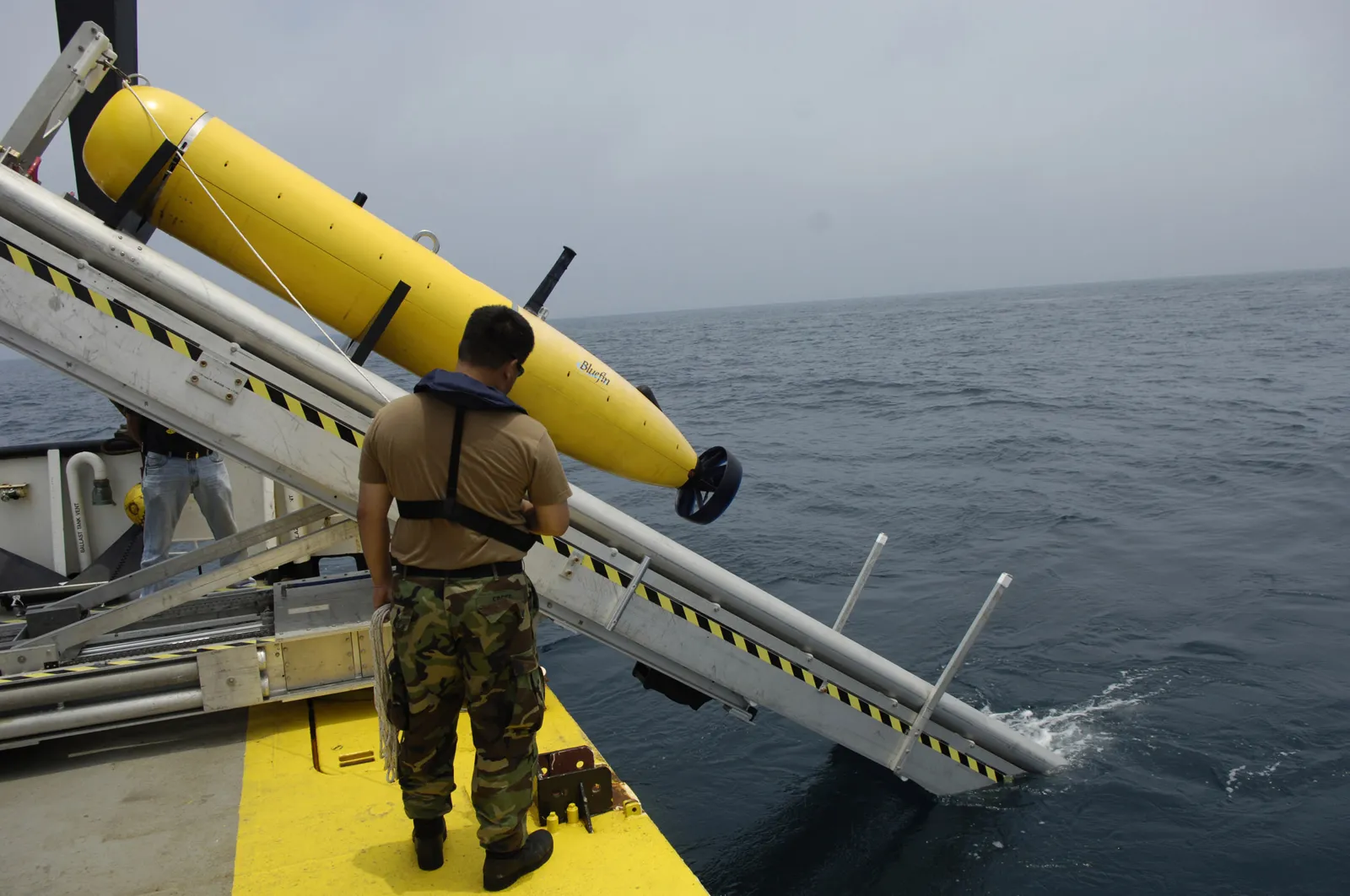
Australia and the United States put a set of autonomous undersea warfare systems through their paces during RIMPAC 2026, the multinational maritime exercise held off Hawaii, under the AUKUS Pillar II advanced-capabilities program.
At a Glance
- RIMPAC 2026 took place off Hawaii in July 2026, drawing 34 nations and more than 25,000 personnel.
- The trial fell under AUKUS Pillar II, the advanced-capabilities pillar of the AUKUS partnership, and focused on strengthening protection of critical seabed infrastructure.
- Systems involved: the Kongsberg HUGIN Superior autonomous underwater vehicle (AUV), a Schilling work-class remotely operated vehicle (ROV), the Lightfish Seasat uncrewed surface vessel (USV), and “Rock Lobster,” a deployable underwater acoustic communication relay built by L3Harris with the Royal Australian Navy and Australia’s Defence Science and Technology Group (DSTG).
- All four systems were launched and recovered from the Australian Defence Vessel (ADV) Guidance.
- The activity tested detection, deterrence and response to maritime threats, and proved out interoperability between Australian and US underwater acoustic communications.
- Commander Paul Clark of the Directorate of Undersea Warfare and Data: “RIMPAC gives us a valuable opportunity to bring together people and capabilities in a real-world environment.”
Background
AUKUS Pillar II sits alongside Pillar I, the nuclear-powered submarine program, and covers joint development across artificial intelligence, cyber, hypersonics, electronic warfare and undersea capabilities between Australia, the United Kingdom and the United States. The RIMPAC 2026 trial builds directly on earlier “Maritime Big Play” activities and forms part of a broader push under Pillar II to mature subsea and seabed warfare capability among the three partners.
Each system tested performs a distinct role in that undersea picture. The HUGIN Superior, built by Norway’s Kongsberg, is an autonomous underwater vehicle capable of long-endurance survey, mapping and object-detection missions at depth without a tether. The Schilling work-class ROV is an operator-controlled system used for hands-on undersea inspection, intervention and maintenance tasks. The Lightfish Seasat USV operates on the surface, acting as a sensor carrier and communications link between subsea assets and command. Rock Lobster, the acoustic relay, is designed to bridge that gap underwater, passing data between separated systems via sound rather than radio, since radio signals do not travel effectively through seawater.
Protecting seabed infrastructure has moved up the priority list for allied navies in recent years. Undersea fibre-optic cables now carry the bulk of global internet and financial data traffic, while subsea pipelines remain central to energy supply. Monitoring that infrastructure over time and across large areas exceeds what surface ships and aircraft alone can sustain, which is why navies are investing in autonomous and uncrewed platforms that can operate persistently underwater at lower cost and without putting crews at risk.
Regional Impact
Seabed infrastructure protection is not a concern unique to the Pacific. Black Sea states face the same underlying problem: undersea pipelines and internet cables running through a contested maritime space, where NATO’s regional posture increasingly factors in the ability to monitor and protect subsea assets.
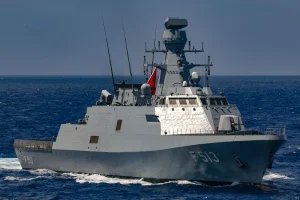
Turkey has its own stake in how this technology develops. Turkish defense firm STM has been advancing its own uncrewed underwater vehicle work, and ASELSAN produces sonar and acoustic systems used for undersea surveillance. Turkey did not take part in this particular AUKUS trial, but the progress allied navies are making on autonomous undersea systems and seabed protection is directly relevant to Turkey’s NATO Black Sea posture and to the direction of its own naval unmanned-systems programs.
FAQ
What is RIMPAC 2026?
RIMPAC (Rim of the Pacific) is a biennial multinational maritime exercise held off Hawaii; the 2026 edition involved 34 nations and more than 25,000 personnel.
What is AUKUS Pillar II?
It is the advanced-capabilities strand of the AUKUS partnership between Australia, the UK and the US, covering joint work on technologies including undersea warfare, separate from Pillar I’s nuclear submarine program.
What does Rock Lobster do?
It is a deployable underwater acoustic communication relay, developed by L3Harris with the Royal Australian Navy and DSTG, that lets separated underwater systems exchange data via sound.
Did Turkey take part in this exercise?
No. This particular AUKUS trial involved only Australia and the United States.
Sources
- defence-industry.eu
- RIMPAC 2026 exercise public affairs releases