US Navy Pushes Tomahawk Output Toward 1,000 Missiles a Year With $22.9 Billion Raytheon Deal
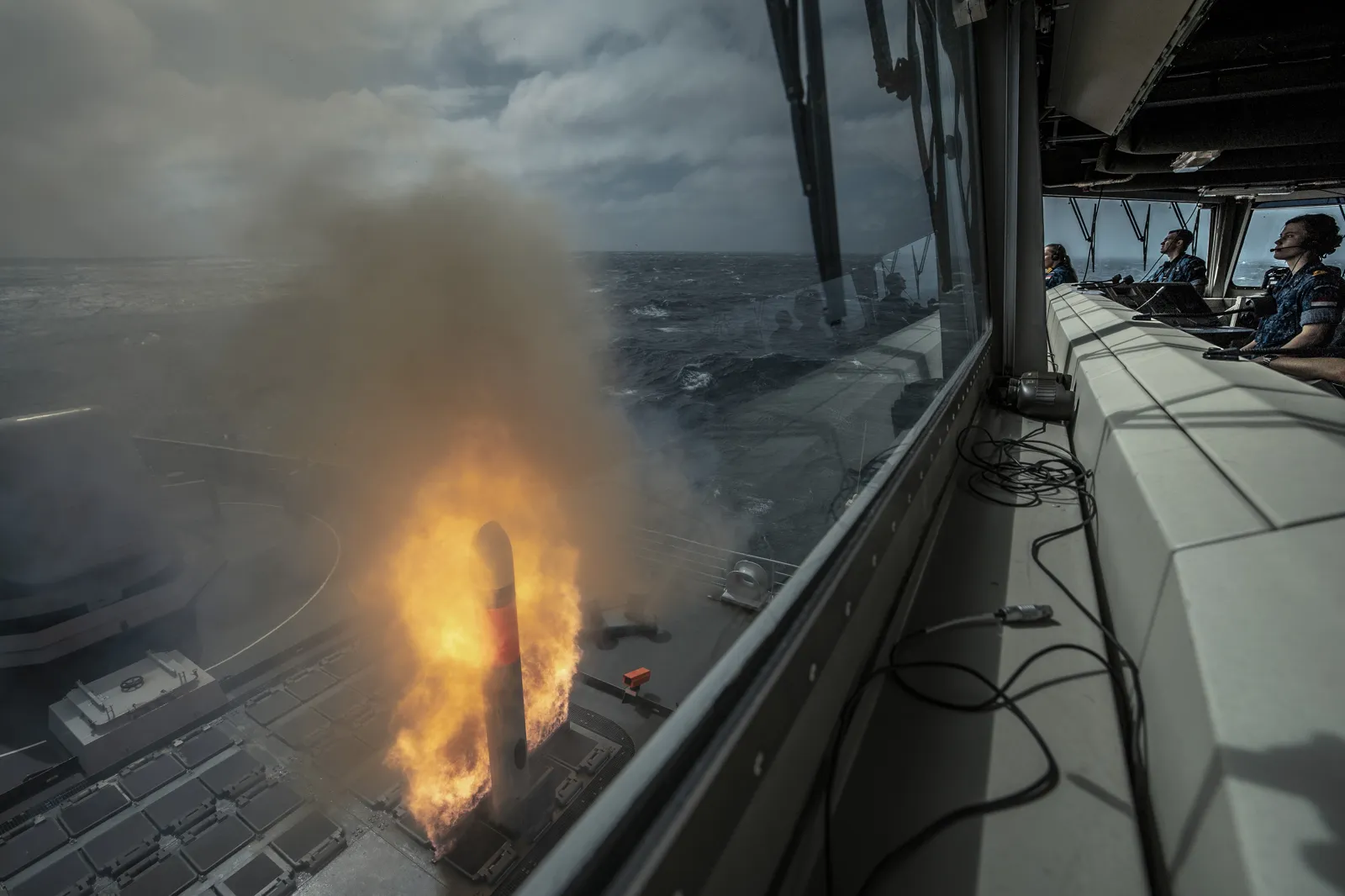
The US Navy has signed a seven-year contract worth $22.9 billion with Raytheon to rebuild the industrial base behind the Tomahawk cruise missile. Announced on 17 August 2026, the award is meant to lift annual output from roughly 60 missiles to more than 1,000.
The deal formalises a framework agreement signed between the US military and Raytheon in February. Acting Secretary of the Navy Hung Cao called it “a landmark investment” that “accelerates the delivery of Tomahawk missiles to our warfighters at unprecedented speed.”
The stockpile did the arguing
What forced the decision was arithmetic, not doctrine. Since the start of Operation Epic Fury the United States has expended more than 1,000 Tomahawks. By August 2026 close to a third of the national inventory was gone. A line producing 60 rounds a year cannot begin to close that gap.
Under Secretary of War Michael P. Duffey framed the contract as part of a wider push to expand US munitions capacity under the department’s Acquisition Transformation Strategy. Raytheon is expected to add workforce, raise throughput and deepen its supplier base under the award.
Why Tomahawk still matters
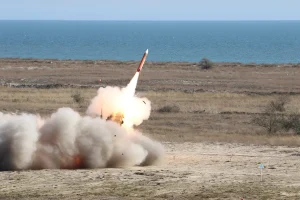
The Tomahawk has carried American long-range land-attack strike since the 1980s. Launched from submarine torpedo tubes and from vertical launch cells aboard surface combatants, the subsonic missile flies a low-altitude terrain-following profile and, depending on block, reaches beyond 1,600 kilometres.
The current Block V family splits into two branches. Block Va, the Maritime Strike Tomahawk, carries a new seeker that lets it engage moving ships — the single most consequential change in the weapon’s history, converting a land-attack round into an anti-ship system. Block Vb pairs the airframe with the Joint Multi-Effects Warhead System for hardened targets.
The export base is widening too. The United Kingdom has fired Tomahawk from its submarines for decades; Japan and Australia both signed on in recent years, and the Japanese destroyer JS Chokai completed its first live firing earlier in 2026.
Capacity is the weapon
The real subject of this contract is not the missile but the line. Going from 60 to 1,000 rounds a year is a seventeen-fold jump, and final assembly is the easiest part of it. Solid rocket boosters, warhead casings, seeker electronics and the small turbofan sustainer each carry their own bottleneck, often at second- and third-tier suppliers with no incentive to invest against a one-year order.
That is precisely why the award is structured as a seven-year multiyear procurement. A stable demand curve is what makes new tooling, new presses and new hiring financeable down the supply chain. Washington applied the same logic to PAC-3 MSE and THAAD earlier this year.
What it means beyond Washington
How quickly long-range strike inventories evaporate in a real campaign is now reshaping planning assumptions across NATO, not only in the United States. European stocks of Storm Shadow/SCALP and Taurus are thin, and replenishment is measured in years rather than months.
For Türkiye, the episode reinforces a point its own programmes already reflect: a cruise missile is worth what the production line behind it can deliver in a crisis. ROKETSAN’s ÇAKIR and SOM families and the ATMACA anti-ship missile matter strategically to the degree that their supply chains are domestic and scalable. Headline range figures are the easy part; sustained monthly output is the hard one — and a $22.9 billion American cheque has just confirmed the priority.
Sources
- US Department of the Navy — Tomahawk multiyear production announcement, 17 August 2026
- Defence Industry Europe — “RTX secures $22.9 billion Tomahawk deal”
- Defense News — “US awards Raytheon $22.9 billion deal to boost Tomahawk output”
- Naval News — “Raytheon Awarded 7-Year Contract for Tomahawk Cruise Missiles”