The US Navy skipped a step: USS Massachusetts goes straight to the fleet
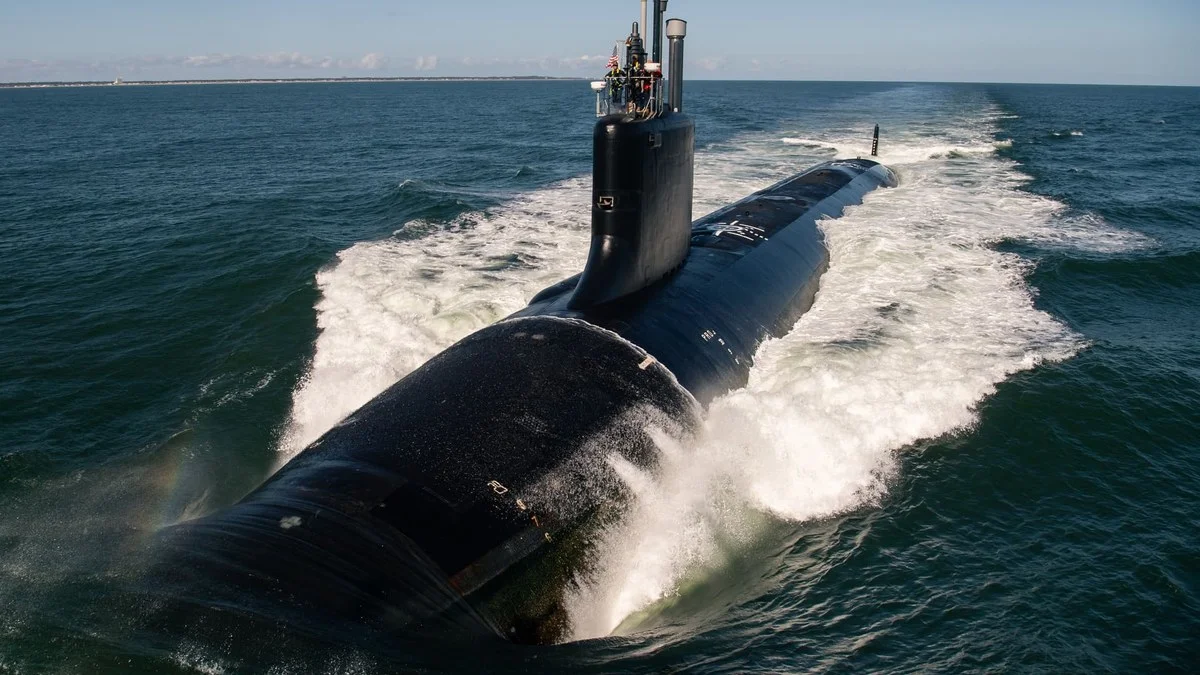
New warships do not go straight to work. They run shakedown trials, generate a list of deficiencies, and then return to the yard for months to have that list closed out. The US Navy has just decided that USS Massachusetts does not need to.
The service confirmed on 17 August that it had waived the post-shakedown availability for the Virginia-class attack submarine SSN 798, sending the boat directly to fleet tasking.
The step that was skipped
Post-shakedown availability, or PSA, is the yard period a newly delivered warship enters after its first trials. Those trials push the ship to its limits and surface whatever the builder’s tests did not. PSA is where the resulting deficiencies are corrected and warranty work is carried out. Duration varies by ship type, but it is measured in months.
The Navy’s stated reasoning was that Massachusetts did not require it. The service cited the boat’s “superb material condition and combat readiness” during trials, together with the urgency of delivering warfighting capability to the fleet.
The boat
USS Massachusetts was built at Newport News Shipbuilding and delivered to the Navy on 21 November 2025. She was commissioned in March 2026 at Boston Harbor. The Virginia class is the successor to the Los Angeles class of nuclear-powered attack submarines, designed to combine intelligence collection, special operations support, anti-submarine warfare and Tomahawk cruise missile carriage in a single hull.
The pressure behind the decision
The significance lies in the state of the American submarine industrial base. The Navy has for years fallen short of its target of two Virginia-class deliveries annually, held back by shipyard capacity, skilled labour shortages and supply chain constraints. The boats earmarked for Australia under AUKUS depend on the same production line.
Operational demand is moving the other way. Chinese naval expansion in the Indo-Pacific has driven up submarine patrol requirements, while a substantial share of the existing fleet sits in maintenance backlogs. Against that arithmetic, holding a ready submarine alongside for months is an expensive choice.
A calculated risk
Navy officials framed the decision as an example of driving efficiency, innovation and speed in shipbuilding, while describing it explicitly as a calculated risk — one taken, they said, without compromising the safety of sailors or the quality of the submarines.
The reservations are real nonetheless. PSA is not only about fixing faults; it is also where design-related problems that emerge in early service get addressed. Skipping it may simply defer those issues into longer and costlier availabilities later. Whether Massachusetts proves to be a one-off or a precedent for subsequent hulls remains open.
The wider lesson
A comparable tension runs through naval programmes elsewhere, Turkey included. The MİLDEN national submarine project and STM’s Preveze-class mid-life modernisation face the same relationship between yard capacity and operational readiness, as does the delivery schedule for the Reis-class boats now entering service.
What the Massachusetts decision illustrates is that the binding constraint in shipbuilding programmes is usually not design but yard throughput. Ordering platforms is the easier half; sustaining the infrastructure that can build, maintain and cycle them is what determines how many are actually at sea.
Sources
- US Navy official press release, 17 August 2026
- Newport News Shipbuilding delivery records