Airbus filled a German exercise with aircraft that were not there
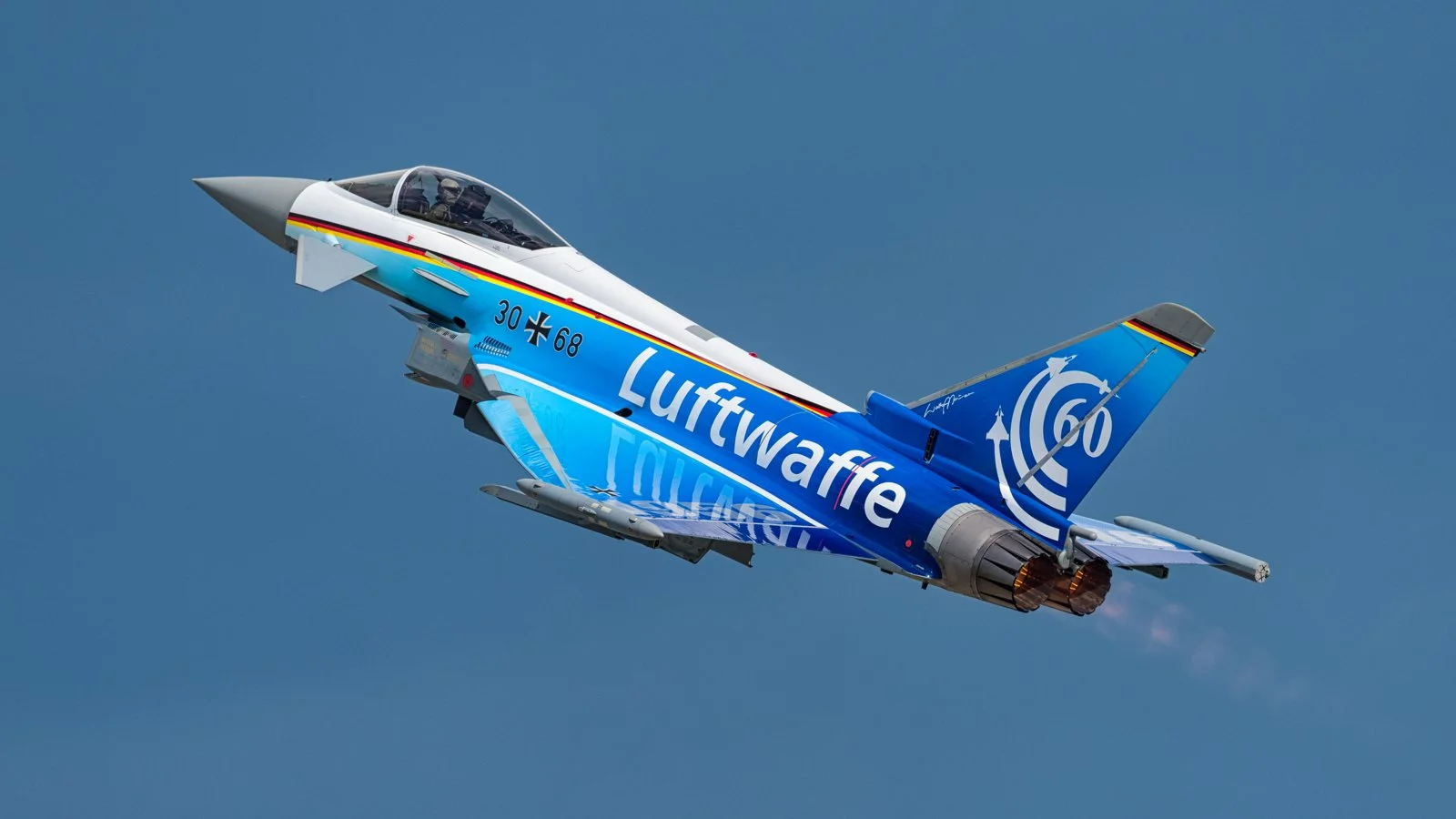
The sky over the German Air Force’s Timber Express exercise this summer was busier than air traffic control would have shown. Tornado and Eurofighter crews flew real sorties against opponents that had no airframes — synthetic aircraft injected into the exercise by Airbus Defence and Space, appearing on sensors and in the tactical picture as though they were there.
How it worked
The mechanism is Airbus’s System Development Lab, which acted during the exercise as a constructive engine: it fed the tracks of aircraft that did not physically exist into the sensors and command systems of aircraft that did.
The framework has a name — LVC, for Live, Virtual, Constructive. Live means real crews in real platforms. Virtual means real operators in ground-based simulators. Constructive means entities generated and flown entirely by software. Fusing all three into one scenario decouples the realism of an exercise from the number of aircraft a service can actually put in the air.
Moving data between systems of differing security classifications fell to the infodas SDoT product line, which connected sensors, command systems and scenario generation tools across classification boundaries.
Three arguments for synthetic opposition
The first is cost. A realistic air combat scenario needs dozens of aircraft airborne, each burning fuel and maintenance hours. Synthetic entities remove most of that bill.
The second is more interesting: testing systems that do not yet exist. Uncrewed collaborative combat aircraft — the loyal wingman class intended to fly alongside manned fighters — will not be operationally available until the end of this decade. The tactics for employing them, however, have to be developed now. Constructive entities let an aircraft that exists only as a specification fly in a live exercise.
The third is security. What an air force practises with real aircraft can be observed from outside. What it practises against synthetic opponents largely cannot.
Beyond the exercise
Airbus positions the SDL as more than a training aid. The lab accompanies a weapon system throughout development, running thousands of automated combat simulations to test design choices against operational requirements before a physical prototype exists.
That approach is becoming standard in sixth-generation fighter programmes. In Europe’s FCAS and the UK-led GCAP, a large share of architectural decisions is being taken through model-based systems engineering and simulation rather than flight test.
Where it breaks down
LVC has well-documented limits. A synthetic adversary is only as realistic as the model behind it; behaviour absent from the model is absent from the exercise. Latency is another issue — millisecond mismatches between a real aircraft’s sensor feed and a constructive entity’s position can produce misleading outcomes in close-in engagements. For that reason LVC is generally trusted more in beyond-visual-range scenarios and command-and-control training than in dogfighting.
The subtler risk is training to the model. Crews who learn to read a synthetic opponent’s predictable behaviour may be less prepared for the genuine uncertainty of combat. LVC is therefore positioned alongside live exercises rather than as a replacement for them.
Turkish relevance
Comparable infrastructure is developing in Turkey on both the industry and service sides. HAVELSAN’s simulator family and combat simulation systems, and Turkish Aerospace’s model-based design work under the KAAN programme, occupy the same ground. Scenarios pairing the national combat aircraft with uncrewed platforms require exactly this kind of synthetic environment.
The Timber Express case raises a question of ownership. Germany built the capability through its prime contractor, and the same lab now serves both exercises and product development. Whoever controls the synthetic environment ultimately shapes which tactics get tested and which design choices get validated.
Sources
- Airbus official corporate publication, August 2026
- German Air Force Timber Express 2026 exercise briefing