What is Iron Beam? Rafael’s 100-kW Laser Air-Defense System, Explained

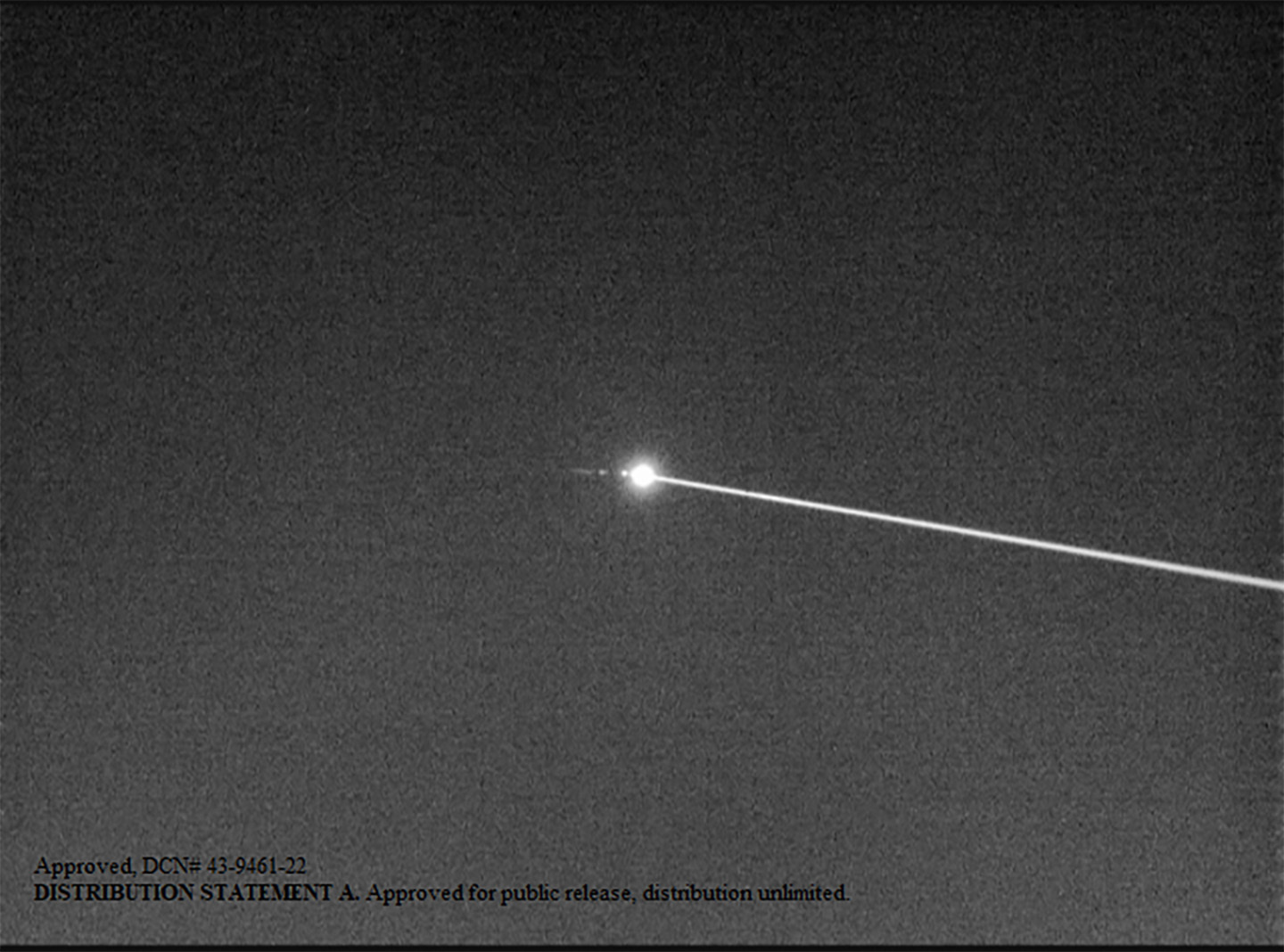
Iron Beam — Hebrew Magen Or, “Shield of Light” — is the world’s first operational 100-kilowatt-class directed-energy weapon, developed by Rafael Advanced Defense Systems with Elbit Systems contributing the beam-director optics. Conceived in the 2010s as an inexpensive cost-per-shot complement to Iron Dome, Iron Beam delivered its first operational combat kill in March 2025, intercepting a Hezbollah-launched 122 mm rocket during the ongoing northern-front operations. With each laser shot costing approximately USD 2 of electricity compared to USD 50,000 for a Tamir missile, Iron Beam represents the most dramatic cost-per-engagement compression in modern air-defense history.
Key facts at a glance
| Attribute | Value |
|---|---|
| Type | Ground-based fiber-laser air-defense weapon |
| Origin | Israel |
| Manufacturer | Rafael Advanced Defense Systems (system); Elbit Systems (beam director) |
| In service | March 2025 (first combat use) |
| Laser type | Combined fiber laser, ~1.06 μm wavelength |
| Power output | 100 kW class |
| Engagement range | Up to 7 km (rockets, mortars); up to 10 km (UAVs) |
| Dwell time | 2–5 seconds per target |
| Magazine | Unlimited (electrical-power-limited) |
| Cost per engagement | ~ USD 2 (electricity only) |
| Counter-targets | Rockets, mortars, UAVs, cruise missiles (limited) |
| Battery cost | ~ USD 100 million (development-amortized estimate) |
| Operators | Israel (operational); United States (test); United Arab Emirates (evaluating) |
How a 100 kW laser kills a rocket
Iron Beam works on the principle of thermal damage at standoff range. The fiber-laser array generates a concentrated beam of 1.06 μm near-infrared light, directed by a stabilized beam-director gimbal to focus on a specific point on the incoming target — typically the forward warhead section of a rocket or the propellant tank of a UAV. The dwell time required to destroy the target depends on the threat’s surface material, distance, atmospheric humidity and wind. Against a typical 122 mm Grad rocket at 5 km range, dwell time is approximately 3–4 seconds; the laser heats the warhead casing past propellant cook-off, causing the rocket to detonate in flight.
Origins: the 1996 NCC program
Israel’s interest in directed-energy weapons dates to the 1996 Northrop Grumman-Israel Nautilus / Tactical High-Energy Laser (THEL) joint program, which produced a chemical-laser demonstrator that destroyed real Katyusha rockets at White Sands in 2000. Chemical lasers proved too logistically demanding for operational fielding. Rafael’s Iron Beam program restarted directed-energy development in 2012 using fiber-laser combining — a technique that aggregates the output of dozens of individual fiber-laser modules into a single coherent high-power beam. The first operational prototype was unveiled at Singapore Air Show 2014.
The Israeli operational architecture
Iron Beam is deployed as a complementary layer to the existing Israeli multilayer air-defense system. Standard operational architecture:
- Iron Beam — engages rockets, mortars and UAVs in the 0–7 km range band.
- Iron Dome (Tamir) — engages from 4 km to 70 km against same target classes.
- David’s Sling (Stunner) — engages medium-range threats from 40 km to 300 km.
- Arrow-2 / Arrow-3 — engages ballistic threats at 100+ km / exo-atmospheric.
Iron Beam’s role is specifically to absorb the highest-volume, lowest-cost portion of the threat (Hamas/Hezbollah unguided rockets and small UAVs) at near-zero per-shot cost, leaving Iron Dome’s Tamir interceptors for higher-value or out-of-laser-range targets.
March 2025 — first combat kill
On 14 March 2025 the Israel Defense Forces and Rafael announced the first operational combat use of Iron Beam: an experimental battery deployed to northern Israel intercepted a Hezbollah-launched 122 mm Grad rocket targeting Kiryat Shmona. The successful intercept was the first confirmed combat kill of a rocket by a Western directed-energy weapon. Three additional Iron Beam intercepts of UAVs and small rockets were confirmed in the following weeks. The IDF moved Iron Beam to operational service immediately after the March 2025 demonstrations, with production now scaling at Rafael facilities.
Iron Beam vs. its peers
| Iron Beam | U.S. Army DE-MSHORAD | UK DragonFire | U.S. Navy HELIOS | |
|---|---|---|---|---|
| Class | Fiber-laser SHORAD | Fiber-laser SHORAD | Fiber-laser shipboard | Shipboard fiber-laser |
| Power | 100 kW | 50 kW | 50 kW | 60 kW |
| Range | 7–10 km | ~3 km | ~5 km | ~5 km |
| Combat-proven | Yes (Mar 2025) | No | No (test only) | No |
| Service entry | 2025 | 2024 (limited) | 2027 (planned) | 2022 (test only) |
Limitations
- Atmospheric attenuation. Rain, fog, smoke and dust significantly degrade laser propagation. Effective range can drop by 50 percent or more in poor weather.
- Engagement geometry. The laser must dwell on a single point on the target for several seconds. Against high-cross-track-rate targets at short range, the beam director may not be able to track fast enough.
- Saturation engagement. A single beam director can engage only one target at a time. Salvo attacks of 20+ rockets per launch wave still require Iron Dome for the majority of engagements.
- Power demand. 100 kW continuous output draws significant electrical power; the deployed system includes an integrated generator/battery system.
The future: 200 kW Iron Beam-M and naval variant
Rafael is currently scaling production of the operational 100 kW Iron Beam and has announced two follow-on variants:
- Iron Beam-M (mobile) — vehicle-mounted variant on heavy 6×6 chassis; first prototypes 2026.
- Iron Beam-N (naval) — shipboard variant for Israeli Sa’ar-class corvettes; first prototypes 2027.
- 200 kW variant — under development with target engagement range past 12 km; first prototypes by 2028.
Why Iron Beam matters
Iron Beam has crossed the directed-energy threshold from prototype to operational combat use. The economics — USD 2 per shot versus USD 50,000 for a Tamir missile — fundamentally rewrite the cost-per-engagement math of air defense against cheap mass-produced threats like Shahed drones and unguided rockets. Iron Beam is the first weapon in this category to actually destroy a real combat threat, and the operational lessons Israel is now generating will inform U.S., UK and EU directed-energy programs through the rest of the decade.