Missile Defense Agency picks X-Bow for low-cost interceptor work
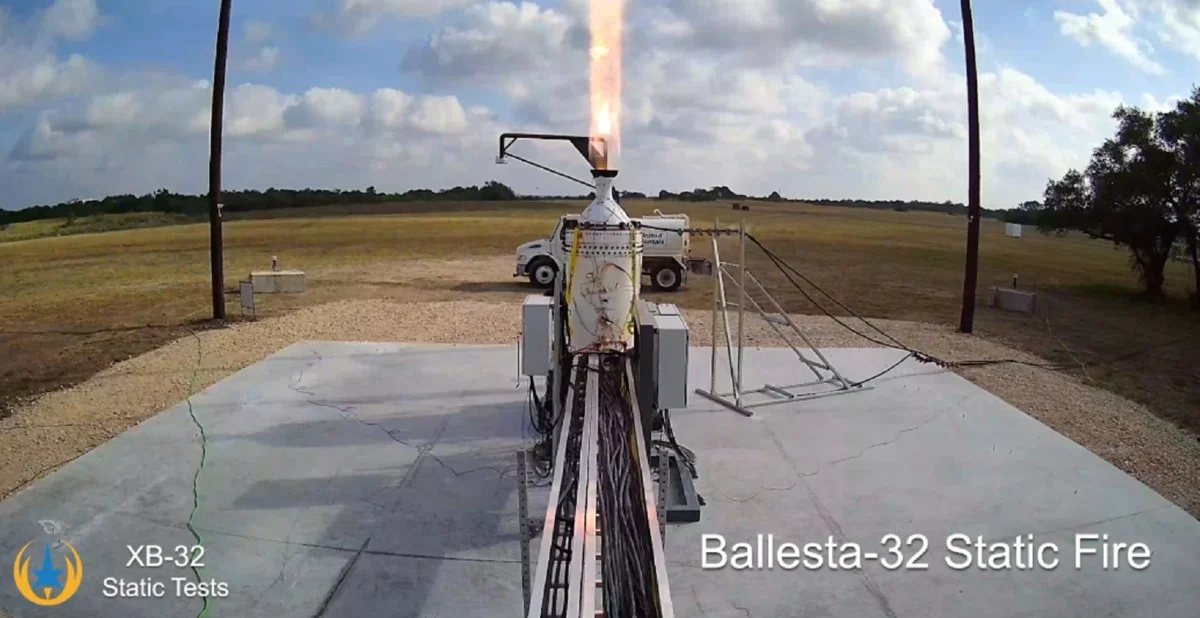
The US Missile Defense Agency has turned to a small solid rocket motor manufacturer as it seeks to broaden the industrial base for interceptor production. The agency has awarded New Mexico-based X-Bow Systems a firm-fixed-price contract worth $10.98 million to develop and flight-test a Low-Cost Interceptor. The award is a Phase II under the Small Business Innovation Research programme and forms part of the agency’s Rapid Response Small Launcher Technology effort.
A choice larger than its price tag
By the standards of missile defence contracting the sum is modest. What the award signals, however, matters more than its value. The Missile Defense Agency is working to spread interceptor production capacity that has long been concentrated among a handful of prime contractors, and the bottleneck in that effort is solid rocket motors.
The solid rocket motor determines both how quickly an interceptor reaches its target and how rapidly it can be manufactured at scale. In the United States that capacity has sat with a small number of producers for decades, while air defence expenditure in Ukraine and the Middle East demonstrated how fast stockpiles can be drawn down. The Pentagon has responded with a series of comparatively small awards intended to diversify the solid propulsion supply chain.
Who X-Bow Systems is
Headquartered in Albuquerque with research and development facilities in Socorro, X-Bow Systems produces solid rocket motors for missiles, interceptors and sub-orbital launch vehicles. The company operates across Texas, Mississippi, California, Alabama, Colorado, Utah, Maryland and Washington, DC.
Two elements define its pitch. The first is a manufacturing method certified by the Air Force Research Laboratory. The second is a proprietary production system the company calls a rocket factory in a box, designed to scale output quickly. Current production includes rocket-assisted take-off motors and propulsion for hypersonic and strategic programmes.
Investors include Boeing and Lockheed Martin Ventures alongside Crosslink Capital and Razor’s Edge Ventures. The company reports that revenue and backlog have more than doubled in recent years.
Chief executive Jason Hundley framed the supply base problem directly: America cannot out-produce today’s threats with yesterday’s supplier base.
Why low-cost interceptors are on the agenda
The central problem in air and missile defence in recent years has been economic rather than technical. Expending a multi-million-dollar interceptor against an attack drone costing a few thousand dollars puts the defender on an unsustainable cost curve. Intense engagements over Ukraine, the Red Sea and Israel made that imbalance concrete.
The result is a two-track search across defence industries: developing inexpensive effectors for the lower tiers of a layered defence, while reserving expensive high-tier interceptors for the threats that genuinely require them. The Low-Cost Interceptor effort follows that logic.
The wider picture
Türkiye is among the small group of states that has built domestic solid rocket motor capacity, through Roketsan. The interceptors of the Hisar family and the Siper air defence system rest on that industrial base. The question facing Ankara is the same one facing Washington: how to build an affordable interceptor layer capable of reversing the cost exchange during a saturation attack by drones and cruise missiles.
Turkish industry is pursuing several answers in parallel, including laser systems, guided 70 mm rockets and interceptor drones. The American approach of using small awards to widen the supplier base offers a notable example of the risk created when capacity is concentrated in a single producer during a crisis.
Sources
- US Department of Defense daily contract announcements
- X-Bow Systems corporate statement
- Defence Industry Europe