US Army tests counter-drone systems from more than 50 companies
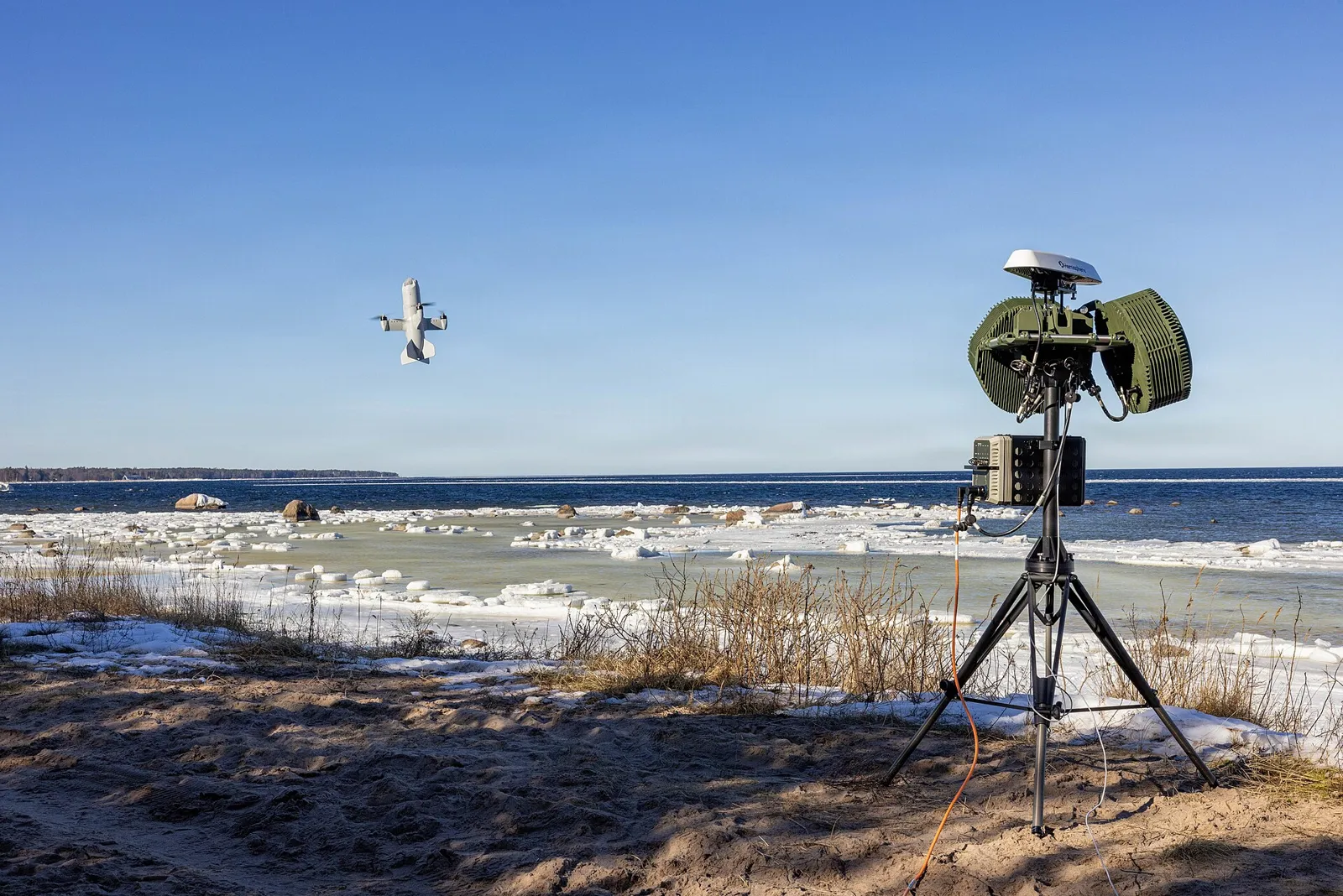
The US Army has stopped looking for a single system to defeat the drone threat and started assembling an architecture instead. XVIII Airborne Corps is evaluating counter-uncrewed aircraft technologies from more than 50 companies, with testing conducted from 11 to 13 August feeding directly into the counter-UAS portion of the Scarlet Dragon exercise scheduled for September.
An architecture, not a silver bullet
The evaluation was run under the Counter-UAS Integration and Planning Conference, which brought together sensor manufacturers, command-and-control developers, communications providers and companies working on common operating pictures. Alongside individual system performance, the Army examined how those systems function together within a broader defensive fires architecture.
Maj Anne Pham, deputy director for XVIII Airborne Corps G34 Fires and Effects, described the intent: what the Corps was looking for was the ability of each capability to perform individually as well as in concert with the others, providing that capability not only for base defence but also in tactical situations. Pham is a Royal Canadian Artillery officer, reflecting allied participation in the Corps’ work on future combat operations.
Industry teams also conducted individual sensor evaluations in the Fayetteville area against representative uncrewed aircraft threats, measuring each system’s ability to detect, track and characterise drones before integration into a wider network.
Why no single sensor suffices
The Army’s assessment is that no individual sensor can address the full range of uncrewed aircraft threats. Radar struggles to separate small targets at low altitude against ground clutter; electro-optical systems depend on visibility; radio frequency detectors cannot see an autonomously flying platform that is not transmitting. Each sensor’s blind spot falls where another is strong.
Staff Sgt Jacob Schmall of XVIII Airborne Corps G34 Fires put it plainly: the goal is not to find one system that does everything, but to understand how different capabilities work together and to integrate the best technologies into a more complete counter-UAS architecture.
The ultimate objective, he said, is to combine sensor data into a single air picture that is more accurate, timely and usable for both commanders and operators.
Where Scarlet Dragon fits
Scarlet Dragon is the exercise series through which XVIII Airborne Corps tests how new technologies can be integrated across the force and applied to operational missions. Results from the August sensor evaluations will shape the counter-UAS element of the September event.
The approach reflects a procurement logic the US Army has increasingly adopted: rather than selecting a capability at the end of a long competition, it compares numerous products through short evaluations and adds those that interoperate into the architecture.
The wider context
Counter-drone defence is among the most active areas of Turkish defence industry work. Aselsan’s Korkut and Gürz weapon systems, together with electronic warfare and laser-based solutions such as İhasavar and Gökberk, occupy different tiers of the same layered logic, and Türkiye’s operational experience in border security and base defence has tested them against real threats.
The notable element of the American evaluation, however, is methodological rather than material. What is being measured is not only how each system performs alone, but whether products from different manufacturers can feed a shared air picture. In layered air defence, the integration problem is often more decisive than sensor range.
Sources
- US Army XVIII Airborne Corps statements
- Defence Industry Europe