Lockheed Lands $211M Order for New-Configuration THAAD Launchers for the UAE

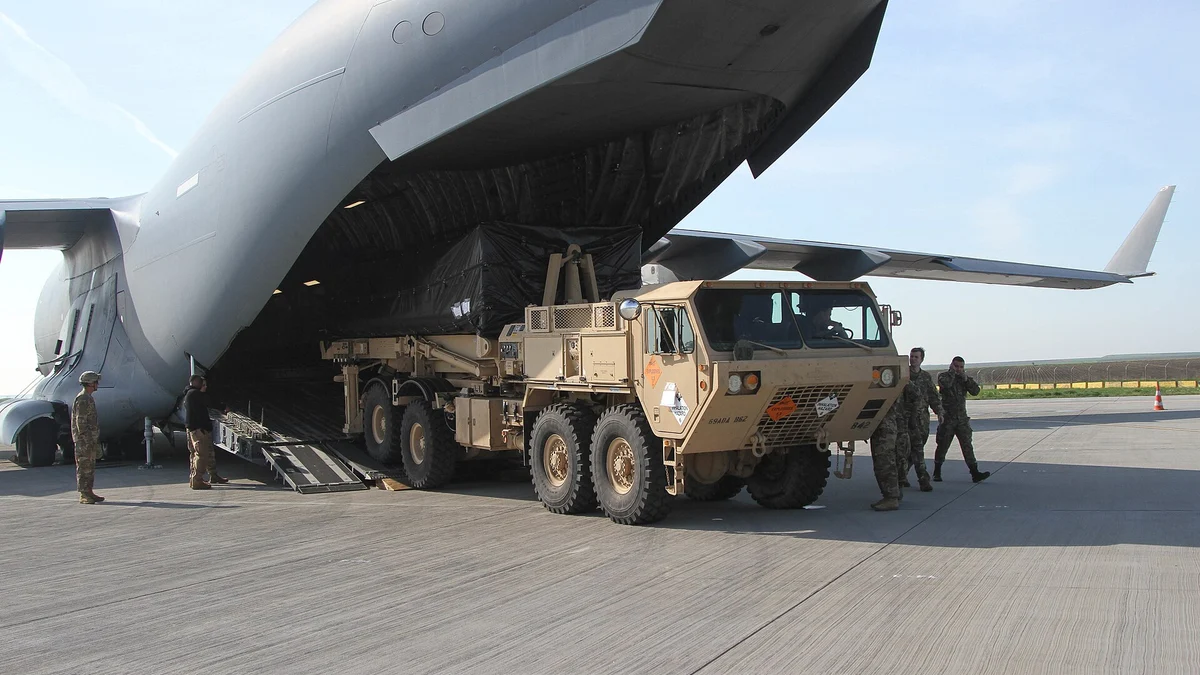
The US Missile Defense Agency has ordered a fresh batch of THAAD launchers for the United Arab Emirates, worth $211.4 million. The award covers the system’s newer Configuration 3 launcher, built around an updated command-and-control architecture.
At a Glance
- The award is worth $211,435,067, booked as a modification to a 2019 contract.
- The change lifts the parent contract’s cumulative value to $1.05 billion.
- The item procured is the new Configuration 3 (C3) THAAD launcher.
- Work runs from August 2026 through January 2031.
- Contracting activity is the Missile Defense Agency in Huntsville, Alabama; the contractor is Lockheed Martin Space in Sunnyvale, California.
- The procurement runs through the Foreign Military Sales channel.
What the Contract Covers
According to the Pentagon’s daily contract announcements, Lockheed Martin Space received modification P00082 worth $211,435,067 against a previously awarded order under a Foreign Military Sales case for the United Arab Emirates. Under the modification the company will manufacture and produce THAAD launchers in the new Configuration 3 standard.
The period of performance opens in August 2026 and is scheduled to conclude in January 2031. With this addition, the cumulative value of the parent 2019 contract rises to $1.05 billion. The contracting activity is the Missile Defense Agency in Huntsville, Alabama.
The C3 designation reflects updates to the system’s command, control and communications layer. The approach eases how a battery’s radar, fire control and launcher elements exchange data, and it allows launchers to sit further from the battery’s core — a direct match for the distributed-basing thinking that has come to dominate air and missile defence over the past decade.
What THAAD Actually Does
Terminal High Altitude Area Defense is built to stop ballistic missiles late in flight, at high altitude. Its defining trait is that the interceptor carries no explosive warhead: it destroys the target by striking it directly, the hit-to-kill principle.
A typical THAAD battery pairs an AN/TPY-2 X-band fire control radar with a tactical fire control and communications element, launchers and interceptors. Because it engages at the boundary between the upper atmosphere and space, THAAD adds a layer above lower- and mid-tier systems such as Patriot. It was never designed as a standalone answer — it is the top rung of a layered architecture.
The UAE’s THAAD Record
The United Arab Emirates was the first country outside the United States to buy THAAD. Earlier agreements delivered two AN/TPY-2 radars and nine launchers, and the system has been operational since 2022.
The Emirati inventory also produced the system’s first known combat use. When a ballistic missile attack was directed at the country in January 2022, THAAD engaged — generating the first real-world performance data for a system that until then had only been assessed through test shots. That episode did as much as any policy paper to lift Gulf spending on layered missile defence.
The Regional Read
Few regions feel the combination of ballistic missile and one-way attack drone threat as acutely as the Gulf. Energy infrastructure, port facilities and airports concentrate high-value fixed targets in a compact space, and the lesson of recent years is that air defence there is a question of depth and persistence, not simply range.
The new C3 launcher order looks less like a refresh of existing batteries than an expansion of firepower volume and basing flexibility. More launchers means a larger area defended by the same radar and fire control backbone.
Why It Matters
Two hundred and eleven million dollars is not, by itself, a headline figure. What it signals is that a procurement line running since 2019 has crossed the billion-dollar mark and keeps going — upper-tier missile defence in the Gulf has stopped being an emergency purchase and become a standing budget item.
Frequently Asked Questions
How does THAAD differ from Patriot?
Patriot works primarily against low- and medium-altitude threats. THAAD is designed to intercept ballistic missiles far higher, at the edge of the atmosphere. They are layers of the same architecture, not competitors.
What does Configuration 3 change?
Updates to the command, control and communications layer let launchers deploy more independently and further from the battery core.
Has the UAE used THAAD in combat?
Yes. The system engaged during a ballistic missile attack on the country in January 2022, the first known combat use of THAAD anywhere.
Sources
- US Department of Defense daily contract announcements (12 August 2026) — Contract value, modification number, contractor, contracting activity and performance period.
- US Missile Defense Agency programme material — THAAD battery composition and system architecture.
- Defence Industry Europe (13 August 2026) — Existing UAE THAAD inventory and assessment of the C3 configuration.