Qatar’s Defense Industry and Military Procurement Profile: The Three-Type Fleet, Suppliers and the Turkey Partnership

This file consolidates Qatar’s defense industry and military procurement profile on one page: spending, force structure, the three-type fighter fleet, main suppliers, the deeply institutionalized military partnership with Turkey, and open modernization threads. A living reference document, updated as Turkey-Qatar contacts develop.
Qatar’s Defense Profile at a Glance
- Spending: among the world’s highest per-capita defense spenders; a global top-10 arms importer in 2020-2024 (SIPRI)
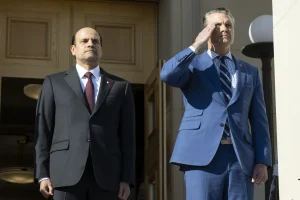
- Defense Minister: Sheikh Saoud bin Abdulrahman Al Thani (Deputy PM; since 11 November 2024)
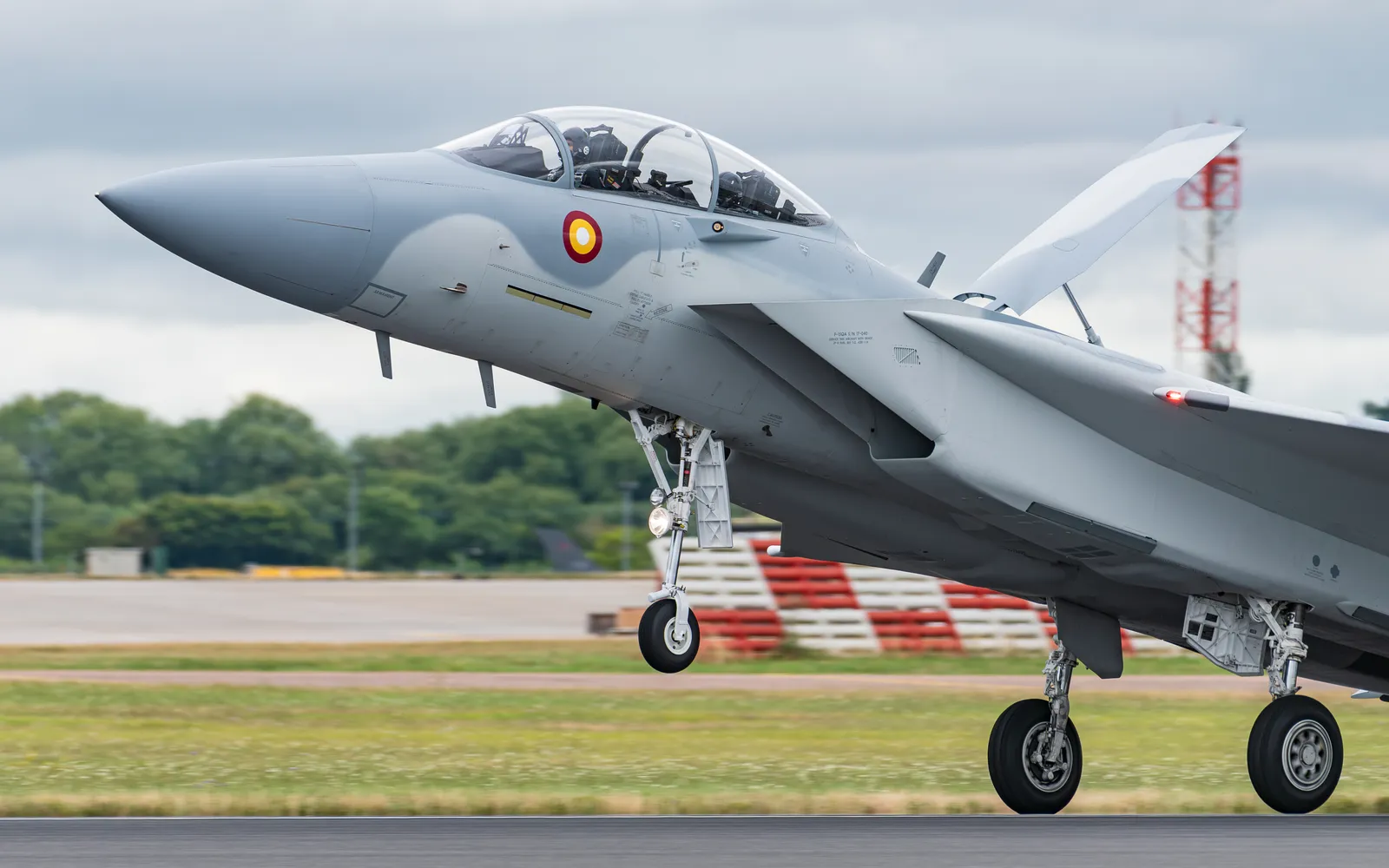
- Fighter fleet: Rafale (36) + F-15QA (36) + Eurofighter Typhoon (24) — three Western types at once
- Turkey status: 2014 defense agreement; Qatar-Turkey Combined Joint Force Command in Doha (2019); TB2s and BMC armor in service
- Exhibition: DIMDEX (Doha International Maritime Defence Exhibition)
- US anchor: Al Udeid, the largest American base in the region
Spending and Force Structure
Despite its small population, Qatar has run one of the world’s most aggressive procurement programs since 2015, placing among the global top-10 arms importers in 2020-2024 per SIPRI. The armed forces comprise land, naval and air components plus the Emiri Guard. With manpower limited, the doctrine leans on platform density, allied presence (US and Turkey) and rapid modernization.
The Three-Type Fighter Fleet: Dependency by Design
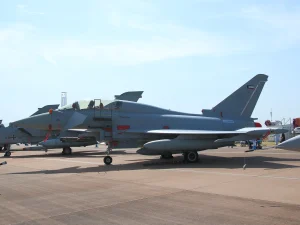
Qatar’s three separate fighter contracts of 2015-2018 — 36 Rafales from France, 36 F-15QAs from the US, 24 Typhoons from the UK — are the clearest expression of its procurement doctrine. Running three types is expensive; Doha treats the cost as the price of binding three separate strategic partners. The 2017 blockade, when neighbors closed their airspace overnight, made this insurance logic permanent.
Main Suppliers and Key Systems
| Supplier | Key systems | Note |
| United States | 36 F-15QA, AH-64E Apache, Patriot, NASAMS | Al Udeid base; ministerial Pentagon meeting October 2025 |
| France | 36 Rafale, NH90 helicopters | 2015 contract plus option expansions |
| United Kingdom | 24 Eurofighter Typhoon, Hawk trainers | Joint squadron model with the RAF (No. 12 Squadron) |
| Italy | 4 Al Zubarah-class corvettes, 2 OPVs, an LPD | Fincantieri naval package (~€5B) |
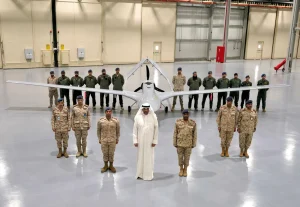
| Turkey | Bayraktar TB2 (6+3 GCS), BMC Kirpi (50), Amazon (35), Vuran | Post-2018; backed by the joint command and exercise architecture |
| China | SY-400 short-range ballistic missile system | Displayed at the 2017 parade; a limited line |
Defense Relations with Turkey: Architecture and Chronology
Turkey’s military relationship with Qatar is its most institutionalized in the Gulf. The 2014 defense agreement created the legal basis for a Turkish military presence; Ankara’s support during the 2017 blockade converted the relationship into a strategic partnership. The Qatar-Turkey Combined Joint Force Command headquarters (“Khalid bin Walid Barracks”) opened in Doha on 14 December 2019. Turkish elements remain deployed, with joint exercises on a regular calendar.
| Date | Development |
| 2014 | Defense cooperation agreement; basis for Turkish deployment |
| 2017 | Gulf blockade; Turkey’s support; accelerated deployment |
| 2018 | Baykar TB2 contract (6 aircraft + 3 ground control stations) |
| 14 Dec 2019 | Combined Joint Force Command HQ opens in Doha |
| 2020-2021 | Further defense cooperation agreements; BMC armor deliveries |
| 11 Nov 2024 | Sheikh Saoud bin Abdulrahman Al Thani becomes defense minister |
| Aug 2026 | Al Thani – Güler phone call |
Person file: Sheikh Saoud bin Abdulrahman Al Thani explained.
Open Modernization Threads
- Navy: sustaining and potentially expanding the Fincantieri package; standing naval interest as DIMDEX host.
- Unmanned systems: TB2 fleet sustainment and potential moves to next-generation UAV classes.
- Air defense: low-altitude and counter-UAV reinforcement beneath the Patriot/NASAMS layer.
- Localization: technology partnerships and joint ventures via Barzan Holdings.
Possible Matches for Turkish Industry — Envanter Medya Editorial Assessment
This is Envanter Medya’s open-source editorial assessment, not confirmed sales information. The installed TB2 and BMC base generates a natural sustainment-munitions-follow-on channel. Qatar’s low-altitude air defense and counter-UAV needs align at the technical-class level with ASELSAN’s KORKUT/GÖKDENİZ family, and its naval modernization with STM/ASFAT offerings. No official talks on these are on public record.
Frequently Asked Questions
Who is Qatar’s defense minister?
Sheikh Saoud bin Abdulrahman Al Thani, Deputy PM and Minister of State for Defense Affairs since 11 November 2024.
What fighters does Qatar fly?
36 Rafales, 36 F-15QAs and 24 Eurofighter Typhoons — three Western types simultaneously.
What has Qatar bought from Turkey?
Bayraktar TB2s (6 + 3 GCS), BMC Kirpi (50), Amazon (35) and Vuran vehicles.
What is the Qatar-Turkey Combined Joint Force Command?
A joint HQ in Doha, opened 14 December 2019, hosting Turkish forces under the 2014 agreement.
What is DIMDEX?
The Doha International Maritime Defence Exhibition — a key Gulf showcase for Turkish companies.
Why does Qatar operate three fighter types?
To bind three separate strategic partners; the 2017 blockade made that insurance logic permanent.
Sources
- SIPRI Arms Transfers Database — import rankings and transfer data
- Qatar Government Communications Office — institutional structure and cabinet
- Turkish MoND and Anadolu Agency — 2014/2019/2020-21 agreements, the joint command
- Qatari MoD, Baykar and BMC statements — TB2 and armor contracts
- Open-source defense press (Janes, Defense News) — fighter and naval programs
- Image: Qatar Emiri Air Force F-15QA, RIAT 2024 — Wikimedia Commons, Julian Herzog, CC BY 4.0
Last updated: 17 August 2026 — updated as new meetings, agreements or deliveries emerge.