What Is a Torpedo? The Underwater Missile Explained

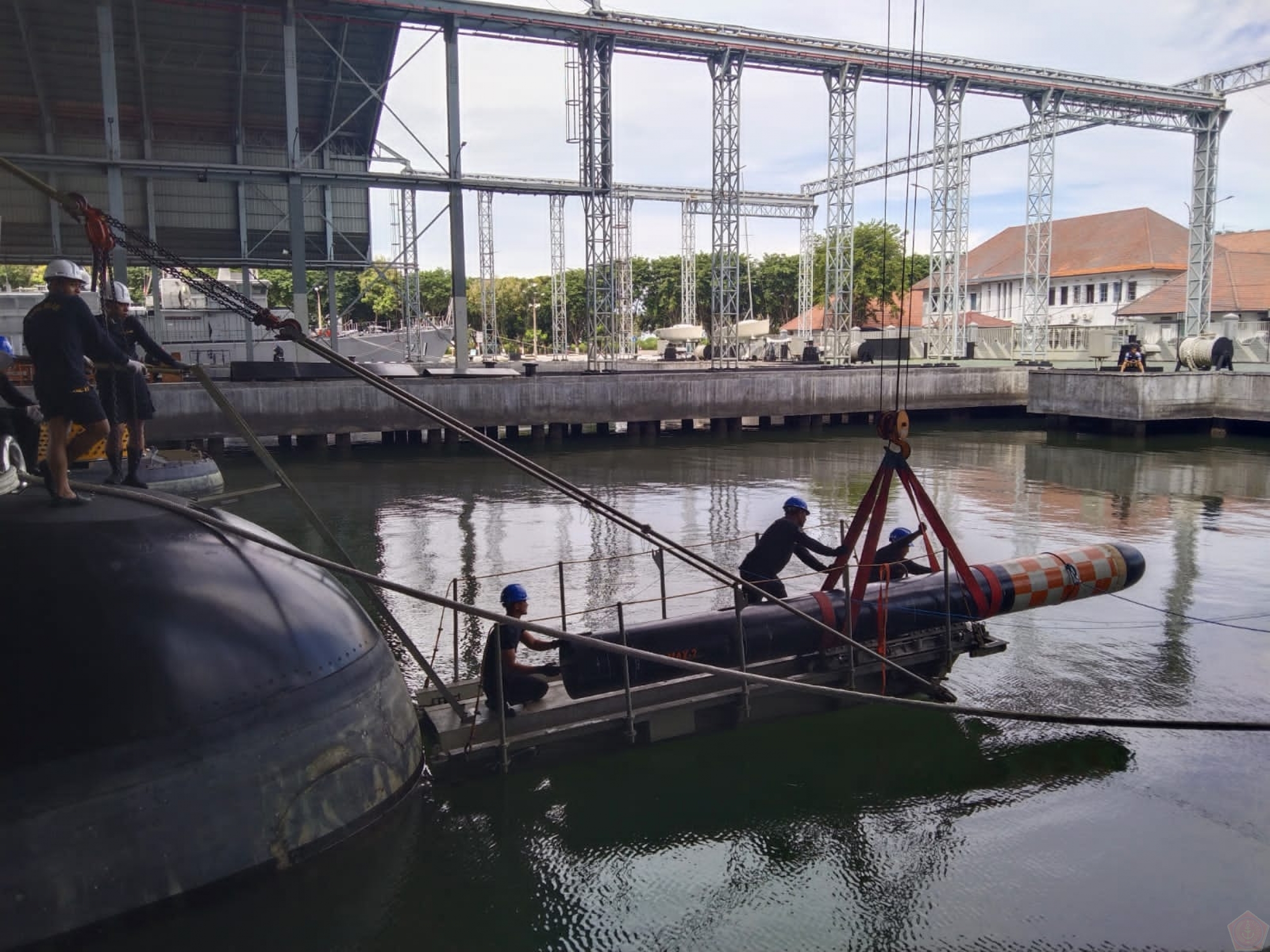
# What Is a Torpedo? The Underwater Missile Explained
Quick answer: A torpedo is a missile that swims instead of flies. It travels underwater with its own engine and brain, chasing submarines or ships. A torpedo doesn’t have to hit a ship’s strong side armor — it can detonate under the hull, breaking the ship in half.
How a Torpedo Works
| Part | Job |
|---|---|
| Battery or fuel engine | Spins the propeller |
| Propeller / pump-jet | Pushes through water |
| Guidance system | Active sonar, passive sonar, wire, or fiber-optic |
| Warhead | 200–500 kg of explosives |
Modern torpedoes travel at 50–100 km/h underwater for distances of 30–50 km. Some (like the Russian Shkval) use a supercavitation trick to reach 370 km/h — that’s like jet-skiing under water.
The Two Main Types
| Type | Used Against | Examples |
|---|---|---|
| Heavyweight (533 mm) | Submarines and large ships | Mk 48, UGST, F21, Akya |
| Lightweight (324 mm) | Submarines, dropped from helicopters/ships | Mk 54, Stingray, A244, ORKA |
How a Torpedo Finds Its Target
Three main methods:
- 1. Wire-guided — a thin wire connects the torpedo to the launching sub; the sub’s sonar guides it
- 2. Active sonar — torpedo sends out “pings,” listens for echoes
- 3. Passive sonar — torpedo listens for the target’s noise (engine, propeller)
Wire-guided is most precise; wire-then-active is most common in modern designs.
Why Torpedoes Are So Dangerous
A modern heavyweight torpedo doesn’t hit the ship’s side — it explodes under the keel. The blast creates a giant gas bubble that lifts the ship, then collapses, snapping the hull. A single Mk 48 can break a destroyer in two.
This is what sank the Argentine cruiser ARA General Belgrano in 1982 (two Mk 8 torpedoes from HMS Conqueror, ~323 killed) — the only nuclear-submarine-vs-ship sinking in history.
Famous Torpedoes
| Name | Country | Length | Speed | Range |
|---|---|---|---|---|
| Mark 48 | USA | 5.8 m | 55+ knots | ~50 km |
| UGST / Fizik | Russia | 7.2 m | 50 knots | 50 km |
| Black Shark | Italy | 6.3 m | 50 knots | 50 km |
| F21 | France | 6 m | 50+ knots | 50 km |
| Type 89 | Japan | 5.8 m | 70 knots | 50 km |
| Akya | Türkiye | 6.2 m | 45+ knots | 50+ km |
| VA-111 Shkval | Russia | 8.2 m | 370 km/h | 11 km |
| Status-6 / Poseidon | Russia | 24 m | 100+ knots | 10,000 km (nuclear) |
What Is Supercavitation?
Water is heavy and slows everything down. The Russian Shkval torpedo solves this by creating a bubble of gas around itself (using nose-cone gas jets and high speed). Inside the bubble, there’s almost no water — so drag drops 90%. The result: 370 km/h underwater, ten times faster than normal torpedoes.
But it’s loud, hard to guide, and short-range. It’s essentially a kamikaze weapon for emergencies.
Poseidon — The “Doomsday Torpedo”
Russia’s Poseidon (Status-6) is in a class of its own:
- 24 meters long (size of a small submarine)
- Nuclear-powered (unlimited range)
- Nuclear warhead (multi-megaton)
- Designed to detonate underwater near a coastal city, causing a radioactive tsunami
There is no defense against it. This is one of the most controversial weapons in development.
How Ships Defend Against Torpedoes
- Sonar — listen for the torpedo’s engine and propeller
- Towed decoys — fake propeller sound trails
- Hard-kill systems — anti-torpedo torpedoes (Russian Paket-NK, US SLQ-25)
- Speed and maneuvering
- Helicopters — drop their own torpedoes on the attacker
But once a torpedo is locked and close, escape is very difficult.
Türkiye’s Akya — Quick Spotlight
Akya (Roketsan, with Aselsan & TÜBİTAK SAGE) is Türkiye’s first indigenous heavyweight torpedo:
- 533 mm, ~6.2 m long
- Range 50+ km
- Wire-guided + active/passive sonar
- For Türkiye’s Reis-class submarines (Type 214TN)
A Kid-Friendly Analogy
A missile is a hawk flying above the ocean. A torpedo is a shark hunting under it. Both follow their prey, both kill instantly when they catch up.
Image Suggestions
- 1. Featured: Torpedo with bubble trail underwater
- 2. Cross-section: motor, fuel, sonar nose, warhead
- 3. Keel-break diagram (bubble under hull)
- 4. Supercavitation Shkval illustration
- 5. Akya being loaded into Reis-class submarine
Related Articles
- What is a submarine?
- What is sonar?
- What is the Akya torpedo?
- What is supercavitation?
- What is anti-submarine warfare (ASW)?