The US Moves to Build More SM-3s: Boeing Signs Seven-Year Framework Deals for Avionics and Ejectors

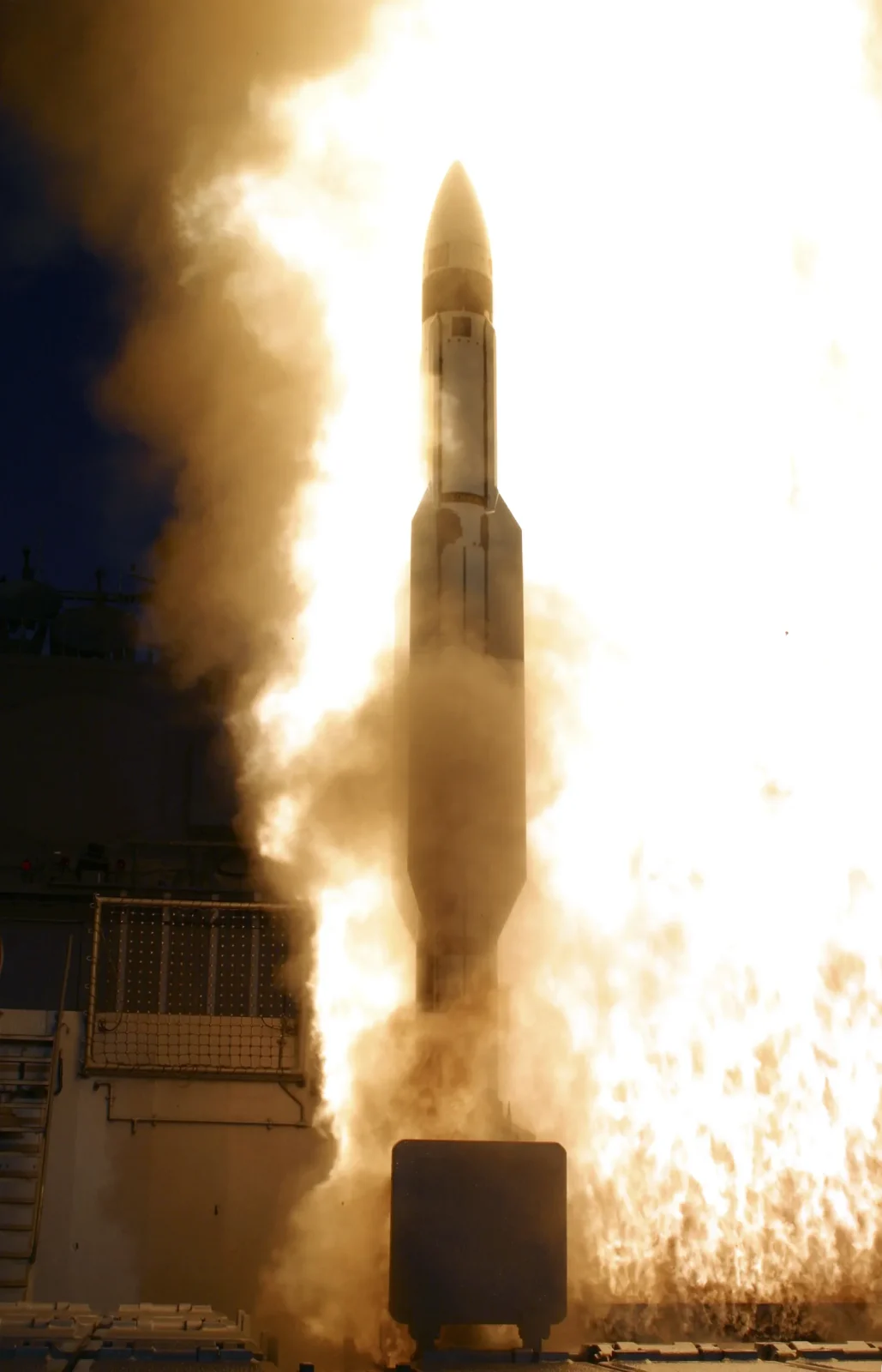
Boeing has signed seven-year framework agreements to increase production of avionics and ejector assemblies for the SM-3 ballistic missile interceptor. The agreements were reached in coordination with Raytheon, the weapon’s prime contractor, and the US defence department.
What the agreements cover
Boeing sits in the SM-3 supply chain rather than at the top of it, supplying the interceptor’s avionics package and the ejector assemblies that separate stages during flight. The frameworks let long-lead components be ordered before a formal multi-year contract is in place — a way of getting ahead of the queue rather than waiting for the paperwork.
Two variants are in scope: the SM-3 Block IB and the larger, longer-reaching SM-3 Block IIA, the latter developed jointly by the United States and Japan.
Bob Ciesla, vice president of Boeing Precision Engagement Systems, framed the value plainly: the arrangement “gives us a clear demand signal to build and deliver SM-3 interceptors” at the required levels. Neither contract value nor target production rates were disclosed.
What the SM-3 does
The SM-3 is the exo-atmospheric interceptor of the Aegis Ballistic Missile Defense architecture — it meets its target outside the atmosphere. It carries no explosive warhead, relying instead on kinetic hit-to-kill: it destroys the target by colliding with it.
The missile launches from Mk 41 vertical launch cells. The same cell architecture appears ashore, at the Aegis Ashore sites in Deveselu, Romania and Redzikowo, Poland, which form the fixed leg of NATO’s European missile defence.
How the architecture works
What makes the SM-3 useful is the system around it. Aegis takes a track from the AN/SPY radar family, computes the intercept point and directs the interceptor there; the kinetic kill vehicle then discriminates the target with its own seeker and makes the final correction.
Crucially, that data is not confined to a single ship. Aegis-equipped vessels and shore sites can be networked, so a target detected by one platform’s radar can be engaged with another platform’s missile. NATO’s European architecture is built on exactly this principle.
Why now
Several pressures converge. Stocks have been drawn down: US Navy destroyers fired SM-3s during Iranian ballistic missile attacks in 2024, the first combat use of the interceptor. Expending a munition that costs tens of millions of dollars per round in a live engagement started the inventory-depth conversation earlier than planned.
The architecture is also expanding. Assessments prepared under the US layered missile defence effort known as Golden Dome point to an interceptor inventory too thin to feed the planned structure. And in the Indo-Pacific, Japan’s Aegis destroyers and South Korea’s Sejong the Great class continue to broaden the user base.
The cost problem
Ballistic missile defence carries a permanent cost asymmetry: the attacker fires a relatively cheap missile, the defender spends tens of millions intercepting it. Sustained saturation attacks strain the defender economically long before they strain them militarily.
The answer being pursued is to scale cost to threat rather than lean on one layer. SM-3 handles high-altitude ballistic threats, SM-6 and Patriot the middle tier, and far cheaper interceptors and electronic warfare the low end against drones. Increasing SM-3 output feeds the most expensive — and least substitutable — end of that stack.
Sources
- Boeing statement, 26 August 2026
- Statements by Bob Ciesla, vice president, Boeing Precision Engagement Systems
- US Missile Defense Agency, Aegis BMD programme information