Ukraine’s Flamingo Missile Strikes 1,200 Km Away: Russia’s Only Ejection Seat Manufacturer Caught Fire

Ukrainian-made FP-5 Flamingo cruise missiles struck the Avitek defense factory in Kirov, located 1,200 kilometers inland, on the morning of July 24. The facility is the sole serial ejection seat manufacturer for all of Russia’s fighter and attack aircraft; it also produces Tor air defense missile modules and components for the Kh-101 cruise missile.
- What happened: On the morning of July 24, 2026, Flamingo cruise missiles struck the Avitek facility in Kirov.
- Range: The target is located ~1,200 km inland from the Ukrainian border; the declared range of the Flamingo is ~3,000 km.
- Casualties: According to local authorities, 6 workers were killed, and 26 were injured; a fire broke out at the facility.
- Why it matters: Avitek is the sole serial ejection seat manufacturer for all of Russia’s combat aircraft; it also produces Tor SAM and Kh-101 components.
- Context: The strike is the latest link in the Flamingo’s deep strike campaign against the Russian defense industry.
A Factory 1,200 Kilometers Beyond the Border
Kirov is nearly a country’s width away from the Ukrainian front; this is precisely why the Russian defense industry had shifted its precision manufacturing to such cities. On the morning of July 24, this security calculation was disrupted. Ukraine’s domestically produced FP-5 Flamingo cruise missiles hit the Avitek facility in the industrial zone of the city, resulting in a major fire. Local authorities confirmed that six workers were killed and 26 were injured.
The choice of target is not coincidental. Avitek is a facility that is not widely known but stands at the backbone of the Russian air power: the sole serial ejection seat (ejection seat) manufacturer for all of the country’s fighter and attack aircraft. A pilot’s survival after being shot down directly depends on the seats produced by this facility. Disruption in the production chain directly affects Russia’s capacity to compensate for aircraft losses as well as its ability to maintain its pool of pilots.
The facility’s production list does not end here. Avitek also produces 9M334 missile modules for the Tor short-range air defense system, 526M gas generators used in the Kh-101 cruise missile and Kh-59 tactical missile, and various air target simulators along with SAM components. Thus, a single strike hit a node that supplies both Russia’s attack missile procurement and its own air defense inventory.
The Flamingo Campaign and Deep Strike Doctrine
This attack is not an isolated incident. Kiev has been using the Flamingo as a carrier for a systematic campaign against Russian defense industry infrastructure in recent months. The same missile had previously targeted the Titan-Barrikady facility in Volgograd (June 27, 2026) and the Votkinsk Machine Manufacturing Plant (February 2026). The Kirov strike is one of the longest-range links in this chain.
The doctrine is clear: Ukraine is targeting the factories that produce these systems, going to the root of the supply chain instead of hunting down the systems on the front line one by one. Hitting a launch pad facility provides leverage equivalent to putting dozens of aircraft at risk simultaneously. This is an asymmetric calculation based on generating maximum strategic impact with a limited number of high-range missiles.
FP-5 Flamingo: Ukraine’s Long Arm
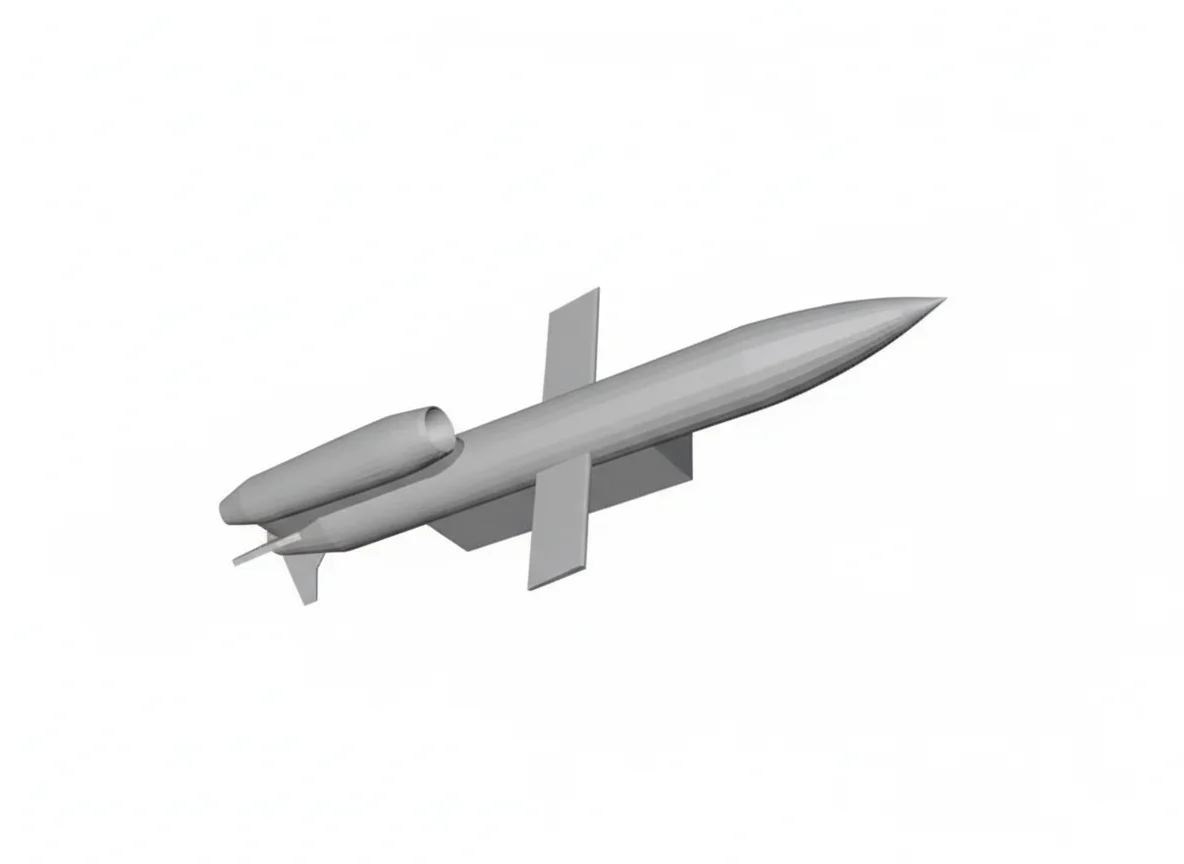
The Flamingo is one of the most notable domestic Ukrainian cruise missile programs that has rapidly matured during the war. The turbofan engine-powered missile can carry a warhead of up to 1,150 kg and has a declared range of approximately 3,000 km. These values make it a strategic strike tool capable of reaching command, logistics, and industrial targets far beyond the front line. Along with systems like Peklo, Ruta, and the previously introduced Bars, Kiev is establishing a domestic deep strike ecosystem that reduces dependence on imported missiles.
| Feature | FP-5 Flamingo (declared) |
|---|---|
| Type | Long-range cruise missile |
| Range | ~3,000 km |
| Warhead | Up to ~1,150 kg |
| Propulsion | Turbofan engine |
| Guidance | INS/satellite navigation (jam-resistant) |
| Manufacturer | Fire Point (Ukraine) |
The deployment of a domestic cruise missile capable of striking industrial facilities in Russia’s interior regions demonstrates that long-range precision strike capabilities are no longer the monopoly of just a few major powers. This scenario is also familiar to countries developing their own cruise missile families: Turkey’s SOM family developed by Roketsan and the expanding range of the GEZGİN cruise missile represent a similar domestic deep strike capability for Ankara.
Sources
- Militarnyi — “Flamingo Strikes Avitek Plant in Russia’s Kirov”
- Ukrinform — “Flamingo missiles strike sanctioned factory in Kirov”
- Kyiv Independent — “Military factory in Russia’s Kirov in flames after reported Flamingo attack”
- Ukrainska Pravda (Eng) — “Ukrainian Flamingo missile strikes Russia’s Kirov plant”