UK Defence Ministry Says Russia Has More Than 4,000 Nuclear Warheads Available for Use

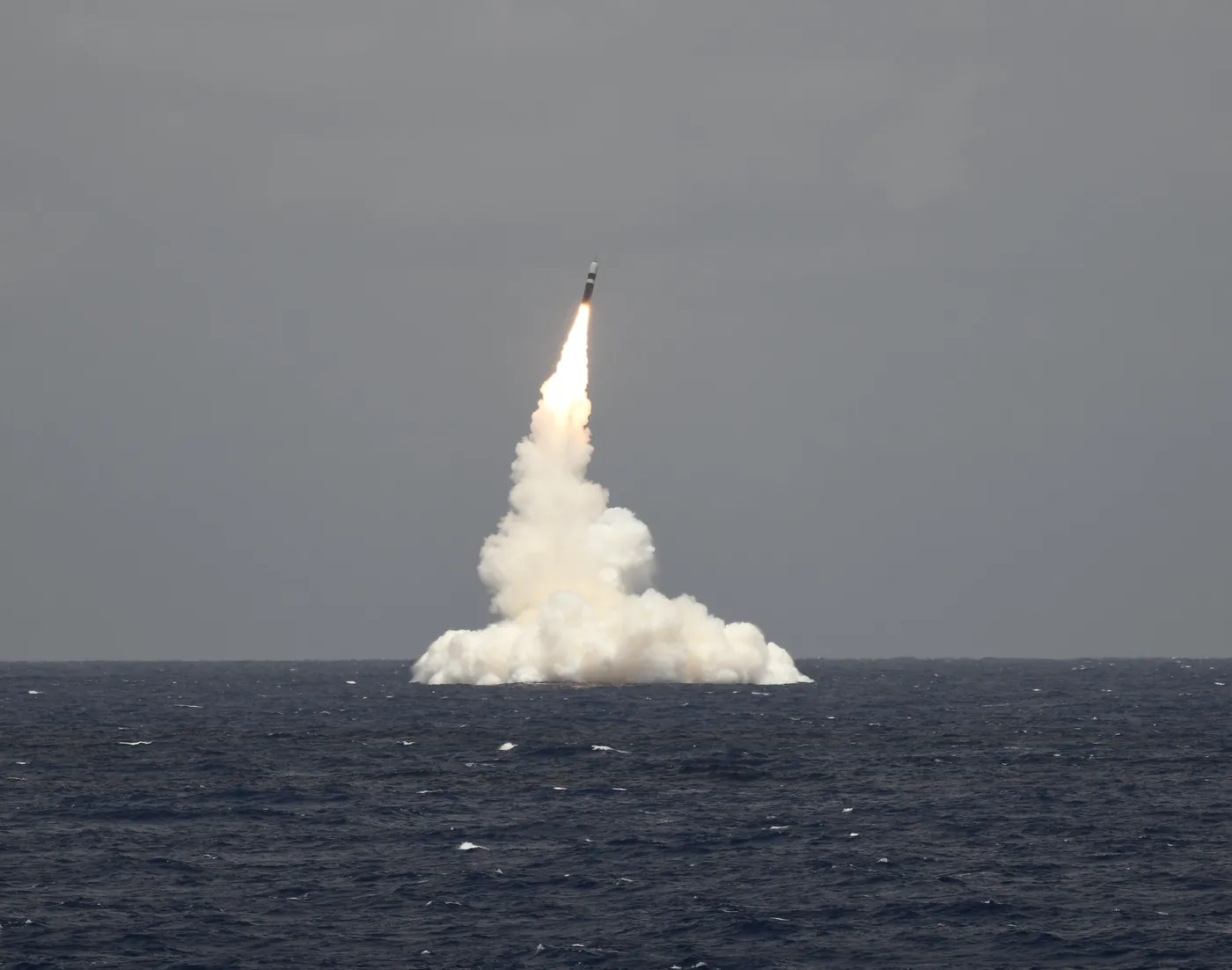
Russia has more than 4,000 nuclear warheads available for use and is expanding weapon systems capable of carrying either conventional or nuclear payloads, according to a new UK Ministry of Defence publication on Britain’s nuclear deterrent.
Where the figure comes from
The assessment appears in “The UK’s nuclear deterrent: A National Endeavour,” a guide published in August 2026 by the Defence Nuclear Organisation. The document sets out the government’s approach to nuclear deterrence and the renewal of Britain’s defence nuclear capabilities.
The ministry says Moscow is investing heavily in modernising its nuclear forces. Russia can deliver warheads at intercontinental range through its strategic triad and at shorter ranges through land-, sea- and air-based platforms. The document describes Russia as “increasingly aggressive” and accuses it of irresponsible nuclear rhetoric.
The dual-capable problem
The publication reserves particular emphasis for Russia’s novel and disruptive dual-capable systems — weapons that can be fitted with either a conventional or a nuclear warhead, making the intent behind any launch harder to read.
The ministry states that Russia has used dual-capable systems in Ukraine. That refers to platforms able to carry different warhead types; it is not a statement that nuclear weapons have been used in the conflict.
The ambiguity is itself the strategic problem. Early-warning systems detect a launch but cannot see what is on the front end. That compresses the time available to decision-makers and widens the space for miscalculation.
China, Iran and North Korea
The same document puts China’s current stockpile at around 600 warheads across land, sea and air delivery systems, and expects it to more than double by 2035 under what it calls an unprecedented programme of rapid nuclear expansion.
Iran’s escalating nuclear programme has brought it closer to producing weapons-grade material, the guide says. North Korea continues to develop nuclear weapons and longer-range missiles, and remains the only state to have detonated a nuclear weapon in the 21st century.
How to read the numbers
Warhead counts are compiled in different ways, and the distinction matters. “Available for use” covers deployed warheads together with those held in storage that could be mated to delivery systems at short notice. Retired warheads awaiting dismantlement fall outside it.
That is why the ministry’s figure of more than 4,000 can differ from total-stockpile estimates published by independent research bodies. The document is written as a threat assessment, not an inventory audit.
Britain’s own renewal
Having set out the threat, the guide turns to London’s response. The government is reprioritising the Defence Nuclear Enterprise on a scale not seen since the end of the Cold War, covering both the capabilities themselves and the industrial base behind them.
Britain runs its deterrent through a single leg. The land and air components were retired after the Cold War, and the capability today is entirely submarine-based, with at least one of four Vanguard-class ballistic missile submarines continuously on patrol. The Dreadnought class intended to replace them is scheduled to enter service in the early 2030s.
Deliberate ambiguity
The UK maintains an independent, minimum and credible deterrent assigned to the defence of NATO. It deliberately leaves unclear when, how and at what scale it might contemplate use, saying only that this would be considered in extreme circumstances of self-defence, including the defence of NATO allies, and that only the prime minister can authorise it.
Not defining the threshold is meant to deny an adversary the room to calculate what falls just below it. The same ambiguity also raises the risk of misreading in a crisis — a tension the doctrine has carried since it was adopted.
What it means for the alliance
The document should be read as a national deterrent tied firmly into a NATO frame. For allies on the alliance’s south-eastern flank, including Turkey, the practical consequence is a hardening of NATO’s collective assessment of Russian nuclear posture.
A denser mix of dual-capable platforms around the Black Sea and eastern Mediterranean raises the premium on early warning, missile defence and situational awareness — the layer Turkey has been building out through its own integrated air and missile defence work.
Sources
- UK Ministry of Defence, Defence Nuclear Organisation, “The UK’s nuclear deterrent: A National Endeavour,” August 2026
- UK Ministry of Defence official publications
Image: Trident II D5 submarine-launched ballistic missile (illustrative). Source: Wikimedia Commons.