General Dynamics Hands the US Army Its First XM30 Wolf Prototype

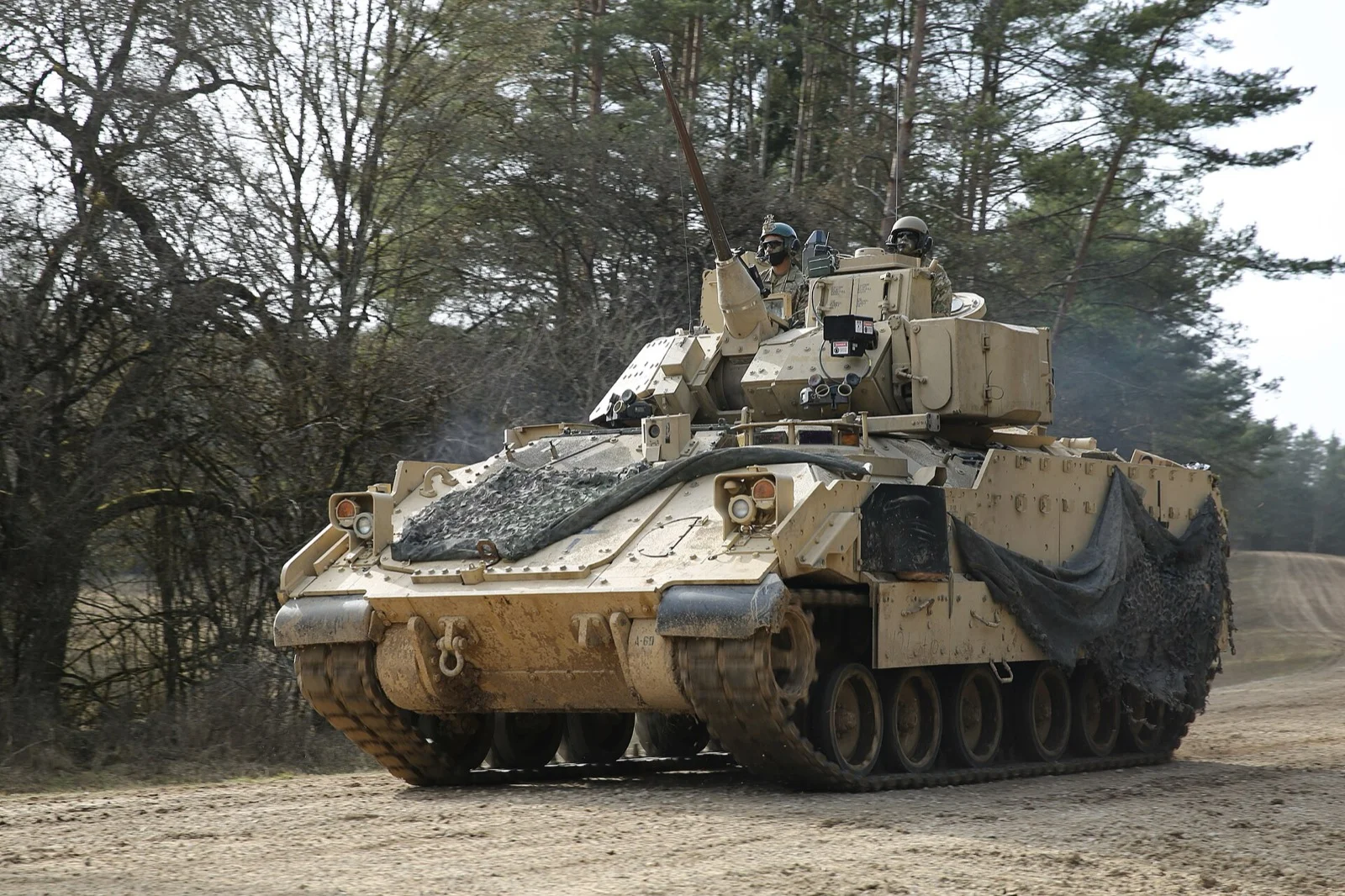
General Dynamics Land Systems has delivered the first prototype of the XM30 “Wolf” mechanised infantry combat vehicle to the US Army at Aberdeen Proving Ground, Maryland. The handover, announced on 29 August 2026, is the first hardware milestone in a programme meant to retire the M2 Bradley after more than four decades of service.
A programme with a long shadow
The Army has tried to replace the Bradley before and failed twice. Future Combat Systems collapsed under its own ambition in 2009; Ground Combat Vehicle followed it into cancellation in 2014. The current effort began as the Optionally Manned Fighting Vehicle in 2019 and was itself restarted after industry judged the original weight and schedule requirements unworkable.
The rewritten programme, now called XM30, is a two-horse race between General Dynamics Land Systems and American Rheinmetall Vehicles. Contracts awarded in 2023 oblige each firm to build between seven and eleven prototypes for competitive trials, with a production decision to follow.
What GDLS has built
XM30 is a tracked, optionally manned vehicle with a crew of two rather than the Bradley’s three, plus six fully equipped dismounts. Cutting a crew position depends on automation: a sensor suite giving 360-degree situational awareness feeds displays that let two soldiers do what three did before.
The main armament is a 50 mm automatic cannon, a substantial step up from the Bradley’s 25 mm M242 Bushmaster and a direct answer to the improved protection appearing on contemporary armoured vehicles. Anti-tank guided missiles and an active protection system complete the package.
Propulsion is hybrid-electric. The practical benefits are silent watch with the engine shut down, a reduced thermal signature, and — the argument the Army makes most often — electrical headroom for the power-hungry systems it expects to bolt on later. The vehicle is required to use an open systems architecture so that software and subsystems can be replaced across its life without returning to a single vendor.
Lessons the design absorbed
Two requirements in the specification read as direct responses to the war in Ukraine. The first is teaming with uncrewed systems: launched effects and escorting ground robots are meant to scout beyond the crew’s line of sight, because small drones have proved ruthlessly effective at finding armour. The second is top-attack protection, which is why active protection is designed in rather than offered as a later fit.
What happens next
Further prototypes are expected at Fort Hood, Texas, where units of the 1st Cavalry Division will run XM30 through field trials alongside M1E3 Abrams prototypes. Testing both at once is deliberate: it lets the Army measure the logistics and maintenance burden of its next armoured brigade as a whole rather than vehicle by vehicle.
The technical agenda on display — remote turrets, larger calibres, designed-in active protection — is the same one shaping armoured vehicle work across NATO. A shift towards 50 mm at the top end would eventually reshape ammunition and turret procurement for allies too.
Sources
- General Dynamics Land Systems statement, 29 August 2026
- US Army XM30 programme briefings