



What Is Turkish Aerospace (TUSAŞ)? Company Overview

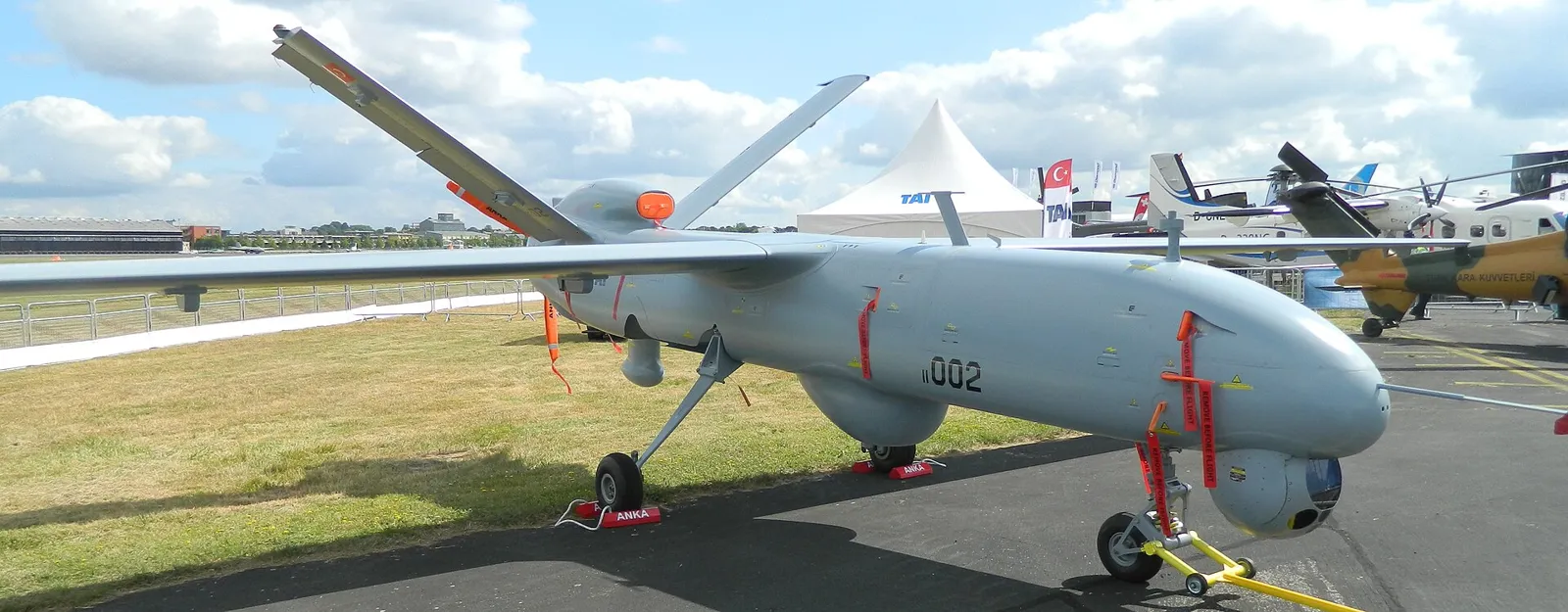
Turkish Aerospace (Türk Havacılık ve Uzay Sanayii A.Ş., TUSAŞ; in English Turkish Aerospace Inc., TAI) is Turkey’s state-controlled prime contractor for aircraft, helicopters, drones and space systems. Founded in 1973 and headquartered in Kahramankazan, Ankara, it develops platforms such as the KAAN fighter, ANKA UAV and Gökbey helicopter.
| Turkish Aerospace — At a Glance | |
|---|---|
| Full name | Türk Havacılık ve Uzay Sanayii A.Ş. (TUSAŞ) / Turkish Aerospace Inc. (TAI) |
| Founded | 28 June 1973 (TAI incorporated 1984; merged 2005) |
| Headquarters | Kahramankazan, Ankara, Turkey |
| Chairman | Ömer Cihad Vardan |
| President & CEO | Dr. Mehmet Demiroğlu |
| Core business | Aircraft, helicopters, UAVs and space systems |
| Employees | ≈17,000 (≈7,000 engineers, ≈6,000 technicians) |
| Ownership | TSKGV 54.49%, SSB 45.45%, THK 0.06% (not publicly traded) |
| 2024 defence revenue | ≈$2.2 billion |
What is Turkish Aerospace?
Turkish Aerospace is the largest aerospace and defence company in Turkey and the country’s designated prime contractor for fixed-wing aircraft, rotorcraft, unmanned systems and space hardware. Its two names refer to the same company: the Turkish name is Türk Havacılık ve Uzay Sanayii A.Ş. (abbreviated TUSAŞ), and the English name is Turkish Aerospace Inc. (abbreviated TAI). The organisation traces its roots to 28 June 1973, when TUSAŞ was established to build a national aviation industry. In 1984, a separate company known as TAI was incorporated as a Turkish–US joint venture to co-produce F-16 fighters under licence. In 2005, TUSAŞ and TAI were consolidated into a single entity operating under the name Turkish Aerospace Inc., which is why the abbreviations TUSAŞ and TAI are used interchangeably today. The company is headquartered in Kahramankazan, Ankara, and is chaired by Ömer Cihad Vardan, with Dr. Mehmet Demiroğlu serving as President and CEO. Turkish Aerospace acts as the platform integrator for many of Turkey’s flagship defence programmes, meaning it designs, assembles and tests complete air vehicles while sourcing major subsystems from specialised partners.
What Does Turkish Aerospace Do?
Turkish Aerospace designs, develops, manufactures, integrates and supports air platforms across several categories. Its work spans manned combat and training aircraft, attack and utility helicopters, unmanned aerial vehicles and space systems. As a prime contractor it takes responsibility for the airframe, systems integration, flight testing and life-cycle support, while relying on domestic and foreign suppliers for engines, sensors and weapons. Its main business lines include:
- Fighter and jet aircraft — the KAAN fifth-generation fighter and the HÜRJET jet trainer / light attack aircraft.
- Trainer aircraft — the HÜRKUŞ turboprop basic trainer, already in service.
- Unmanned aerial vehicles — the ANKA and ANKA-S MALE UAVs, the twin-engine AKSUNGUR and the ANKA-3 flying-wing jet UAV.
- Helicopters — the T129 ATAK attack helicopter, the T625 Gökbey utility helicopter and the T929 ATAK-2 heavy attack helicopter.
- Space systems — contributions to the GÖKTÜRK reconnaissance satellites, the İMECE observation satellite and structural work for TÜRKSAT 6A.
- Modernisation and support — upgrades, maintenance and structural manufacturing for existing fleets and international partners.
The table below summarises Turkish Aerospace’s key platforms and their development status as of 2026. Where a platform is described as flight-testing or preparing for serial production, prototype figures should not be read as final production values.

Turkish Aerospace is not listed on any stock exchange; it is owned by Turkish state and defence-sector institutions. The figures below reflect the most recent official and industry-reported data.
How Many Employees Does Turkish Aerospace Have?
Turkish Aerospace employs approximately 17,000 people according to 2024-2025 figures, making it one of the largest single-site employers in the Turkish defence industry. Of this workforce, roughly 7,000 are engineers and around 6,000 are technicians, reflecting the company’s research- and production-intensive profile. Some 2026 sources cite a slightly lower headcount of around 16,180, so the exact figure varies by reporting date. The concentration of engineering staff supports the company’s simultaneous work on fighters, helicopters, UAVs and space programmes at its Kahramankazan campus in Ankara.
Relationship with Other Defence Companies
Turkish Aerospace is the platform prime contractor, not the maker of every subsystem inside its aircraft. Responsibility for major subsystems is shared across Turkey’s defence ecosystem: radar, avionics, electro-optical and electronic-warfare systems come mostly from ASELSAN; engines are supplied by TEI together with foreign manufacturers — for example, the KAAN prototype flies with two General Electric F110 engines, while a fully indigenous engine remains a target rather than a delivered product. Software and simulation work involves HAVELSAN, and missiles and guided weapons are provided by ROKETSAN and TÜBİTAK SAGE. This division of labour means Turkish Aerospace integrates and certifies complete platforms while partners supply the specialised systems within them.
Prototype data should not be confused with serial-production values, and an indigenous-engine target is not the same as a ready engine. Ongoing negotiations do not constitute confirmed exports. Where technical figures have not been released by the company or the state, they are treated here as not officially disclosed.
Frequently Asked Questions
What does Turkish Aerospace do?
Turkish Aerospace (TUSAŞ/TAI) designs, develops, manufactures and integrates aircraft, helicopters, unmanned aerial vehicles and space systems. As Turkey’s aerospace prime contractor, it is responsible for airframes, systems integration, flight testing and life-cycle support. Its portfolio includes the KAAN fighter, HÜRJET and HÜRKUŞ trainers, ANKA and AKSUNGUR UAVs, and the ATAK and Gökbey helicopters, alongside satellite and structural space work.
Is TAI the same as TUSAŞ?
Yes. TUSAŞ (Türk Havacılık ve Uzay Sanayii A.Ş.) and TAI (Turkish Aerospace Inc.) are two names for the same company. TUSAŞ was founded in 1973, while a separate TAI joint venture was incorporated in 1984 for F-16 co-production. The two were merged in 2005 under the name Turkish Aerospace Inc., so both abbreviations now refer to a single organisation.
Is Turkish Aerospace state-owned or private?
Turkish Aerospace is effectively state-controlled. Its shares are held by the Turkish Armed Forces Foundation (TSKGV) with 54.49%, the Presidency of Defence Industries (SSB) with 45.45%, and the Turkish Aeronautical Association (THK) with 0.06%. It is a joint-stock company but is not privately owned in the commercial sense, and its ownership sits entirely within Turkish public and defence-sector institutions.
When and why was Turkish Aerospace founded?
Turkish Aerospace was founded on 28 June 1973 to establish a national aviation and defence-manufacturing capability for Turkey. In 1984 the TAI joint venture was created with US partners to build F-16 fighters under licence, transferring know-how to the country. In 2005 the two entities merged, forming today’s Turkish Aerospace Inc. as the consolidated national prime contractor for air and space platforms.
Where is Turkish Aerospace headquartered?
Turkish Aerospace is headquartered in Kahramankazan, a district of Ankara, Turkey. Its main campus houses design offices, production halls, integration lines and flight-test facilities where its fighters, helicopters, UAVs and space hardware are developed and assembled. Ankara is also the centre of Turkey’s wider defence-industrial cluster, placing the company close to partners such as ASELSAN, ROKETSAN and TEI.
How many employees does Turkish Aerospace have?
Turkish Aerospace employs approximately 17,000 people according to 2024-2025 figures, including around 7,000 engineers and about 6,000 technicians. Some 2026 sources report a slightly lower figure of roughly 16,180. The large share of engineering staff reflects the company’s simultaneous work across multiple advanced programmes, from the KAAN fighter to unmanned and space systems.
Which aircraft does Turkish Aerospace make?
Turkish Aerospace builds a broad range of platforms: the KAAN fifth-generation fighter, the HÜRJET jet trainer and HÜRKUŞ turboprop trainer, the ANKA, AKSUNGUR and ANKA-3 unmanned aerial vehicles, and the T129 ATAK, T625 Gökbey and T929 ATAK-2 helicopters. It also contributes to space programmes including the GÖKTÜRK reconnaissance satellites, İMECE and structural work for TÜRKSAT 6A.
Sources
- Turkish Aerospace official website — tusas.com
- Presidency of Defence Industries (SSB) — programme and procurement disclosures
- Defense News Top 100 (2025 edition) — defence revenue and global ranking
- Anadolu Agency and Daily Sabah — corporate and programme reporting
- Turkish Armed Forces Foundation (TSKGV) — shareholding information
- Wikipedia, “Turkish Aerospace Industries” — for discovery and cross-reference