Sri Lanka’s Military Strength: How Many Tanks, Jets and Ships? (2026)

Sri Lanka’s military inventory is one of the sharpest “large in people, thin in technology” cases in this series. Sitting astride some of the Indian Ocean’s busiest shipping lanes, the island emerged from a civil war that ended in 2009 with a heavy land army and one of the most boat-dense navies in the world. In the same inventory, the columns for air-defence missiles, submarines, frigates, self-propelled artillery and anti-ship missiles are all empty. The 2030 restructuring plan announced after the 2022 economic crisis is aimed precisely at reversing that imbalance — fewer people, more technology.
At a Glance
- Active personnel: ≈ 346,000 active troops and ≈ 90,000 reservists; ≈ 436,000 in total
- Global ranking: 68th of 145 countries in the 2026 Global Firepower list (power index 1.3822)
- Main battle tanks: ≈ 87 (built around the T-55AM2); zero self-propelled artillery
- Military aircraft: ≈ 90 aircraft; only 6 combat jets and zero attack aircraft
- Air-defence missiles: No air-defence missiles in the inventory; air defence rests entirely on gun systems
- Naval power: ≈ 275 naval units, 259 of them patrol craft; zero submarines, frigates or corvettes
Note: The inventory figures below are approximate values drawn from open sources such as Global Firepower, the IISS Military Balance and SIPRI.
About the Sri Lanka Armed Forces
The Sri Lanka Armed Forces comprise the Army, Navy and Air Force alongside coast guard and civil defence elements. Global Firepower’s 2026 data lists 346,000 active and 90,000 reserve personnel. Service-level open sources, reflecting the post-2024 drawdown, put the Army at roughly 150,000, the Navy at 40,000 and the Air Force at 26,000; the gap comes from differing definitions of what counts as active. Either way the conclusion is the same: relative to its population and economy, the island’s military is extraordinarily large.
The source of that size is the civil war fought against the Liberation Tigers of Tamil Eelam between 1983 and 2009. The conflict shaped the force in two directions: on one side a land army built around light infantry and protected wheeled vehicles, on the other a navy that is numerically vast but small in tonnage, designed to answer the Sea Tigers’ small-boat tactics. The seven-metre Arrow-class attack boats, designed and built by the navy itself for its Rapid Action Boat Squadron, became the emblem of that doctrine.
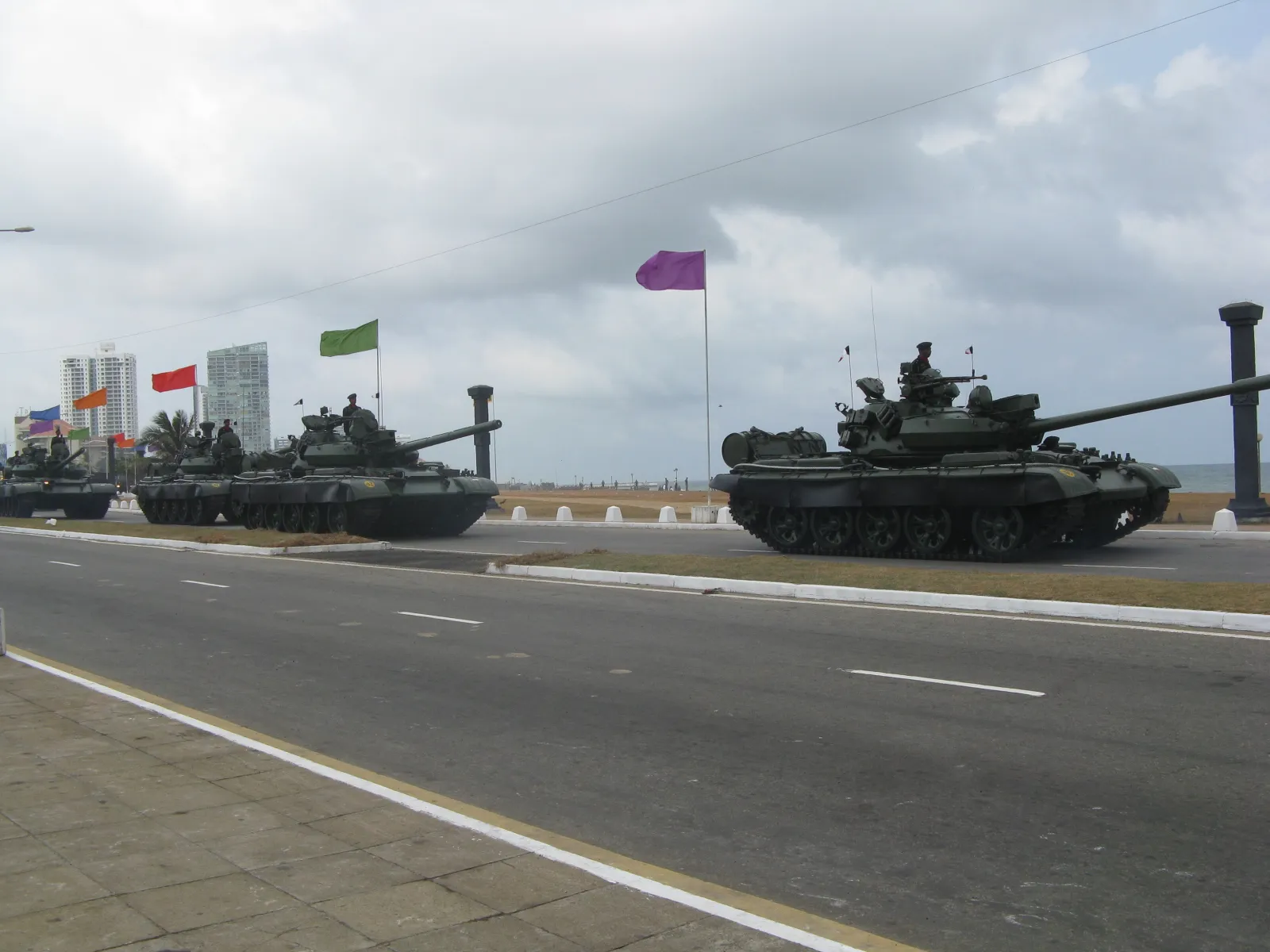
The heavy end of the inventory is narrow. The Army’s main battle tank line rests on T-55As acquired from Czechoslovakia in 1991 and T-55AM2s bought from the Czech Republic in 2000, supplemented by Chinese light tanks delivered in 1991. Artillery is dominated by Type 66 152 mm and Type 59-1 130 mm towed pieces plus Czech-built RM-70 multiple rocket launchers. Self-propelled howitzers register as zero in open sources. Anti-armour capability rests on Baktar-Shikan guided missiles, the Pakistani licence-built version of the Chinese HJ-8.
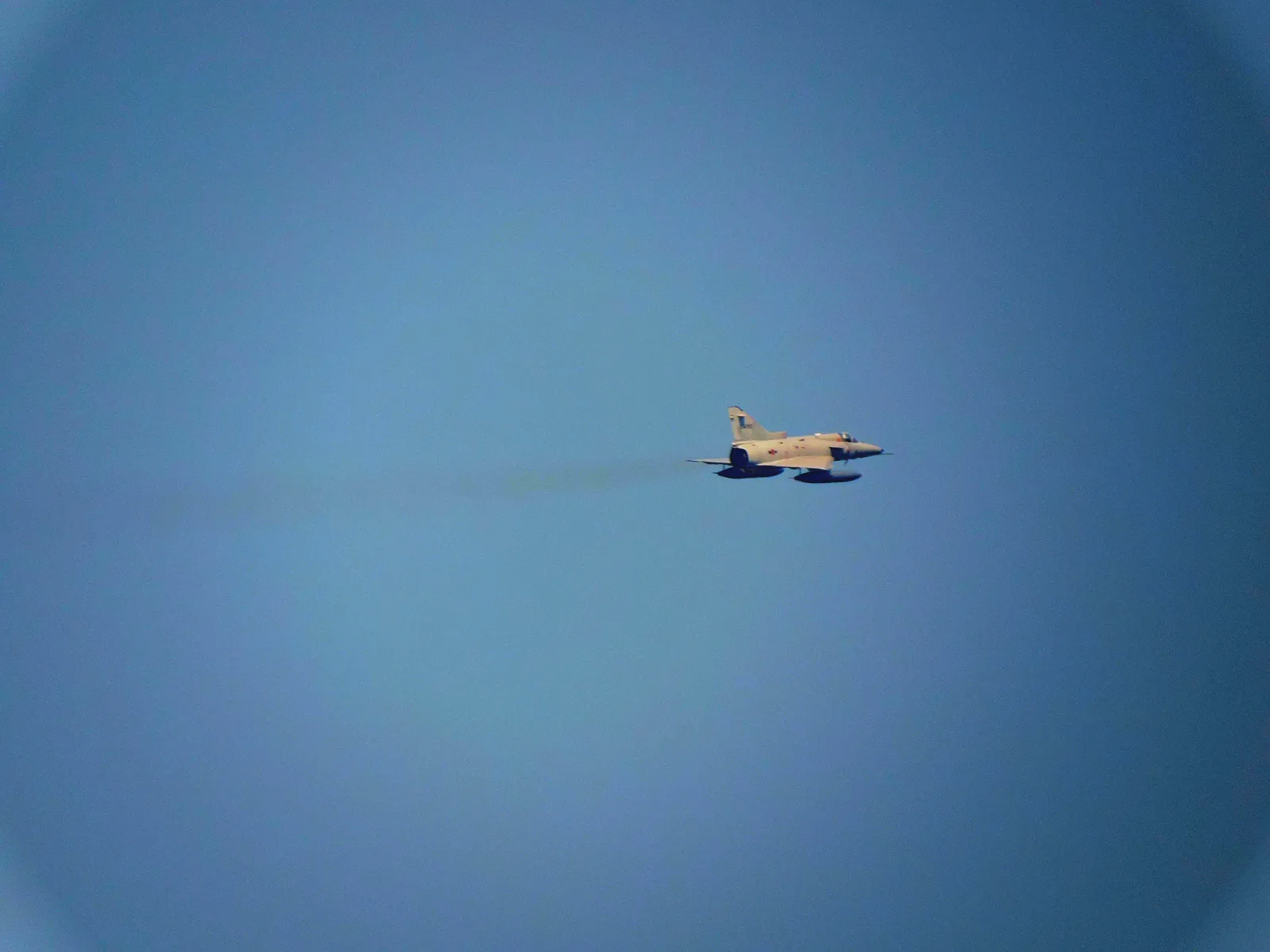
The Air Force is the most fragile link. The combat line consists of IAI Kfir C.2/C.7 fighters with No. 10 Squadron and Chengdu F-7GS/FT-7 interceptors with No. 5 Squadron; only a handful of each type is serviceable. The MiG-27M line, once the backbone of the strike role, is out of service. Rotary-wing assets include Mi-24/Mi-35P attack helicopters plus Mi-17, Bell 212, Bell 412 and Bell 206 transport and utility machines, although open sources report that much of the Mi-17 fleet is grounded by maintenance problems. Fixed-wing transport covers the C-130K, An-32B, Y-12 and Super King Air, with a Dornier 228 in the maritime patrol role. Unmanned systems comprise the indigenous Lihiniya MK I and MK II plus the Israeli-origin Blue Horizon 2.
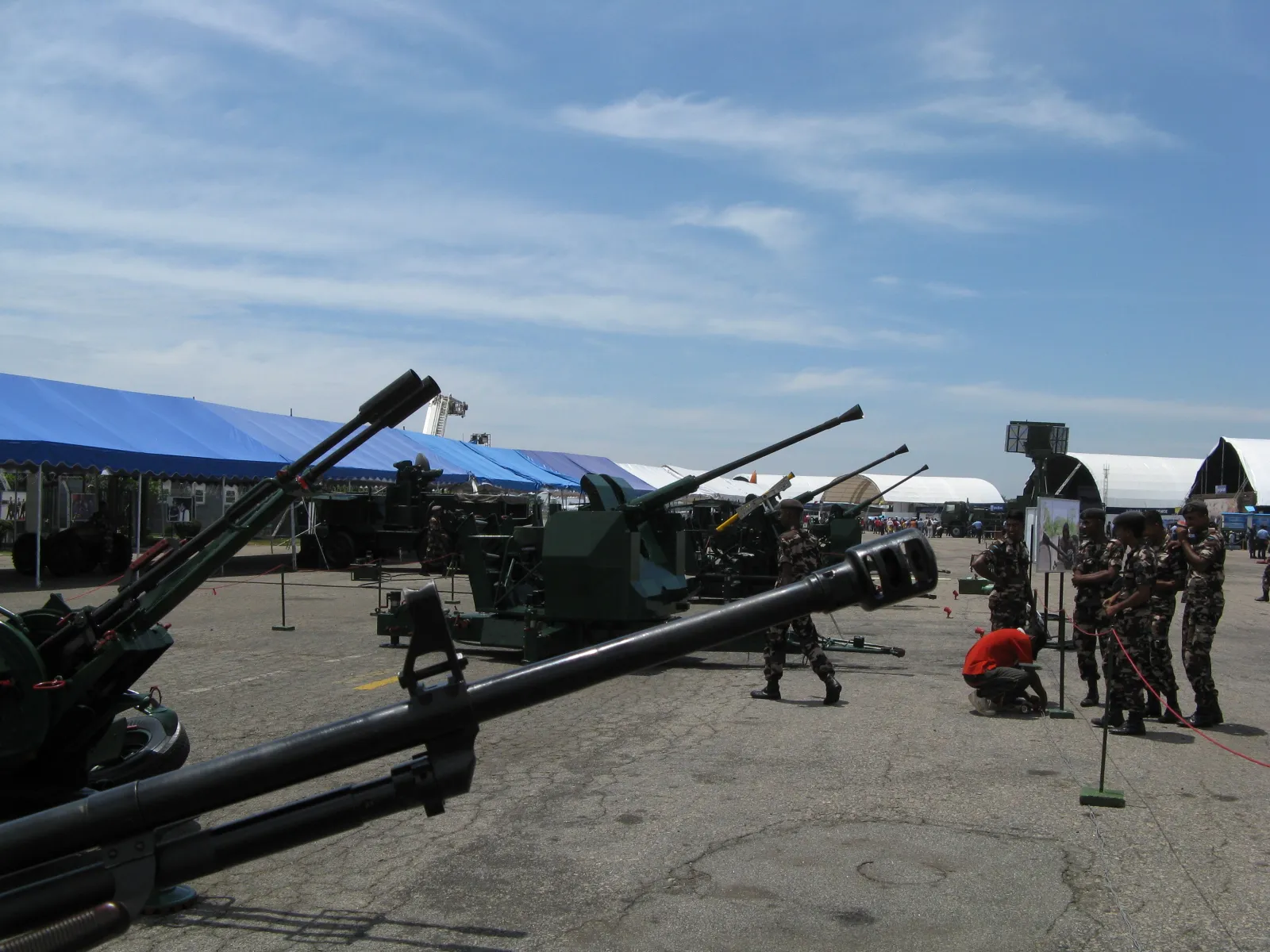
The most striking gap is in air defence. The Sri Lanka Artillery disbanded its anti-aircraft regiments in 1962, and the mission has since sat with the Land Based Air Defence Wing of the Air Force Regiment. The systems in that wing’s hands today amount to Bofors 40 mm L/70 guns plus ZU-23-2 23 mm and TCM-20 20 mm anti-aircraft pieces. In other words the country’s air defence is entirely gun-based and confined to low altitude; there is not a single medium- or long-range missile system. Ballistic missiles, cruise missiles and anti-ship missiles are equally absent.
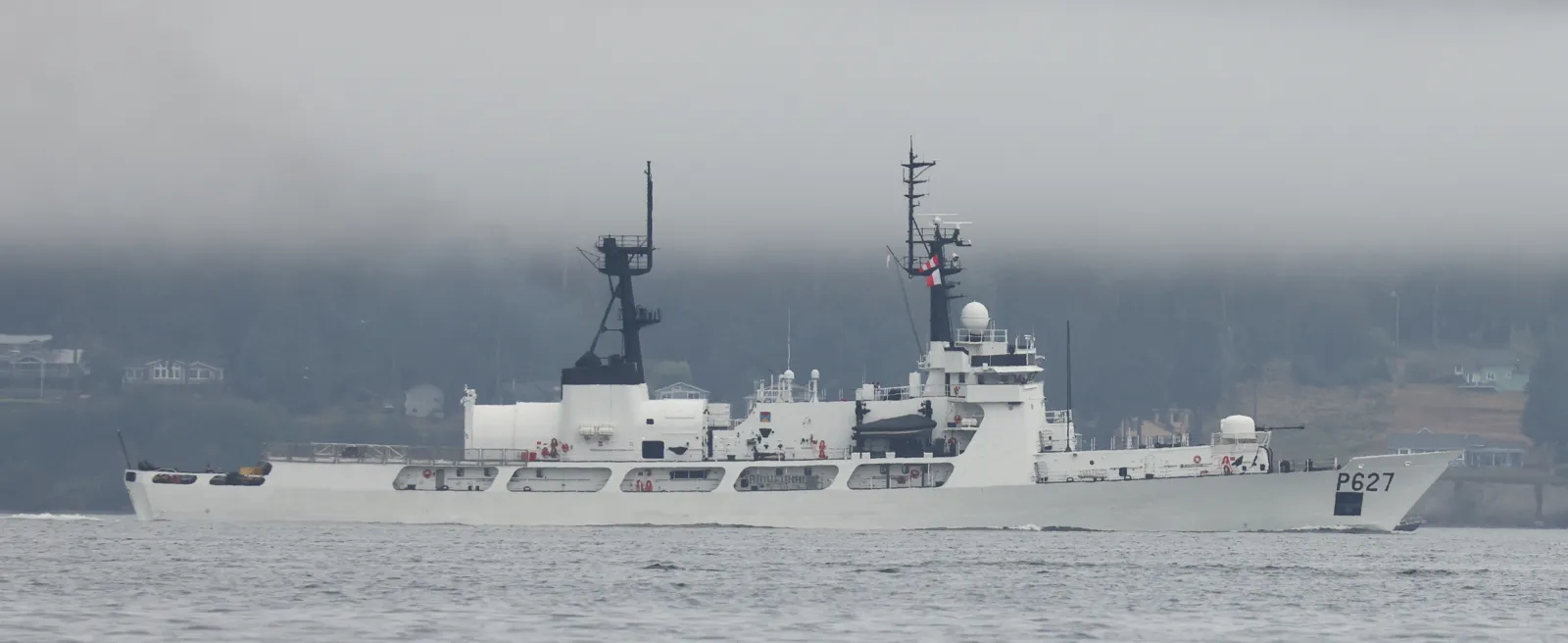
The navy is where the distance between numbers and capability is clearest. Global Firepower counts 275 naval units, 259 of them patrol craft. The five platforms shown in its frigate column are in practice advanced offshore patrol vessels: the Hamilton-class Gajabahu and Vijayabahu transferred from the US Coast Guard, Sayurala and Sindurala built at India’s Goa Shipyard, Sayura handed over by the Indian Navy, and the Chinese-built Parakramabahu. The fast attack force combines Israeli-origin Super Dvora Mk II/III and Shaldag classes with the indigenous Colombo class. Colombo Dockyard and the Naval Boat Building Yard can produce everything from landing craft to patrol boats — but that capability has yet to reach a missile-armed warship.
Finance is the constraint that will define the coming period. The 2026 defence budget allocates about $1.29 billion to recurrent expenditure against only some $203 million in capital spending; the roughly 3 per cent rise over 2025 becomes a real-terms decline once inflation and exchange rates are taken into account. President Anura Kumara Dissanayake’s 2030 plan foresees cutting the Army to 100,000, the Navy to 40,000 and the Air Force to 18,000, with the aim of redirecting money saved on personnel into technological capability.
Land Forces Inventory
| System type | Est. quantity |
|---|---|
| Main battle tanks (T-55A / T-55AM2, plus a Chinese light-tank line) | ≈ 87 |
| Armoured vehicles (BMP-1/2/3, BTR-80, WZ551, Type 63/86/89, mine-protected Buffel and Unicorn) | ≈ 15.000 |
| Towed howitzers (Type 66 152 mm, Type 59-1 130 mm, 122 mm) | ≈ 96 |
| Self-propelled howitzers | None in inventory |
| MLRS (RM-70 122 mm, Type 63 107 mm) | ≈ 28 |
| Anti-tank guided missiles (Baktar-Shikan) | Pakistani-built, based on the Chinese HJ-8 |
Air Force Inventory
| Platform | Est. quantity |
|---|---|
| Total military aircraft | ≈ 90 |
| Combat jets (IAI Kfir C.2/C.7, Chengdu F-7GS/FT-7) | ≈ 6 |
| Attack aircraft (the MiG-27M line is out of service) | 0 |
| Attack helicopters (Mi-24 / Mi-35P) | ≈ 8 |
| Helicopters (total: Mi-17, Bell 212, Bell 412, Bell 206) | ≈ 49 |
| Transport and maritime patrol (C-130K, An-32B, Y-12, Super King Air, Dornier 228) | ≈ 15 |
| Trainers (K-8 Karakorum, Cessna 150, PT-6) | ≈ 7 |
| Unmanned aerial vehicles | Indigenous Lihiniya MK I/MK II and the Israeli-origin Blue Horizon 2 |
Missile and Air-Defence Systems
| System | Type / Note |
|---|---|
| Long- and medium-range air-defence missiles | None in inventory |
| Short-range air-defence missiles / MANPADS | No inventory verified in open sources |
| Bofors 40 mm L/70 | Gun-based air defence — Air Force Regiment |
| ZU-23-2 23 mm and TCM-20 20 mm | Low-altitude gun-based air defence |
| Ballistic and cruise missiles | None in inventory |
| Anti-ship missiles | None in inventory; the navy is entirely gun-based |
Naval Power
| Class / Type | Est. quantity |
|---|---|
| Total naval platforms | ≈ 275 |
| Advanced offshore patrol vessels (Gajabahu and Vijayabahu — former US Hamilton class; Sayura, Sayurala, Sindurala — Indian-built; Parakramabahu — Chinese-built) | ≈ 5 |
| Fast attack craft (Super Dvora Mk II/III, Shaldag, indigenous Colombo class) | ≈ 40 |
| Patrol and inshore craft (including the indigenous Arrow class) | ≈ 259 |
| Landing ships (Yuhai-class LST, Yunnan-class LCM, indigenous Ranavijaya class) | A limited number |
| Submarines, frigates and corvettes | None in inventory |
The Turkey Angle: Turkish Defence Industry
There is no publicly recorded major defence platform contract between Türkiye and Sri Lanka. Over the past three years, however, concrete and verifiable contacts have accumulated on the defence side of the relationship. For the Turkish defence industry this file describes not an existing customer but a clearly defined market window.
The first link is diplomatic. Sri Lanka’s ambassador in Ankara, Saranya Hasanthi Urugodawatte Dissanayake, told Anadolu Agency on 2 January 2023 that her country was interested in defence-industry cooperation with Türkiye. She singled out unmanned aerial vehicles, noting they could serve not only military purposes but also wildlife monitoring, search and rescue, counter-trafficking and agriculture. The same interview reported that contact had been opened between a Turkish university and a Sri Lankan university engaged in UAV production and research, with visits to the relevant ministries planned.
The second link is maritime. The Turkish Navy’s Ada-class corvette TCG Kınalıada called at Colombo during a diplomatic tour in 2024, and a sister ship, TCG Büyükada, made a formal visit to the Port of Colombo on 13 June 2025, welcomed by the Sri Lanka Navy in accordance with naval tradition. Maritime security, countering illegal trafficking and protecting safe sea lanes were on the agenda. The second meaning of those visits is plain: the Ada class, a product of the MİLGEM programme, was shown to the Sri Lanka Navy in its own harbour.
The third and most recent link is an offer. Türkiye’s ambassador in Colombo, Semih Lütfü Turgut, said at a meeting hosted by the Pathfinder Foundation that he had proposed selling Turkish-built surveillance UAVs to Sri Lanka; the report appeared in the press on 29 January 2026. The ambassador stated that the proposal had been put to Sri Lankan defence authorities but that nothing had been finalised. There is, in short, no signed contract — what exists is an offer made and recorded at official level.
The overlap between the gaps in the inventory and the Turkish product line explains why the offer was made under that particular heading. Sri Lanka has 1,340 kilometres of coastline and an exclusive economic zone of roughly half a million square kilometres, and the only fixed-wing asset it has for watching that space is a single Dornier 228. A medium-altitude long-endurance UAV line — Bayraktar TB2, Akıncı, ANKA or Aksungur — addresses that gap directly. In air defence the picture is starker still: with no missiles at all in the inventory, the HİSAR family, KORKUT and GÜRZ would form the first rung of a layered defence. The sustainment problem facing the Mi-24/Mi-35P fleet, tied as it is to the Russian supply chain, opens a window for the T129 ATAK of the kind seen in the Philippines. At sea, patrol vessel and fast attack craft sustainment sits on ground comparable to the contracts ASFAT has signed in Qatar and Jordan, while Colombo Dockyard’s existing production capacity offers ready infrastructure for joint production and technology transfer.
Honesty requires setting out the obstacles as well. The first is financial: the capital line of the 2026 budget stands at around $203 million and the country is still running an IMF programme, which makes a large platform purchase unrealistic in the short term. The second is geopolitical. Sri Lanka pursues a careful balancing doctrine between India and China; part of its fleet is Indian-built, while Hambantota port was handed to a Chinese operator on a 99-year lease in 2017. For Colombo, a new supplier line is always simultaneously a foreign policy decision. The third is that Türkiye’s deepening defence cooperation with Pakistan enters Colombo’s calculations through New Delhi’s regional sensitivities.
Against that, the 2030 restructuring plan is itself a working lever for the Turkish industry. The plan cuts personnel and shifts weight onto technology, and unmanned systems, electro-optical reconnaissance, ground-based air defence and protected wheeled vehicles are the lowest-cost rungs of that transition. An industrial base that has already carried out the same transition with Turkish products in Bangladesh, Malaysia and the Philippines arrives at this island south of the Bay of Bengal with a familiar set of offers.
Frequently Asked Questions
How many combat aircraft does Sri Lanka have? Global Firepower’s 2026 data puts the total fleet at about 90 aircraft, of which only 6 are combat jets. The combat line consists of IAI Kfir C.2/C.7 fighters and Chengdu F-7GS/FT-7 interceptors, and the attack aircraft count is zero.
Does Sri Lanka have air-defence missiles? No. The country’s air defence rests entirely on gun systems: Bofors 40 mm L/70 plus ZU-23-2 and TCM-20 anti-aircraft guns. The mission has sat with the Air Force Regiment’s Land Based Air Defence Wing since 1962, and there is no medium- or long-range missile system in the inventory.
Does the Sri Lanka Navy operate submarines or frigates? No. The navy has no submarines, frigates or corvettes. The five platforms shown in Global Firepower’s frigate column are in practice advanced offshore patrol vessels; the largest are the Hamilton-class Gajabahu and Vijayabahu transferred from the US Coast Guard.
Does Sri Lanka operate Turkish defence systems? Public records show no major Turkish platform in the Sri Lankan inventory. However, Türkiye’s ambassador in Colombo said in remarks reported in early 2026 that Ankara had offered to sell Turkish-built surveillance UAVs, with nothing finalised. The Colombo port calls by the corvettes TCG Kınalıada and TCG Büyükada are among the concrete contacts in the defence relationship.
Bottom Line
Sri Lanka’s inventory is one of this series’ clearest illustrations of the distance between headcount and capability depth. Sitting 68th on the Global Firepower list with 346,000 active troops, the country fields 87 tanks, 96 towed guns and 275 naval units — while the columns for air-defence missiles, submarines, frigates, self-propelled artillery and anti-ship missiles are all empty. That structure is not a list of deficiencies but the outcome of a doctrine: because the 26-year civil war defined the threat as confined to its own territory and coastal waters, the army’s weight shifted to infantry and small boats. Seventeen years after the fighting ended, the threat definition has changed. The island sits in the middle of one of the Indian Ocean’s busiest trade corridors, inside the competition space of two major powers, and that equation cannot be answered with large infantry formations. Hence the 2030 plan’s decision to cut personnel by roughly a third and turn towards technology. What will define the Sri Lankan inventory in the coming period is not a new tank or a new fighter, but the question of who provides its maritime surveillance and with what budget its empty air-defence layer gets filled.