Military Power of Slovenia: How Many Tanks, Aircraft and Ships Are in the Inventory? (2026)

Slovenia’s military inventory is a good way to understand the place of a 2.1-million Alpine-Adriatic country within NATO. In the Global Firepower 2026 ranking Slovenia is 91st of 145 countries with a PwrIndx score of 1.9404; its inventory holds 54 tanks, 40 military aircraft and 3 naval platforms. The country has been a member of NATO and the European Union since 2004, operates no combat jets and leaves the protection of its airspace to allies. The picture facing the army cuts both ways: the gap left by the M-55S tanks and Valuk armoured vehicles sent to Ukraine has not been filled, while a modern layer is being built for the first time with IRIS-T SLM air defence, CAESAR howitzers and AW139M helicopters. This article examines Slovenia’s land, air, missile and naval inventory item by item using open-source data, and looks at the concrete supply link with the Turkish defence industry on both land and sea.
At a Glance
- Active personnel: Global Firepower gives 7,000 active personnel, 26,000 reserves and 5,000 paramilitary. Conscription was abolished in 2003 and the force has been professional since 2004, backed by a voluntary contract reserve
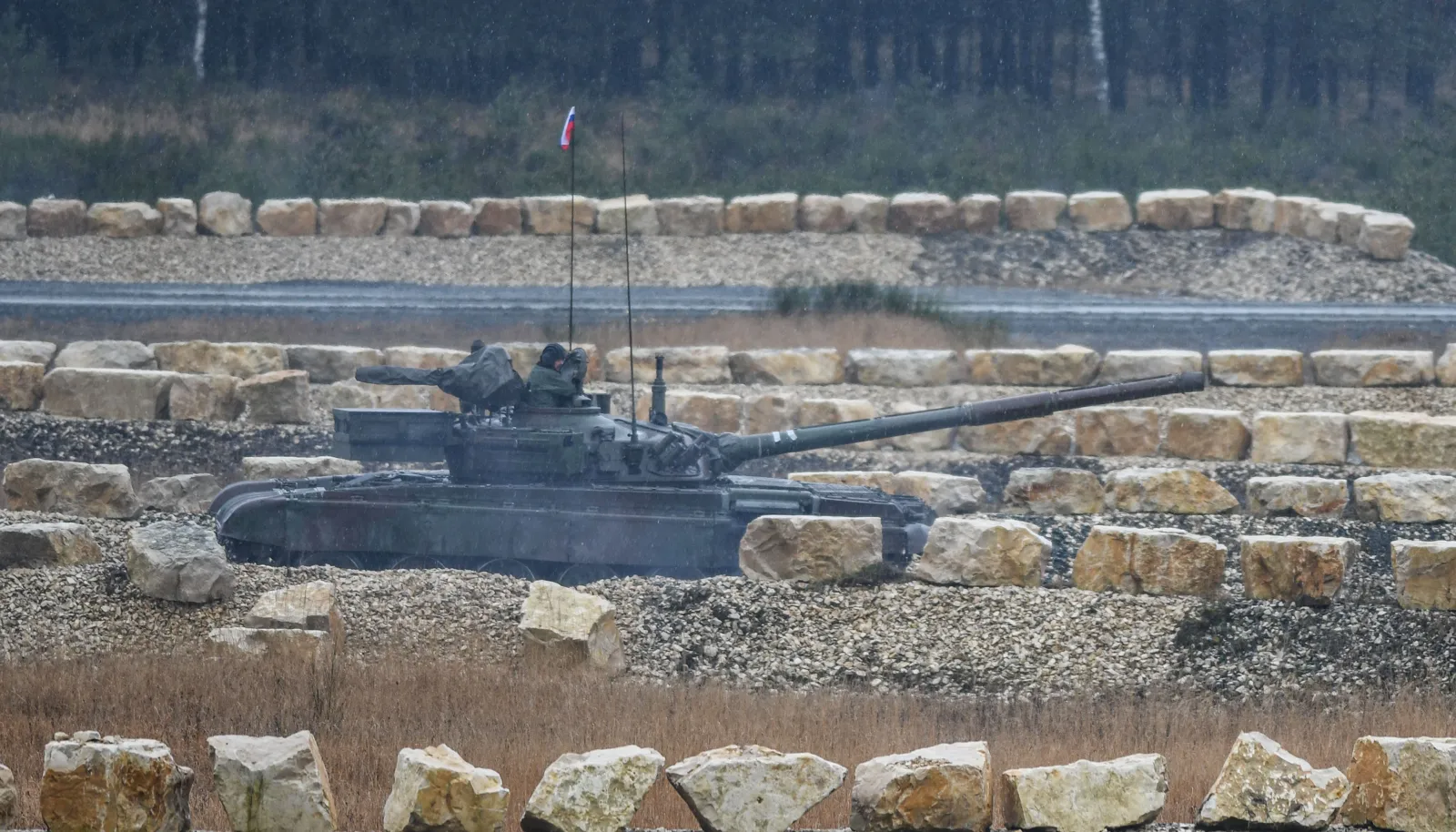
- Main battle tanks: 54 (Global Firepower). All are M-84s upgraded to the M-84A4 Sniper standard by 2008; open sources put 13-20 in active use and the rest in reserve
- Military aircraft: 40 (Global Firepower): 0 fighters, 5 transports, 23 trainers and 16 helicopters. The country has no combat jets; its airspace is policed by Italy and Hungary under NATO
- Artillery: Global Firepower gives 17 self-propelled and 18 towed guns. The towed backbone is 18 TN-90 155 mm howitzers; 12 CAESAR 6×6 self-propelled howitzers are on order
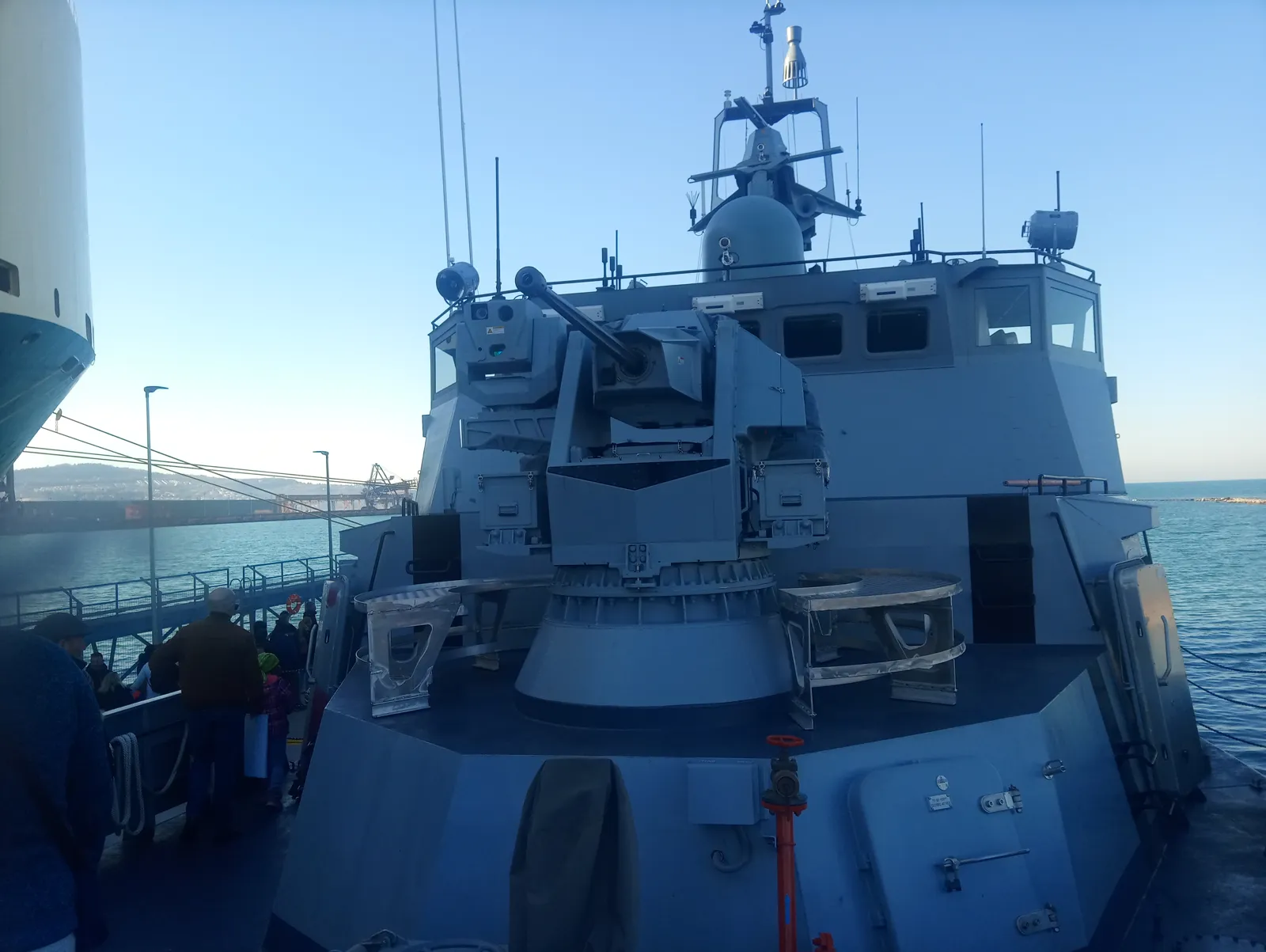
- Naval platforms: 3 (Global Firepower), all patrol class. The largest ship is Triglav, whose 2024-2025 modernisation began at Desan Shipyard in Istanbul and replaced the Russian AK-630 with an ASELSAN SMASH 200/30 weapon system
- Defence budget: Global Firepower gives 1.782 billion dollars. Slovenia reached the 2 percent of GDP target in 2025; the level of spending became a political flashpoint that in 2025 even led to a proposed referendum on NATO membership
Note: The inventory figures below are approximate values drawn from open sources such as Global Firepower, the IISS Military Balance and SIPRI.
About the Slovenia Armed Forces
The Slovenian Armed Forces (Slovenska vojska) are a land-centred single-service force; the air and naval elements are units within the army rather than separate commands. The combat core is formed by the 1st Brigade, responsible for western Slovenia, and the 72nd Brigade for the east, joined by the Logistics Brigade, the Special Operations Unit, the 15th Military Aviation Regiment at Cerklje ob Krki and the 430th Naval Division at Ankaran. In the reorganisation under way in 2026, more than half of all commands were disbanded; because there are not enough modern armoured vehicles to fill three motorised battalions at once, a tank company and a wheeled combat vehicle company were pooled in the Logistics Brigade and lend vehicles to four new infantry regiments as needed.
The Global Firepower 2026 count shows 7,000 active personnel, 26,000 reserves and 5,000 paramilitary. Conscription was abolished in 2003 and the force has been fully professional since 2004; personnel fall into three categories: professional soldiers, contract reservists serving up to 30 days a year and volunteers in basic training. The force, which reached 55,000 in the conscription era, is today just over a tenth of that. The personnel shortfall is a permanent item of political debate.
The command level changed in 2026. The Commander-in-Chief is President Natasa Pirc Musar. After the March 2026 election, a minority coalition of SDS, NSi, SLS, Fokus and Demokrati led by Janez Jansa was formed on 4 June 2026, and Valentin Hajdinjak of NSi became defence minister. The Chief of the General Staff is Major General Bostjan Mocnik. After taking office, Hajdinjak announced a review of defence spending plans and said that at the current rate of implementation the full 780-million-euro programme could not be delivered by the end of 2028.
The defence budget has been the most contentious political issue of the past two years. Global Firepower gives a budget of 1.782 billion dollars, and Slovenia reached the 2 percent of GDP target in 2025. But when a parliamentary decision on spending increases collided in July 2025 with the 5 percent pledge made at the NATO summit by then Prime Minister Robert Golob, Golob proposed putting NATO membership to a referendum; parliament annulled the referendum decision on 18 July 2025. Jansa, Defence Minister Hajdinjak and Foreign Minister Tone Kajzer attended the NATO Summit in Ankara on 7-8 July 2026.
Aid to Ukraine has also shaped the current inventory. In 2022 28 M-55S tanks went to Ukraine under a ring exchange with Germany, and in 2023 20 Valuk armoured vehicles and about 20 Humvees were donated. In return military trucks and tankers came from Germany and L-ATV light tactical vehicles from the United States. As a result the heavy armour inventory thinned while the light protected vehicle fleet grew.
The country hosts NATO’s Mountain Warfare Centre of Excellence at Begunje na Gorenjskem, and mountain expertise is one of the Slovenian army’s most distinctive contributions to the alliance. Slovenia is also part of the Multinational Land Force with Italy, Hungary and Croatia, and provides personnel to missions such as KFOR in Kosovo, NATO forward presence in Latvia and Slovakia and EUFOR Althea in Bosnia and Herzegovina. More than 15,000 personnel have been sent on international missions to date.
Land Forces Inventory
| System type | Est. quantity |
|---|---|
| Main battle tanks (M-84A4 Sniper) | 54. The Yugoslav-built M-84s were brought to the M-84A4 standard with the Sniper fire-control system by 2008; open sources put 13-20 in active use and 34-41 in reserve. The tank company sits within the Logistics Brigade and lends vehicles to infantry regiments as needed. Slovenia took part in the February 2025 international tank challenge at Grafenwoehr with M-84s |
| Main battle tanks (M-55S) | 0. The 28 M-55S tanks, a T-55 derivative upgraded in Slovenia, were sent to Ukraine in 2022; in return military trucks and tanker vehicles were received from Germany under a ring-exchange arrangement |
| Armoured personnel carriers (Svarun / Patria AMV) | 30 vehicles. The Patria AMV purchase, planned in 2006 for 135 vehicles, was capped at 30 in the shadow of a corruption investigation; 20 carry a Protector remote weapon station. Twelve have been refitted with the Slovenian-developed 25 mm Mangart 25 RCT turret |
| Armoured personnel carriers (Patria AMV XP, planned) | 0 in service, 106 planned. The Patria offer was chosen in July 2024 after Boxer was dropped, and a letter of intent was signed with Finland on 13 February 2025; the estimated cost is about 695 million euros. The first 53 are meant for a medium combat reconnaissance battalion battlegroup. The previous cabinet left the contract until after the election in December 2025; the decision now rests with the government formed in June 2026 |
| Multi-role armoured vehicles (Valuk / Pandur I) | 65 vehicles. The 6×6 Pandur I family, built in Slovenia under Austrian licence, includes personnel carrier, ambulance, 120 mm CARDOM mortar carrier and reconnaissance versions with the OWS-25 turret carrying an M242 Bushmaster and TOW missiles. Twenty were donated to Ukraine in 2023 |
| CBRN reconnaissance vehicles (Otokar Cobra) | 10 vehicles. The Turkish-built Otokar Cobras were ordered in 2007, delivered in 2008 and serve in the chemical, biological, radiological and nuclear reconnaissance version. They are the only Turkish-built land vehicles in the Slovenian inventory |
| Light tactical vehicles (Oshkosh L-ATV) | A target of about 160 vehicles. Ordered in five batches since 2018, one of which consists of vehicles provided by the United States in return for Slovenian donations to Ukraine. The Protector RS4 station can fire Spike LR and Spike LR2 anti-tank missiles; some are being fitted with the Slovenian Mangart 25 turret against drones |
| Towed howitzers (TN-90) | 18. The TN-90 is a 155 mm howitzer based on the Israeli Soltam M71; alongside it are 50 MN-9 120 mm heavy mortars |
| Self-propelled howitzers (CAESAR and 2S1) | 12 CAESAR on order with 6 more planned; the French system will be the country’s first modern self-propelled 155 mm gun. Of the 9 Soviet-built 122 mm 2S1 Gvozdikas on hand, 8 are in reserve |
| Anti-tank weapons | Spike LR and Spike LR2 guided missiles, the latter ordered in September 2022 for 6.67 million euros, plus Carl Gustaf M4 and RGW 90. Spike LR has also been fitted to some Humvees through a Slovenian integration |
Air Force Inventory
| Platform | Est. quantity |
|---|---|
| Total military aircraft | 40 (Global Firepower): 0 fighters, 0 attack aircraft, 5 transports, 23 trainers and 16 helicopters. All flying units belong to the 15th Military Aviation Regiment at Cerklje ob Krki Air Base; one Bell 412 is kept at Ljubljana Airport for mountain rescue |
| Combat jets | 0. Slovenia has operated no combat jets since joining NATO in 2004; air policing is carried out in rotation by the Italian and Hungarian air forces |
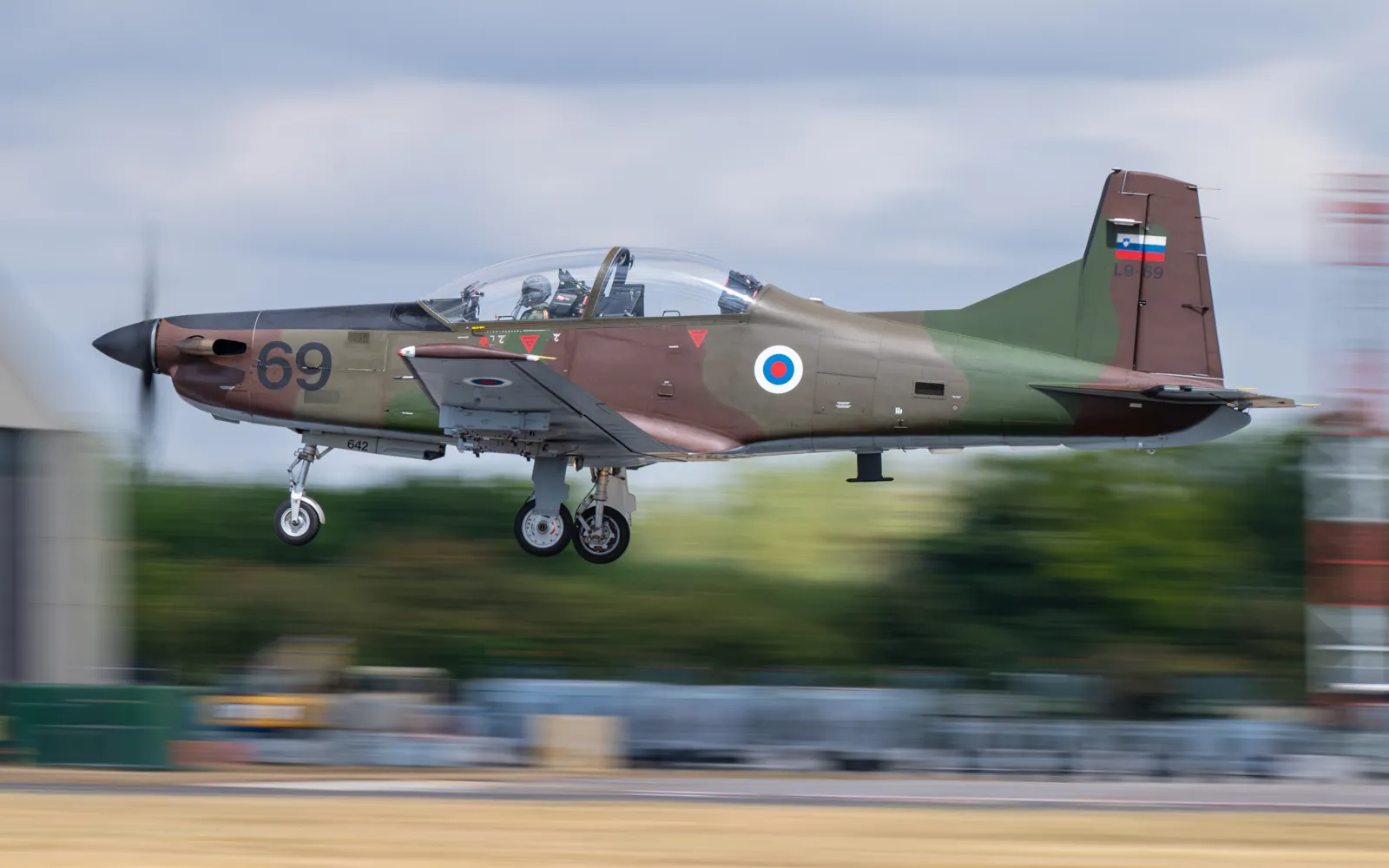
| Light attack / training aircraft (PC-9M Hudournik) | 9. The Swiss-built PC-9M turboprops fly with the 152nd Fixed Wing Squadron for both advanced training and close air support, and regularly appear at events such as the Royal International Air Tattoo |
| Basic trainers | About 15: 8 Zlin Z-242s, 2 Zlin Z-142s and 5 electric Velis Electro aircraft built by the Slovenian company Pipistrel. Slovenia was among the first countries to bring an electric trainer into military flight training |
| Transport aircraft | 6: two C-27J Spartans named Martin Krpan and Edvard Rusjan, delivered at the end of 2023 and 2024, one L-410 Turbolet, one Falcon 2000 VIP aircraft and two PC-6 Porters |
| Utility helicopters (Bell 412 and AS532 Cougar) | 12: 8 Bell 412s and 4 AS532 Cougars. The fleet is used for search and rescue, mountain rescue, firefighting and special forces transport; the upgrade of all four Cougars is planned to be completed by the end of 2026 |
| Utility helicopters (AW139M, on order) | 0 in service, 6 on order. Ordered from Leonardo in November 2023 through a government-to-government deal worth about 188.3 million euros excluding VAT; another 6 are planned. Four Bell 206 training helicopters are also in the inventory |
| Unmanned aerial vehicles | Slovenian-built Bramor C4EYE reconnaissance drones and the navy’s Galeb UAV. There is no armed drone; a version carrying four loitering munitions was shown at the unveiling of the Mangart 30 RCT turret |
Missile and Air-Defence Systems
| System | Type / Note |
|---|---|
| Medium-range air defence (IRIS-T SLM) | 0 in service, 3 fire units on order. The first unit was ordered under the European Sky Shield Initiative at the turn of 2023-2024 and two more in August 2025 through Germany’s BAAINBw. Each unit comprises a radar, an operations centre and four launchers; deliveries in 2027 and 2028 |
| Short-range air defence (Roland II) | 4, largely out of service. Two systems are reportedly still used to defend Cerklje ob Krki Air Base; part of the missile stock was sent to Croatia for destruction in 2016 |
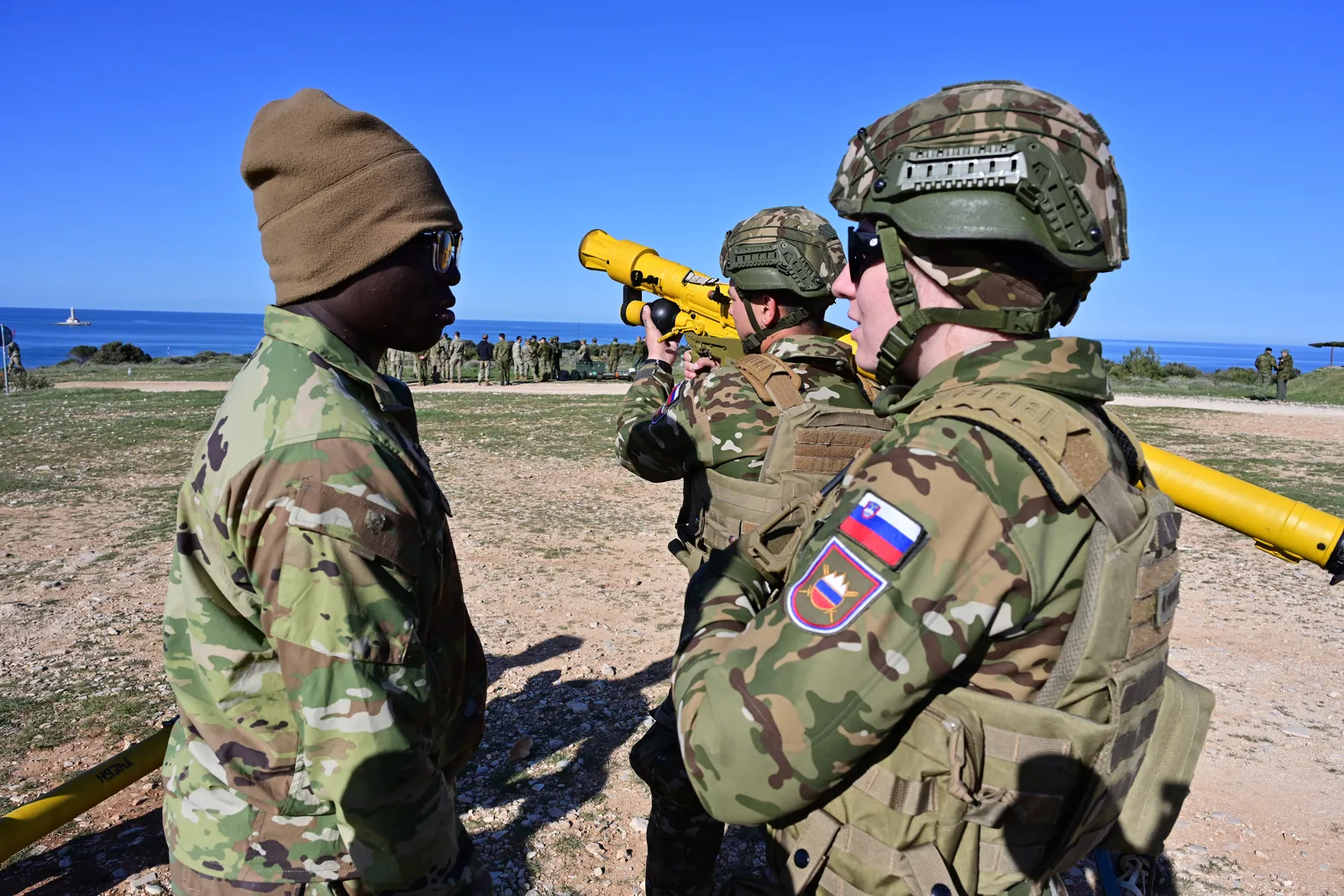
| Man-portable air defence (Igla-S and Strelets) | Russian-built Igla and Igla-S missiles and Strelets multiple launchers mounted on Puch G vehicles. The system was used alongside US paratroopers in exercise Shield 25 in Croatia in 2025 |
| Anti-aircraft guns (Mangart 25) | The 25 mm Mangart 25 turret from the Slovenian company Valhalla Turrets is being fitted to L-ATV and Svarun vehicles for use against low-flying drones |
| Radar and early warning | The airspace is monitored by Thales Raytheon Ground Master GM-403, Ericsson Giraffe 40 and IAI Elta EL/M-2106NG radars, with data fed into NATO’s integrated air and missile defence system |
| Ballistic and cruise missiles | None. Slovenia has no ballistic, cruise or anti-ship missiles; the anti-ship missiles carried by Triglav’s Russian-service sister ships were never fitted to the Slovenian version |
Naval Power
| Class / Type | Est. quantity |
|---|---|
| Total naval platforms | 3 (Global Firepower), all patrol class. The naval element is not a separate service but the 430th Naval Division of about 130 personnel, based at the Slovenski pomorscaki barracks in Ankaran |
| Patrol ship (Triglav) | 1. The 375-tonne, 49.5-metre Project 10412 ship was acquired against a Russian debt owed to Slovenia and commissioned in 2011. The first phase of its 2024-2025 modernisation was carried out by Desan Shipyard in Istanbul, which returned the ship on 25 February 2025, two months early; the final phase was completed at Croatia’s Iskra shipyard in December 2025. The programme cost about 17 million euros |
| Naval weapon system (ASELSAN SMASH 200/30) | 1. The Russian-built AK-630 close-in gun on Triglav was removed and replaced with ASELSAN’s SMASH 200/30 remote-controlled stabilised weapon system with a 30×173 mm Mk44 Bushmaster II cannon. It fires more slowly but more accurately and is compatible with NATO ammunition; the mast was also rebuilt to track mini drones and unmanned surface vessels |
| Patrol boat (Ankaran) | 1. An Israeli-built Super Dvora Mk II fast patrol boat acquired after the arms embargo was lifted in 1996 |
| Diving support boat (C-91) | 1. A Polish-built 10-metre Parker 920 Explorer boat commissioned in 2024 and used for diver support and coastal patrol |
| Frigates, corvettes and submarines | None. Slovenia’s roughly 47 km coastline lies on the Gulf of Trieste; no ocean-going combatant or submarine has ever entered the inventory |
| Contribution to naval operations | Triglav took part in Italy’s Operation Mare Nostrum in 2013 and the EU’s Operation Sophia in 2015; Slovenian personnel have also served in Atalanta and EU NAVFOR MED |
The Turkey Angle: Turkish Defence Industry
Among the Central European countries covered in this series, Slovenia is one of the few with Turkish-built systems directly in its inventory. The basis of the relationship was laid when Türkiye recognised independent Slovenia in 1992, and the two have been NATO allies since 2004. The strategic partnership declared in 2011 reached its 15th anniversary in March 2026; for a framework renewed with a 2024-2026 action plan, the two sides expressed their intention to prepare a new action plan on the sidelines of the Dubrovnik Forum.
The land link dates back to 2007. Slovenia ordered 10 Cobra light armoured vehicles from Otokar in 2007, and they were delivered in 2008. In Slovenian service the Cobras operate in the chemical, biological, radiological and nuclear reconnaissance version and remain in the inventory today. They are the only Turkish-built vehicle family in the Slovenian land forces, but more than fifteen years of uninterrupted use in a specialised role such as CBRN reconnaissance is a notable reference for the platform’s reliability.
The most striking link is at sea. For the modernisation of the country’s largest warship, Triglav, the Slovenian Ministry of Defence selected three companies in a programme that took effect on 29 March 2024, and the first phase went to Desan Shipyard in Istanbul. Desan renewed the HVAC, fire detection and suppression, electrical distribution and platform control and monitoring systems, carried out structural reinforcement based on 3D scanning and plate thickness measurements, and delivered the ship on 25 February 2025, two months ahead of schedule. The second phase went to Slovenia’s Panna Plus and the final phase, including rearmament, to Croatia’s Iskra shipyard; the ship was delivered on 17 December 2025 and the whole programme cost about 17 million euros.
The most visible result of the modernisation is that Triglav’s main weapon is now Turkish-built. The Russian AK-630 close-in gun was removed and replaced with ASELSAN’s SMASH 200/30 remote-controlled stabilised weapon system. It uses a 30×173 mm Mk44 Bushmaster II cannon; compared with the AK-630 it fires more slowly but more accurately and is compatible with NATO ammunition stocks. ASELSAN’s September 2025 bulletin announced it as the first delivery of the SMASH family to Slovenia. Slovenia’s largest warship has thus moved from a Russian-origin gun to a NATO-compatible Turkish system.
Contacts are also growing at industrial level. A memorandum of understanding was signed in 2023 between the Turkish defence cluster SAHA Istanbul and the Slovenian defence cluster GOIS, focusing on joint production, technology sharing and supply chain integration. At SIDEC 2025, held in Slovenia on 21-24 October 2025, a Turkish national participation coordinated by the Presidency of Defence Industries featured companies such as ASELSAN, Roketsan, Turkish Aerospace and Sarsilmaz.
In sum: Turkish defence products are in service in Slovenia on both land and sea, but there is no publicly announced separate military framework agreement between the two countries. Whether the link grows depends on Slovenia’s open choices: the 106-vehicle 8×8 programme is on the new government’s desk, and counter-drone defence and armed drones remain empty fields. Together with regional precedents such as Croatia’s purchase of six Bayraktar TB2s, these areas stand out as potential markets for the Turkish defence industry.
Frequently Asked Questions
How many tanks does Slovenia have? The Global Firepower 2026 count shows 54 tanks for Slovenia. All are Yugoslav-built M-84s upgraded to the M-84A4 standard with the Sniper fire-control system by 2008. Open sources put 13-20 in active use and 34-41 in reserve. The 28 M-55S tanks upgraded in Slovenia were sent to Ukraine in 2022. The tank company is pooled within the Logistics Brigade and lends vehicles to infantry regiments as needed.
Does Slovenia have fighter jets? No. Slovenia has operated no combat jets since joining NATO in 2004, and its airspace is policed in rotation by the Italian and Hungarian air forces under NATO command. The Global Firepower 2026 count shows 40 military aircraft: 5 transports, 23 trainers and 16 helicopters. The only fixed-wing type with a combat capability is the fleet of 9 Pilatus PC-9M Hudournik turboprops, used both for advanced training and close air support.
Does Slovenia have a navy? There is no separate naval command; the naval element belongs to the 430th Naval Division of about 130 personnel, based at Ankaran. Global Firepower counts 3 patrol platforms. The largest ship is the 375-tonne Project 10412 Triglav, which received an ASELSAN SMASH 200/30 weapon system in a 2024-2025 modernisation whose first phase was carried out at Desan Shipyard in Istanbul. Alongside it are the Israeli-built Super Dvora Mk II patrol boat Ankaran and the diving support boat C-91, commissioned in 2024.
What is Slovenia’s air defence system? Air defence in the inventory today is mainly short-range: Russian-built Igla and Igla-S shoulder-fired missiles and Strelets launchers mounted on Puch G vehicles. Most of the old Roland II systems are out of service. The medium-range layer is being built with IRIS-T SLM from Germany: the first fire unit was ordered under the European Sky Shield Initiative, two more were ordered in August 2025, and deliveries are expected in 2027 and 2028. The Slovenian-built Mangart 25 turret is also being introduced against the low-altitude drone threat.
Is there defence cooperation between Türkiye and Slovenia? Yes, at the level of concrete supply. Slovenia ordered 10 Otokar Cobras in 2007; they were delivered in 2008 and still serve in the CBRN reconnaissance version. The first phase of the modernisation of the largest warship, Triglav, was carried out by Desan Shipyard in Istanbul and the ship was delivered on 25 February 2025; its Russian AK-630 gun was replaced with an ASELSAN SMASH 200/30. Added to these are the strategic partnership in place since 2011, the 2023 memorandum between SAHA Istanbul and the Slovenian GOIS cluster, and the Turkish national participation at SIDEC 2025. There is no publicly announced separate military framework agreement.
Bottom Line
Slovenia’s inventory clearly shows where a small NATO country concentrates its resources. The numbers are modest: about 7,000 active personnel, 54 tanks, 40 military aircraft, 3 patrol platforms and no combat jets. Slovenia has left the protection of its airspace to its allies while trying to rebuild its land forces around light and medium wheeled vehicles. The weaknesses are clear: only a small part of the tank fleet is active, donations to Ukraine left a gap in heavy armour, the first medium-range air defence unit will not arrive before 2027, and there are as yet no armed drones or modern self-propelled artillery. The biggest uncertainty is the 106-vehicle Patria AMV XP programme: because the first Patria purchase in 2006 turned into a corruption investigation, the subject is especially sensitive in Slovenian politics, and the decision now rests with the Jansa government formed in June 2026. The strengths are notable for its size: host of NATO’s centre of excellence for mountain warfare, a niche domestic industry stretching from electric trainers to reconnaissance drones and counter-drone turrets through companies such as Pipistrel, C-Astral and Valhalla Turrets, and a renewal wave squeezed into the same period with IRIS-T SLM, CAESAR and AW139M. For Türkiye, Slovenia’s value lies in hosting, rarely for the region, Turkish products in service on both land and sea: the Otokar Cobras on duty since 2008 and the ASELSAN SMASH 200/30 on Triglav’s bow. Desan delivering its modernisation two months early and SMASH replacing a Russian system as a NATO-compatible solution illustrate a model the Turkish defence industry can offer small allies inside the European Union: not so much large platform exports as fast, cost-effective modernisation that brings existing inventory up to NATO standard. The new government’s choices on 8×8 vehicles, counter-drone defence and naval platforms will shape the next stage of this relationship.
Related Reading
Sources
- Global Firepower — Slovenia
- IISS — The Military Balance
- SIPRI — Arms Transfers Database
- Wikipedia — Slovenian Armed Forces
- Wikipedia — Slovenian Ground Force equipment
- Wikipedia — Slovenian Air Force and Air Defence
- Wikipedia — Slovenian Navy
- Wikipedia — 16th Government of Slovenia
- Janes — Desan delivers modernised Triglav
- TURDEF — Desan upgrades Slovenian patrol vessel Triglav with ASELSAN
- More.hr — Iskra shipyard delivers Triglav
- Yeni Safak — Turkish defence giants at SIDEC 2025
- Airforce Technology — Slovenia orders additional IRIS-T SLM units
- Defense News — Slovenia stalls Patria vehicle purchase