RTX Lands $22.9 Billion Tomahawk Deal as US Bets on Volume Over Novelty
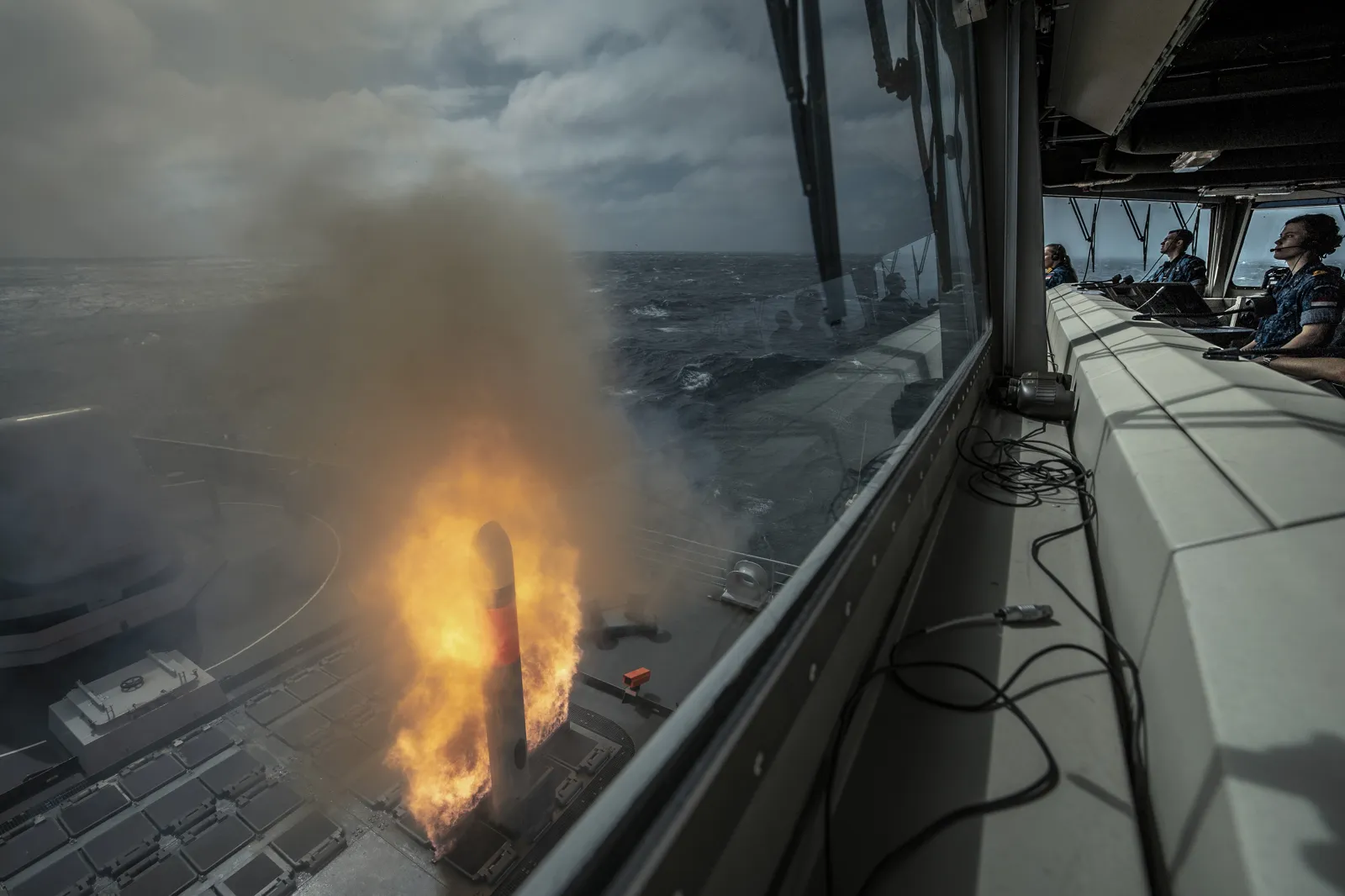
The Pentagon has awarded RTX a seven-year, $22.9 billion contract for Tomahawk cruise missile production — one of the largest single commitments in the weapon’s four-decade service life, and a clear signal that magazine depth has become as pressing a problem as capability itself.
Why a seven-year deal matters
The structure is as significant as the sum. Rather than funding the line one budget year at a time, the award locks in demand through the early 2030s. That gives RTX room to place long-lead orders with suppliers, stockpile scarce components such as seekers and rocket motors, and justify tooling investment it would not make against a single-year order book.
The company says it is aiming for annual deliveries above 1,000 missiles under the agreement, and that production in the first half of 2026 already ran at triple the rate of the same period in 2025.
The stockpile problem behind the contract
Recent operations have made the arithmetic uncomfortable. Sustained engagements in the Red Sea and strike packages across the Middle East drew down precision munitions faster than industry could replace them. A cruise missile takes months to build; an intensive campaign can expend dozens in days. For two years that gap has driven the loudest procurement argument in Washington.
This contract is the capacity-side answer to it — a bet that the decisive variable in a protracted conflict is not the sophistication of the weapon but how quickly it can be replaced.
What the missile does now
Tomahawk is a subsonic, low-flying cruise missile that navigates by terrain reference and satellite guidance, launched from surface ships’ vertical launch cells and from submarine torpedo tubes, with range in the 1,600-kilometre class.
The current Block V family splits three ways. The baseline Block V refreshes navigation and communications. Block Va — the Maritime Strike Tomahawk — restores an anti-ship role the missile had lacked for decades, giving surface groups a way to threaten moving warships far beyond the horizon. Block Vb carries a new warhead tuned for hardened land targets.
From ship to shore, and to allies
The weapon is no longer purely naval. The US Army’s Typhon battery, part of its Mid-Range Capability programme, fires Tomahawk from a ground launcher and has become a focal point of basing debates across the Indo-Pacific.
Export demand adds to the pressure on the line. The United Kingdom has fired Tomahawk from its submarines for years; Japan has ordered 400; Australia and the Netherlands are also on the customer list. Allied orders now shape the production schedule alongside US Navy requirements.
Where the bottleneck actually sits
In cruise missile manufacturing the constraint is rarely final assembly. It sits further down: solid-propellant boosters, turbofan cruise engines, guidance sets and warhead components all come from a thin layer of specialist suppliers. RTX’s emphasis on working with hundreds of small and mid-sized firms points directly at that layer — tripling output is a supply-base problem before it is a factory-floor one.
The same constraint has shaped recent US experience with Patriot PAC-3 MSE interceptors and 155mm artillery ammunition. Across the sector, the defining procurement question of the past two years has shifted from what to build next to how fast existing designs can be multiplied.
Four decades of service
Tomahawk entered US service in 1983 and had its defining moment in the 1991 Gulf War, where roughly 290 rounds established the cruise missile’s place in modern air campaigns. It has since been used over the Balkans, Afghanistan, Iraq, Libya, Syria and Yemen. The most consequential change in recent blocks is not propulsion or range but the targeting chain: Block V missiles can receive updated target data in flight and be retasked mid-mission, which turns a pre-planned strike weapon into something closer to a responsive one.
The wider read
For NATO members weighing their own deep-strike options — Turkey among them, with the SOM family, ATMACA and the longer-ranged Gezgin under development — the lesson in this award is less about the missile than about industrial rhythm. Deterrence from a strike weapon rests on replacement rate as much as on range or accuracy. Washington has just paid $22.9 billion to buy that rhythm.
Sources
- RTX / Raytheon corporate statement
- US Department of Defense contract announcement
- Naval News, 18 August 2026