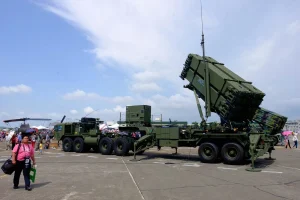
LEVENT: Roketsan’s Naval Point-Defence Missile System Explained


LEVENT is a naval point-defence (close-in air defence) missile system developed by Roketsan of Türkiye to protect warships against anti-ship missiles, aircraft, helicopters, drones and cruise missiles. Built around an imaging-infrared, fire-and-forget missile derived from the SUNGUR MANPADS, it offers an effective range of about 11 km and is positioned as a domestic replacement for the US-made RAM system.
| LEVENT — At a Glance | |
|---|---|
| Category | Naval point-defence / close-in air defence system (CIADS) |
| Developer | Roketsan (Türkiye) |
| Unveiled | IDEF 2023 |
| First test firing | 10 October 2024 (land platform) |
| Sea trials | March 2025, corvette TCG Beykoz |
| First guided intercept | November 2025 |
| Effective range | ~11 km |
| Missile | SUNGUR derivative; 3.2 m / 128 mm / ~75 kg (Janes/press; no official datasheet) |
| Speed | Not officially disclosed |
| Warhead | Not officially disclosed (SUNGUR-derived HE expected, unconfirmed) |
| Guidance | Imaging infrared (IIR), fire-and-forget |
| Launcher | 11-cell test configuration |
| Sensors | Fixed-face AESA radar + electro-optics, 360° coverage |
| Operator | Turkish Naval Forces (trial/procurement stage) |
What is the LEVENT system?
LEVENT is a ship-mounted close-in air defence system developed by Roketsan. Its job is to provide the last layer of a warship’s layered air defence: destroying anti-ship missiles, aircraft, helicopters, unmanned aerial vehicles and cruise missiles that have leaked through medium- and long-range defences and are closing on the ship. This mission class is known internationally as point defence or CIADS (close-in air defence system).
The system was unveiled at the IDEF 2023 exhibition in Istanbul. Its interceptor is a navalised derivative of SUNGUR, Roketsan’s man-portable air defence missile, inheriting its imaging-infrared seeker technology. Through LEVENT, Türkiye aims to field a domestic substitute for the US-origin RAM (RIM-116) class point-defence missiles that have equipped Turkish Navy ships for decades.
As of 2026, LEVENT is not yet in serial production; it remains in test and procurement. The first seeker-guided live intercept, achieved in November 2025, nevertheless marked the programme’s key technological milestone.
Technical characteristics and how it works
LEVENT’s effective engagement range is approximately 11 km — notably longer than the classic RAM-class envelope. According to Janes and defence press reporting, the missile is 3.2 m long, 128 mm in diameter and weighs about 75 kg; Roketsan has not published an official datasheet, so these figures rest on secondary sources. The missile’s speed has not been officially disclosed.
The engagement chain works as follows:
- Detection and tracking: a fixed-face AESA radar and electro-optical sensors provide 360° coverage, continuously tracking threats including low-flying and sea-skimming targets.
- Engagement: threats are prioritised and missiles are launched from an 11-cell launcher (the configuration used in trials).
- Guidance: the missile locks on with its imaging-infrared (IIR) seeker and homes autonomously in fire-and-forget mode — no post-launch illumination from the ship is required.
- Kill: the warhead has not been officially disclosed; a SUNGUR-derived high-explosive warhead is expected but unconfirmed.
IIR guidance offers inherent resistance to radar jamming and performs well against small radar-cross-section targets such as drones and sea-skimming missiles. Fire-and-forget operation lets the system ripple-fire against multiple incoming threats in quick succession.
LEVENT’s direct competitors are the missile- and gun-based point-defence systems that occupy a warship’s innermost defensive layer. Within Türkiye, ASELSAN’s GÖKSUR is being developed as a domestic alternative in the same mission class.
Platforms, operators and the test timeline
LEVENT has moved through validation on a brisk schedule:
- IDEF 2023: public unveiling.
- 10 October 2024: first test firing from a land platform.
- March 2025: sea trials from the corvette TCG Beykoz.
- November 2025: first seeker-guided live intercept.
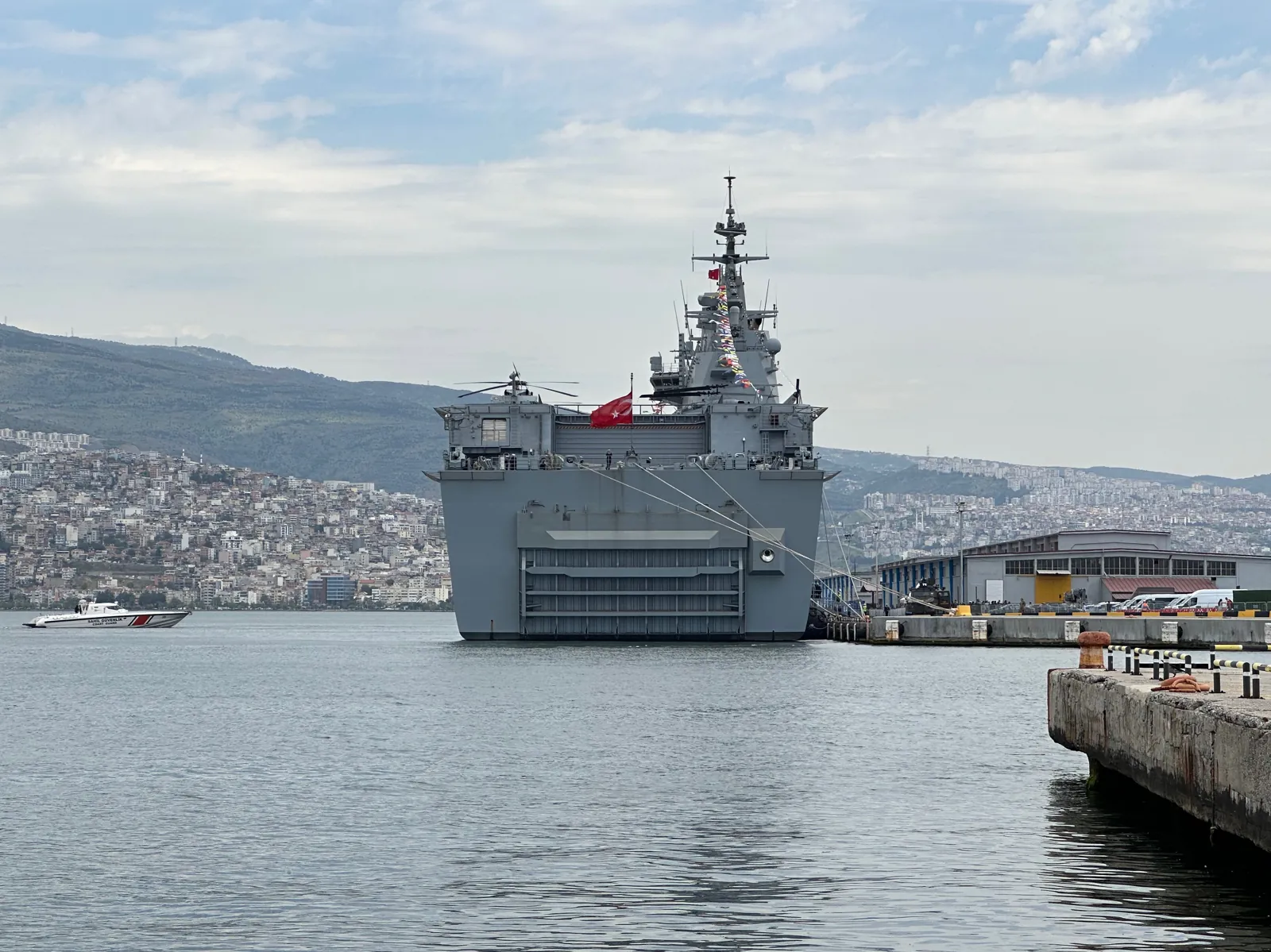
To date the system has only been trialled aboard TCG Beykoz. Which ships will ultimately carry it — including the amphibious assault ship TCG Anadolu — has not been officially announced; defence media widely expect LEVENT to take over the point-defence role on Turkish Navy vessels currently fitted with RAM. The operator is the Turkish Naval Forces, with the programme in the trial/procurement stage. Export status has not been officially disclosed.
Place in Türkiye’s defence industry: strengths and limitations
LEVENT targets one of the most sensitive foreign-dependency items on Turkish naval platforms: the point-defence missile that serves as a ship’s last guarantee of survival. RAM-class systems and their reload stocks are subject to export licences; a domestic substitute means supply security, cost control and freedom to arm export versions of the MILGEM, TF-2000 and amphibious ship programmes.
Strengths: a mature IIR seeker lineage inherited from SUNGUR; fire-and-forget multi-target engagement; 360° coverage from AESA radar and electro-optics; and Roketsan’s broader air-defence ecosystem built through the HİSAR and SİPER programmes.
Limitations: the system is not yet in serial production or fleet inventory; warhead, speed and the definitive shipboard configuration remain officially undisclosed. Critical details such as magazine depth against saturation attacks and the reload concept have not been made public either. LEVENT’s real report card will be written by acceptance trials and fleet integration over the coming years.
Roketsan has not published an official technical datasheet for LEVENT. The missile’s dimensions and weight (3.2 m / 128 mm / ~75 kg) come from Janes and defence press reporting. Speed, warhead, target ship platforms (including TCG Anadolu) and export status have not been officially disclosed; where such values appear on this page they are flagged as estimates or secondary-source figures.
Frequently Asked Questions
What is the range of the LEVENT system?
LEVENT’s effective engagement range is approximately 11 km, which exceeds the typical envelope of RAM-class point-defence missiles it is intended to replace.
What missile does LEVENT use?
LEVENT fires an imaging-infrared, fire-and-forget missile derived from Roketsan’s SUNGUR MANPADS. Press sources cite a length of 3.2 m, a diameter of 128 mm and a weight of about 75 kg; no official datasheet has been published.
Which ships will carry LEVENT?
So far the system has only been tested aboard the corvette TCG Beykoz. The target platforms — including TCG Anadolu — have not been officially announced, though defence media expect LEVENT to replace RAM on Turkish Navy ships.
What are LEVENT’s closest equivalents?
Its direct comparables are the US/German RAM Block 2 (RIM-116) missile system, the gun-based Phalanx CIWS and France’s Crotale NG/Sadral family. Within Türkiye, ASELSAN’s GÖKSUR is a domestic rival in the same class.
When will LEVENT enter service?
No official in-service date has been announced. The system completed its first firing in October 2024, sea trials from TCG Beykoz in March 2025 and its first seeker-guided intercept in November 2025; the programme is in the trial/procurement stage.
Has LEVENT been exported?
No. There has been no official announcement regarding exports; LEVENT is still in testing and procurement for the Turkish Naval Forces.
Sources
- Naval News — First test firing of LEVENT (October 2024)
- ROKETSAN (resmî) — ROKETSAN (resmî) — LEVENT yakın hava savunma sistemi — resmî ürün kataloğu
- Army Recognition — First guided intercept and the RAM replacement
- Janes — Live firing test of the LEVENT missile
- Roketsan official — roketsan.com.tr