From HNA to HUD: inside the FOTONİKS sight family


Quick answer: FOTONİKS‘ weapon-mounted and aircrew equipment products can be grouped under a single heading: the HNA holographic weapon sight, the TAG-1 red dot sight, the TAG-3M magnifier, the CSS 1X/3X/5X combat sights, a head-up display (HUD) for aircraft, the OD-60 and OD-250K friend-identification strobes, and the BÖRÜ and GÖKBÖRÜ tactical torches. What the family has in common is the aim of shortening the time between the shooter’s or pilot’s eye and the target.
HNA: aiming with a hologram
HNA is an electro-optical sight based on laser hologram technology. According to the official page, its 68 MOA ring reticle suits range estimation; both-eyes-open aiming preserves situational awareness; and the sight keeps working even if the glass is cracked or partially obscured. Other published figures include 1,000 hours of battery life, waterproofing to 10 metres, automatic shutdown after 4-8 hours and unlimited eye relief. Use together with night vision devices and magnifying optics is supported. In the 2021 MSI Turkish Defence Review (MSI TDR) interview, Cem Yazıcıoğlu said serial production of holographic sights was under way, and in the same interview set out the goal of building know-how in hologram plate production and holographic optical networks.
The TAG and CSS series: from close quarters to standard ranges
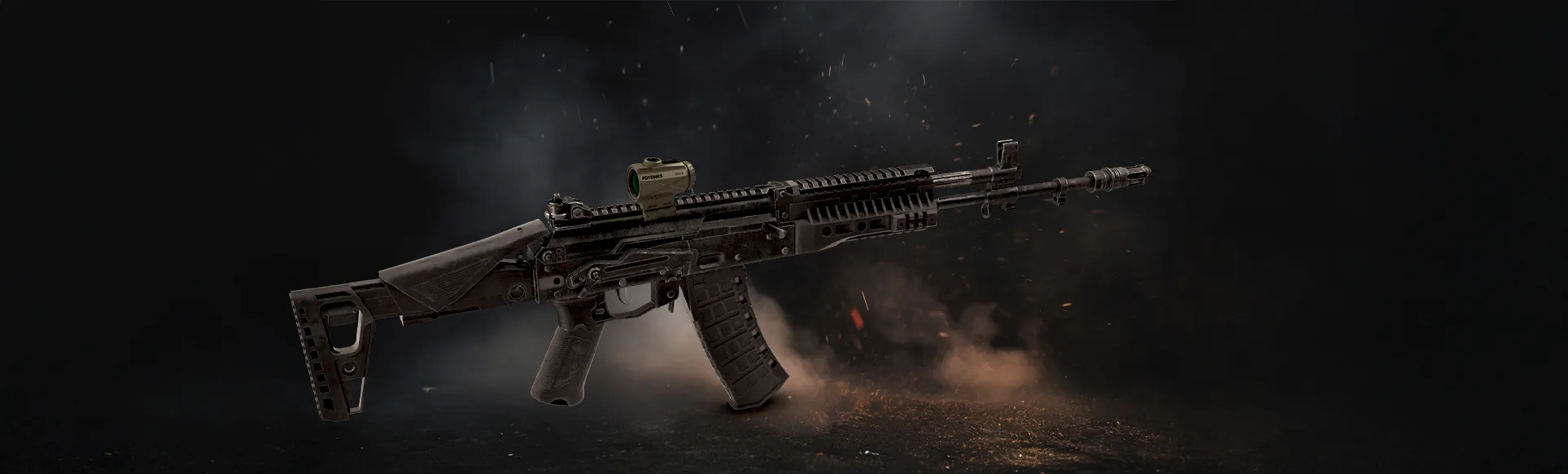
TAG-1 is a 1x red dot sight for rapid target acquisition in close combat, with 10 brightness settings and automatic shutdown after 5 minutes. TAG-3M is a 3x magnifier fitted behind an HNA or a red dot sight on a flip-to-side mount; it is presented as a lighter version of the TAG-3B with an enlarged field of view. The CSS series comprises fixed-magnification combat sights with etched illuminated reticles: CSS 1X (16-degree field of view), CSS 3X (75 mm objective) and CSS-5X (5x magnification). Night vision compatibility and a MIL-STD reference are listed for all three.
Official data for the family
| Product | Class | Main published figures |
|---|---|---|
| HNA | Holographic sight | 68 MOA reticle; 1,000 hours battery; waterproof to 10 m |
| TAG-1 | Red dot | 1x; 10 brightness settings; 5 min automatic shutdown |
| TAG-3M | Magnifier | 1x-3x rapid transition; flip-to-side mount; no reticle |
| CSS 1X / 3X / 5X | Combat sight | 16° field of view (1X); 75 mm objective (3X); 5x magnification (5X) |
| HUD | Head-up display | Optical, electronic and control subunits |
| OD-60 | Infrared strobe | 515-525 nm visible; 830-850 nm IR; CR123 battery; haptic feedback |
| OD-250K | High-power strobe | Visible at 9.6 km; 40 hours battery; one-way blue filter |
| BÖRÜ / GÖKBÖRÜ | Tactical torch | 500 lumens; 6300K; additional 830-860 nm IR mode on GÖKBÖRÜ |
HUD: the transparent screen in the cockpit
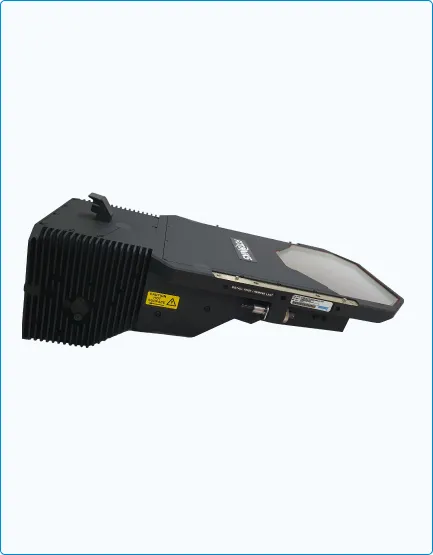
The company’s HUD page defines the head-up display as a system that projects speed, altitude, fuel and armament data at the pilot’s eye level, and notes the widespread use of HUD technology on aircraft in the Turkish Air Force inventory such as the F-16, T-38, C-130, KT-1T, Hürkuş and Hürjet. Which platform the FOTONİKS HUD is used on has not been officially disclosed. The product consists of an optical subunit, an electronic subunit and a control unit.

Strobes and torches: the tools of friendly force identification
OD-60 is a helmet-mounted dual-band strobe used to mark friendly units during close air support; haptic feedback allows it to be operated without looking. OD-250K directs its signal to a chosen bearing through a one-way blue filter and is stated to be visible from 9.6 kilometres in the open. The GÖKBÖRÜ tactical torch offers 830-860 nanometre infrared illumination alongside white light, while BÖRÜ works in the visible band only. The company disclosed in 2021 that GÖKBÖRÜ was in active field use. The soldier’s vision devices are covered in a separate file, and the full portfolio in the product guide.


Frequently asked questions
Which weapons is HNA fitted to?
The manufacturer states compatibility with different weapon platforms; the integration list has not been officially disclosed. Use on infantry rifles with a standard rail interface is envisaged.
How does a holographic sight differ from a red dot?
In a holographic system the reticle is formed by laser; there is no eye relief restriction, and aiming remains possible even if the glass is partly obscured. A red dot works by LED reflection and offers longer battery life.
Which aircraft flies the FOTONİKS HUD?
Not officially disclosed. The company points only to the widespread use of HUD technology across aircraft types in the Turkish Air Force inventory.
Why is OD-60 dual-band?
The visible band (515-525 nm) is seen with the naked eye and the infrared band (830-850 nm) through a night vision device, so the marking works by day and by night.
Which CSS model suits which task?
According to the official positioning, CSS 1X is for close range and rapid response, CSS 3X for medium range and CSS-5X for extended range; all three use an illuminated etched reticle.
Sources and verification note
- https://www.fotoniks.com.tr/tr/urun/holografik-nisan-aleti-hna — Accessed: August 12, 2026
- https://www.fotoniks.com.tr/tr/urun/nisangah-tag-1 — Accessed: August 12, 2026
- https://www.fotoniks.com.tr/tr/urun/3x-buyutmeli-durbun-tag-3m — Accessed: August 12, 2026
- https://www.fotoniks.com.tr/tr/urun/css-1x — Accessed: August 12, 2026
- https://www.fotoniks.com.tr/tr/urun/css-3x — Accessed: August 12, 2026
- https://www.fotoniks.com.tr/tr/urun/css-5x — Accessed: August 12, 2026
- https://www.fotoniks.com.tr/tr/urun/headup-display — Accessed: August 12, 2026
- https://www.fotoniks.com.tr/tr/urun/kizil-otesi-flasor-od-60 — Accessed: August 12, 2026
- https://www.fotoniks.com.tr/tr/urun/kizil-otesi-flasor-od-250k — Accessed: August 12, 2026
- https://www.fotoniks.com.tr/tr/urun/taktik-fener-gokboru — Accessed: August 12, 2026
Technical values are manufacturer statements. Platform integrations and delivery quantities have not been officially disclosed.