What is ATLAS? The FOTONİKS reconnaissance family

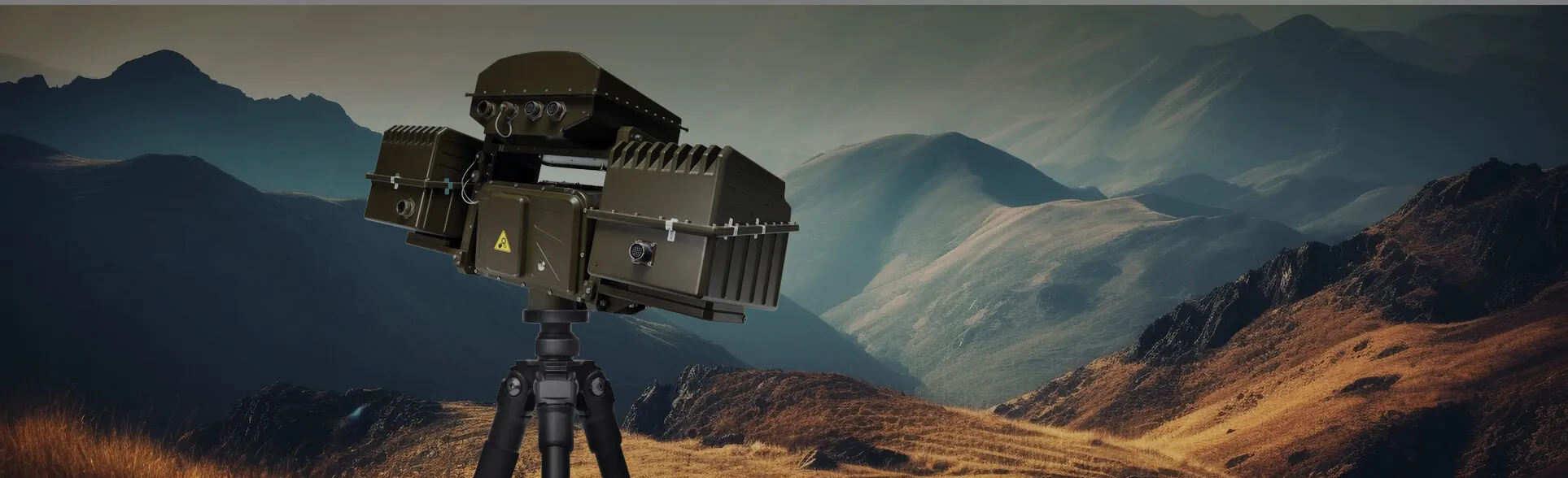
Quick answer: ATLAS is FOTONİKS‘ family of long-range reconnaissance and surveillance systems. The family has three members: ATLAS 2A, fitted with a cooled thermal camera and a target coordinate unit; the more streamlined ATLAS-2B; and ATLAS-660D, positioned for border and coastal surveillance. The same category also includes OPRAD PGS-360, a panoramic surveillance system that scans through 360 degrees. The systems are used for target detection, recognition, identification and coordinate generation.
ATLAS 2A: the observer that generates coordinates
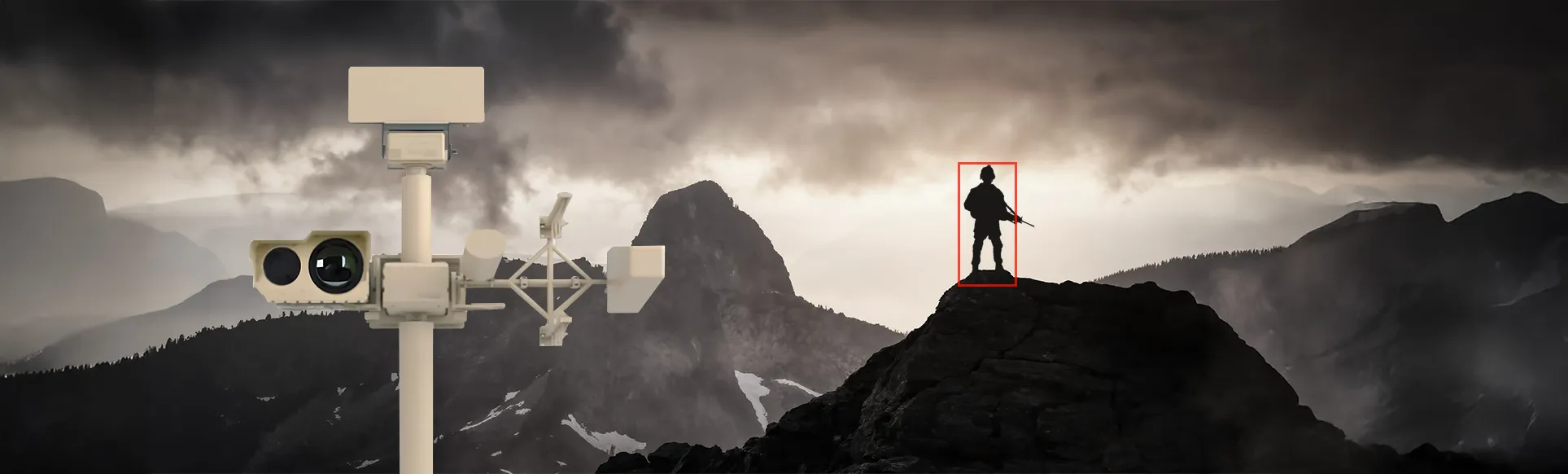
According to the company’s official product page, ATLAS 2A consists of a high-resolution cooled MWIR thermal camera, a day camera and a target coordinate unit. Using the unit’s GPS, digital magnetic compass and laser rangefinder, the system can compute the geographic coordinates of a target. A suspect target marked by the operator can be tracked automatically by the system, a function the company presents as helping distinguish real threats from false alarms. The configuration includes a laser pointer, a pan-tilt positioner, an operator control unit and an optional SWIR camera.
The family’s three members, plus OPRAD
ATLAS-2B is designed for detecting threats in darkness and in degraded visibility such as fog and smoke; the target coordinate unit is optional on this model. ATLAS-660D is positioned not only for border and coastal surveillance but also for integration on land and naval platforms. OPRAD PGS-360 targets critical infrastructure and perimeter security with 360-degree scanning and detection software; the company says it can be integrated with external systems such as radar.
Official technical data
The figures below were compiled solely from the company’s product pages; fields the manufacturer has not published are explicitly marked rather than left blank.
| Feature | ATLAS 2A | ATLAS-660D | OPRAD PGS-360 |
|---|---|---|---|
| Thermal band | MWIR (cooled) | 3.7-4.8 μm MWIR, cooled MCT (HgCdTe) | 8-12 μm LWIR |
| Detector pixel pitch | Not officially disclosed | 15 μm | Not officially disclosed |
| Field of view / scanning | Pan-tilt steering | Not officially disclosed | 360° horizontal, 8° vertical; 26040×640 system resolution (IR) |
| Target coordinate generation | GPS (2.5 m accuracy) + compass + laser rangefinder | Optional architecture | Via detection software |
| Laser pointer | ≥2,000 m | Not officially disclosed | Not officially disclosed |
| Electronic zoom | 2X | Not officially disclosed | Not officially disclosed |
| Detection criterion | Not officially disclosed | STANAG 4347 (vehicle/human, 50 percent probability) | STANAG 4347 (vehicle/human, 50 percent probability) |

What does the STANAG 4347 criterion mean?
STANAG 4347, cited in the table, is NATO’s performance assessment standard for thermal imaging systems; the manufacturer quotes its 50 percent probability thresholds for vehicle and human targets against this standard. For the day channel, the MRC (minimum resolvable contrast) measurement standard is used as the reference. That choice provides a basis for comparing the figures with systems from other manufacturers measured to the same standard, although direct comparison remains limited because no numerical range table has been published. The optional SWIR (short-wave infrared) camera adds a third channel that offers an advantage over the visible band in fog and haze.
Which missions is it used for?
The company promotes the ATLAS family for border and coastal surveillance, critical infrastructure security and forward observation tasks. Target coordinate generation is the distinguishing function, as it allows the system to work alongside fire support elements; a technical comparison with foreign systems in a similar mission profile is drawn in a separate comparison file. For the thermal surveillance devices carried by dismounted soldiers, see the ORKA-2 and MAMBA-S file; for weapon station sensors, see the KESKİN family.

Frequently asked questions
What components make up ATLAS 2A?
A cooled MWIR thermal camera, a day camera, a laser rangefinder, GPS, a digital magnetic compass, a laser pointer, a pan-tilt positioner and an operator control unit. A SWIR camera is offered as an option.
What is the range of ATLAS 2A?
The manufacturer has not published numerical detection-recognition-identification distances on the official page. The only published range figure is the laser pointer’s 2,000 metres and beyond.
What is the difference between ATLAS 2A and 2B?
The target coordinate unit is standard on the 2A and optional on the 2B. The 2B is a leaner configuration focused on the core reconnaissance-surveillance task.
Why does ATLAS-660D use a different band?
According to the official page, the 660D operates in the 3.7-4.8 micron MWIR band with a cooled MCT detector, while OPRAD uses the 8-12 micron LWIR band. Band selection varies with the operating environment; the manufacturer has not separately explained its reasoning.
Who operates ATLAS?
Users have not been officially disclosed. The company generally cites the Turkish Armed Forces (TSK), the police and other security forces as its customer base.
Sources and verification note
- https://www.fotoniks.com.tr/tr/urun/kesif-gozetleme-sistemi-atlas-2a — Accessed: August 12, 2026
- https://www.fotoniks.com.tr/tr/urun/kesif-gozetleme-sistemi-atlas-2b — Accessed: August 12, 2026
- https://www.fotoniks.com.tr/tr/urun/kesif-gozetleme-sistemi-atlas-660d — Accessed: August 12, 2026
- https://www.fotoniks.com.tr/tr/urun/panoramik-gozetleme-sistemi-oprad — Accessed: August 12, 2026
- https://www.fotoniks.com.tr/tr/kategori/kesif-ve-gozetleme-sistemleri — Accessed: August 12, 2026
All values in the table are manufacturer statements; no independent test data has been published. Range, weight and price figures have not been officially disclosed.