Kuşkapanı (HYTS): How Altınay Captures a Helicopter on a Moving Frigate Deck

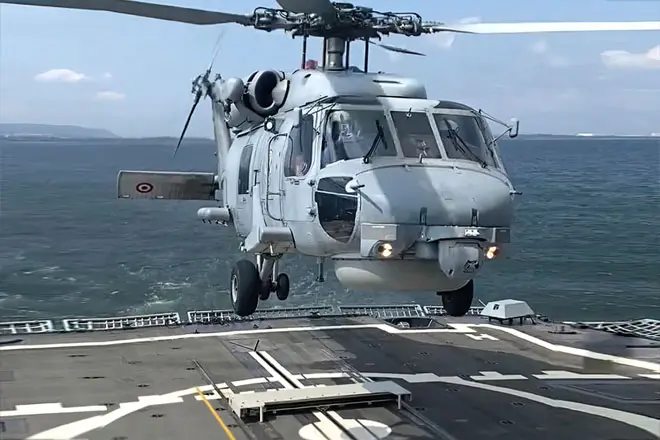
On a frigate flight deck the decisive moment is not the landing itself but the few seconds that follow it. The deck is roughly a tenth of a football pitch, it pitches and rolls in every axis, and until the aircraft is physically locked down the next swell can move nine tonnes of helicopter sideways. Navies have handled that interval with deck crews and chains for decades. Kuşkapanı — the Helicopter Capture and Transfer System developed by Turkey’s Altınay Savunma Teknolojileri — is an attempt to hand those seconds to a machine instead. This file sets out what the system does, which ships it is actually tied to, and which claims are confirmed and which are not.
Why a helicopter has to be ‘captured’
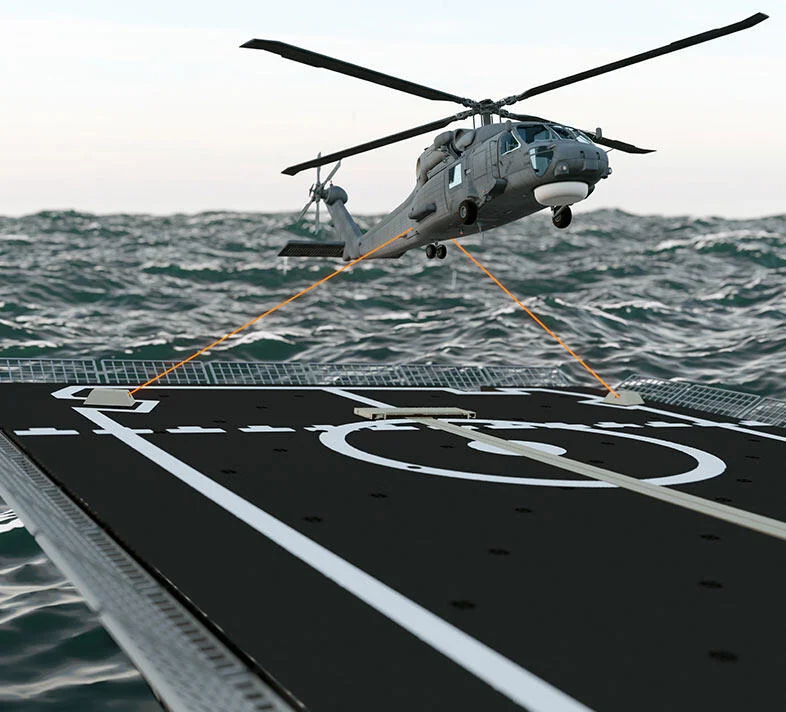
A destroyer or frigate flight deck is a compromise. It is large enough for a maritime helicopter to put wheels down and too small for anything to go wrong. Once the aircraft is on deck the pilot faces a poor choice: shut the engines down and let the airframe sit unsecured while the ship works in a seaway, or keep the rotors turning while deck crew run underneath to fit lashings. Both options have cost aircraft and people.
Western navies converged on the same answer in the 1960s. A probe under the helicopter’s belly is drawn into a grid or trap on the deck, a mechanism clamps it, and the aircraft is then traversed along a rail into the hangar. Canada’s Beartrap, the American RAST and Curtiss-Wright’s ASIST are the best known members of that family. Turkey bought this capability abroad. Kuşkapanı is the domestic entry into the same product class, and the engineering logic behind it is recognisably Altınay’s: precisely moving a heavy object on an unstable base is the same problem the company solves in radar pedestals and servo drives, transferred to a deck.
How the system works, phase by phase
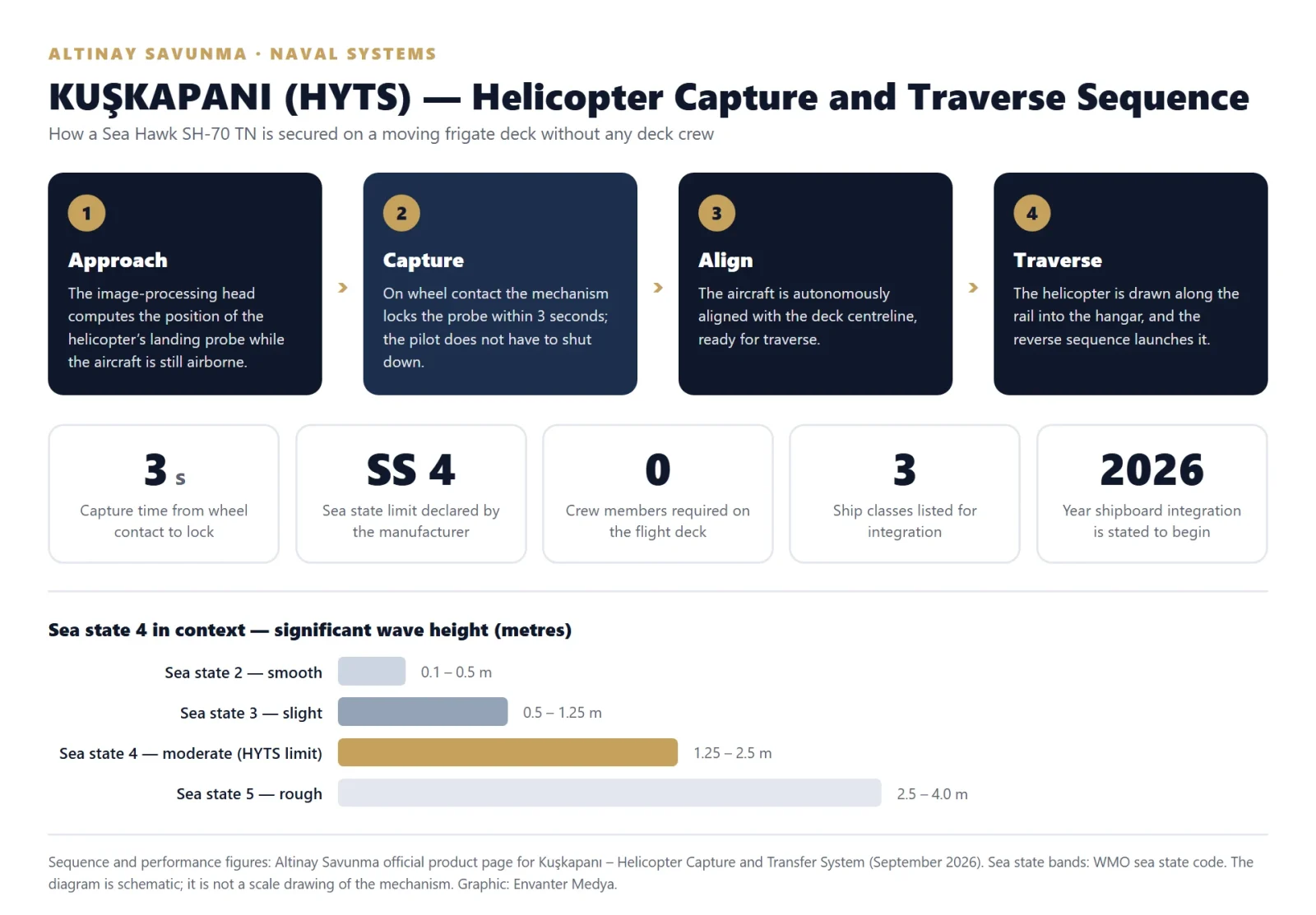
According to the manufacturer’s product page, the system combines image processing and position calculation, embedded software and control algorithms, and hydraulically and pneumatically driven mechanisms. In operational terms it runs in four steps. An optical head tracks the helicopter’s landing probe while the aircraft is still airborne and computes where it will touch down. On wheel contact the mechanism locks the probe inside three seconds, so the pilot never has to leave the aircraft unsecured. The airframe is then aligned autonomously with the deck centreline. Finally it is drawn along the rail into the hangar; for launch the sequence runs in reverse.
Two design choices define the product. The first is that the capture is computed optically rather than commanded by a person watching from the deck edge, which is what makes the three-second figure possible. The second is that no one has to be on the flight deck at all — a single operator works from a console away from the rotor arc. Altınay states the system functions day and night and in poor sea conditions up to Sea State 4, roughly 1.25 to 2.5 metres of significant wave height.
Technical data as published
| Item | Value | What it means |
|---|---|---|
| System name | Kuşkapanı — Helicopter Capture and Transfer System | Rendered HYTS or HCTS in English-language coverage |
| Primary aircraft | Sikorsky Sea Hawk SH-70 TN | The Turkish Naval Forces’ embarked maritime helicopter |
| Capture time | 3 seconds | From wheel contact to mechanical lock |
| Sea state limit | Sea State 4 | Moderate sea, 1.25–2.5 m significant wave height |
| Deck personnel | None required | One operator, from a remote console |
| Sensing | Image processing and position calculation | Probe position computed while the aircraft is still airborne |
| Ship types listed | Frigate, offshore patrol vessel, replenishment and combat support ship | Integration options named by the manufacturer |
| Engineering scope | Embedded software, control algorithms, hydraulic and pneumatic drive | Described as a multi-disciplinary in-house development |
Which ships — status line by line
This is where reporting on Kuşkapanı most often goes wrong, because a programme in negotiation and a programme in integration end up in the same sentence. They should not. The table below keeps the source and the status separate for each platform. A wider view of the company’s platform relationships is in our file on the projects Altınay takes part in.
| Platform | Status | Basis |
|---|---|---|
| İstif-class frigate (MİLGEM 5–8) | In development; shipboard integration stated for 2026 | Altınay statement, March 2026; STM is prime contractor |
| MİLGEM programme (general) | Developed within programme scope | Hakan Altınay interview, August 2026; company news page |
| TF-2000 air-defence destroyer | In discussion with ASFAT — no selection announced | Statement by Altınay’s general manager, October 2025 |
| National aircraft carrier | Candidate for two subsystems; which ones not disclosed | Same source |
| Patrol boat, replenishment ship | Listed as an integration option | Manufacturer product page |
| Export customer | None announced | No public record |
One detail is worth keeping straight. MİLGEM is a programme, not a ship class: the first four hulls are Ada-class corvettes and the next four are İstif-class frigates. Kuşkapanı is being developed for the İstif class. The word used about TF-2000 is ‘discussion’, and it comes from Altınay’s own general manager; ASFAT has not commented. Treating that as a selection would be wrong.
Where it sits against NATO equivalents
The world market for deck handling systems is small and has few players. Curtiss-Wright’s ASIST is in service with the United States, Canada and several other NATO navies; RAST is the older generation of the same idea; France’s SAMAHE and a handful of Northern European systems fill out the field. Kuşkapanı is a new domestic entrant to that class rather than a different kind of product.
Altınay emphasises two differentiators: optically computed autonomous positioning, and operation with no one on the flight deck. Neither claim has been tested against the incumbents in any published comparison, so the honest formulation is ‘same class’, not ‘better’. The export logic, on the other hand, is straightforward. Navies that operate the SH-60/S-70 family, and navies buying Turkish-built hulls, are the natural addressable market; the company says the system also answers the needs of allied countries. Gulf and NATO navies stand out on that reading — an assessment, not a customer list. Our file on Altınay’s exports and international activity tracks what has actually been announced.
JP-5: the second system on the same deck
Kuşkapanı should not be read alone. Altınay is developing a second system for the same İstif-class ships: a JP-5 (NATO F-44) helicopter fuel transfer and servicing system covering transfer from the ship’s tank to the aircraft, filtration, storage and tank servicing, working on deck and during flight operations. General manager Burak Mercan has described the two together as removing an external dependency. Taken as a pair they amount to a helicopter deck package rather than two unrelated subsystems — which is the more useful way to read Altınay’s naval portfolio.
Who builds it
Altınay Savunma Teknolojileri was founded in 2014 and trades on Borsa İstanbul under the ticker ALTNY. Its core business is motion control; unmanned systems sit with the DASAL subsidiary and aerostructures with TAAC, the joint venture with TUSAŞ. A fuller picture is in our overviews of what the company produces and its DASAL and TAAC subsidiaries.
| Kuşkapanı (HYTS) — Fact Box | |
|---|---|
| System | Kuşkapanı — Helicopter Capture and Transfer System (HYTS) |
| Manufacturer | Altınay Savunma Teknolojileri A.Ş. (BIST: ALTNY) |
| Country | Turkey — Teknopark İstanbul, Pendik |
| Class of system | Deck handling / helicopter haul-down and traverse |
| Primary aircraft | Sikorsky Sea Hawk SH-70 TN |
| Capture time | 3 seconds (manufacturer figure) |
| Sea state limit | Sea State 4 (manufacturer figure) |
| Lead platform | İstif-class frigate, STM as prime contractor |
| Integration start | Stated for 2026 |
| Export status | No announced sale |
Frequently Asked Questions
What is Kuşkapanı?
It is the Helicopter Capture and Transfer System developed by Altınay Savunma Teknolojileri. It locks a helicopter to the flight deck at the moment of touchdown, aligns it with the deck centreline and draws it along a rail into the hangar, with no personnel required on the deck.
What does HYTS stand for?
HYTS is the Turkish acronym for Helikopter Yakalama ve Transfer Sistemi — helicopter capture and transfer system. English-language coverage also renders it HCTS. Kuşkapanı is the product name.
Which helicopter is it designed for?
The manufacturer names the Sikorsky Sea Hawk SH-70 TN, the Turkish Naval Forces’ embarked maritime helicopter, as the primary platform. The published performance figures — three-second capture and Sea State 4 — are given for that aircraft.
Which ships will carry it?
It is being developed for the İstif-class frigates with STM as prime contractor, and Altınay has said shipboard integration begins in 2026. The MİLGEM programme scope was confirmed in an August 2026 interview with Hakan Altınay. For TF-2000 the company describes discussions with ASFAT; no selection has been announced.
How does it differ from ASIST or RAST?
It belongs to the same product class. Altınay’s stated differentiators are image-processing-based autonomous positioning and operation without deck crew. No published head-to-head comparison exists, so the accurate statement is that it competes in that class, not that it outperforms it.
Has it been exported?
No export sale has been announced. The company says the system also addresses allied requirements. Navies operating the S-70 family and navies buying Turkish-built hulls are the logical market — that is an assessment, not customer information.
Is the JP-5 system part of Kuşkapanı?
No, it is a separate product. Altınay is developing a JP-5 (NATO F-44) helicopter fuel transfer and servicing system for the same ships. The two together form a helicopter deck package.
Why does capture time matter so much?
Because the window between touchdown and the next significant wave is short. Every second the aircraft sits unsecured on a moving deck is a second in which it can slide or tip. Compressing that interval to three seconds, without anyone standing under the rotor disc, is the entire point of the system.
Sources
- Altınay Savunma, official product page: Kuşkapanı — Helicopter Capture and Transfer System (altinaysavunma.com, accessed September 2026)
- Altınay Savunma, 2025 full-year results statement: Kuşkapanı for MİLGEM frigates, shipboard integration in 2026 (March 2026)
- SavunmaTR, reporting on Altınay’s İstif-class work and on TF-2000 discussions with ASFAT (October 2025)
- Hürriyet, interview with Hakan Altınay by Zeynep Bilgehan (August 2026)
- WMO sea state code — reference scale for the significant wave heights cited
- Envanter Medya archive — Altınay product and programme coverage