Egypt’s Defense Industry and Military Procurement Profile: Budget, Suppliers and Turkey Ties

This file consolidates Egypt’s defense industry and military procurement profile on a single page: the defense budget, force structure, procurement institutions, domestic production base, main supplier countries, the trajectory of relations with Turkey, and open modernization needs. It is a living reference document, updated as Turkey-Egypt defense contacts intensify.
Egypt’s Defense Profile at a Glance
- Defense budget: roughly $5B/year officially; effective resources run higher via US aid and credit-financed packages
- Armed forces: the Arab world’s largest military, ~440,000 active personnel
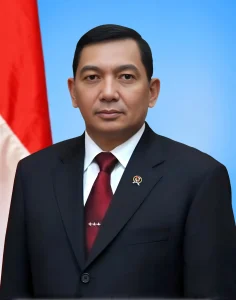
- Defense Minister: Lt. Gen. Ashraf Salem Zaher (since 11 February 2026)
- Procurement character: deliberate diversification across the US, France, Russia and China; a global top-10 arms importer in 2020-2024 (SIPRI)
- Domestic base: Ministry of Military Production + Arab Organization for Industrialization (AOI); EDEX exhibition
- Turkey status: February 2026 military framework agreement; two letters of intent in July 2026; ASELSAN office in Cairo
Budget and Force Structure
Egypt’s official defense budget is announced at around $5 billion a year, but the effective resource base is assessed to be higher: US Foreign Military Financing adds roughly $1.3 billion annually, major purchases are often credit-financed, and the military’s extensive economic footprint sits outside the budget line. The armed forces comprise four main services — Army, Navy, Air Force and Air Defense Forces. The separate Air Defense Forces command is a Soviet-school legacy, and the branch in which current Defense Minister Ashraf Salem Zaher spent his career.
Procurement Institutions and Domestic Industry
| Institution | Role |
| Ministry of Defense and Military Production | Main procurement and military-production authority; state military factories report to it |
| Arab Organization for Industrialization (AOI) | State holding for aerospace, electronics and vehicles; principal counterpart for co-production programs |
| EDEX (Egypt Defence Expo) | Cairo’s international defense exhibition; the regional shop window |
Domestic production spans small arms and ammunition through armored vehicle assembly — including the US-licensed M1A1 Abrams line. But in fighters, submarines and high-end systems Egypt remains import-dependent, which is why official language increasingly stresses co-production and technology transfer. The “joint capability development” phrasing in the letters of intent signed with Turkey reads squarely within that frame.
Main Suppliers and Key Systems
| Supplier | Key systems | Note |
| United States | ~220 F-16s (Block 40/52), co-produced M1A1 Abrams, Apache | ~$1.3B annual FMF; the F-16 fleet’s modern-munitions shortfall is a chronic issue |
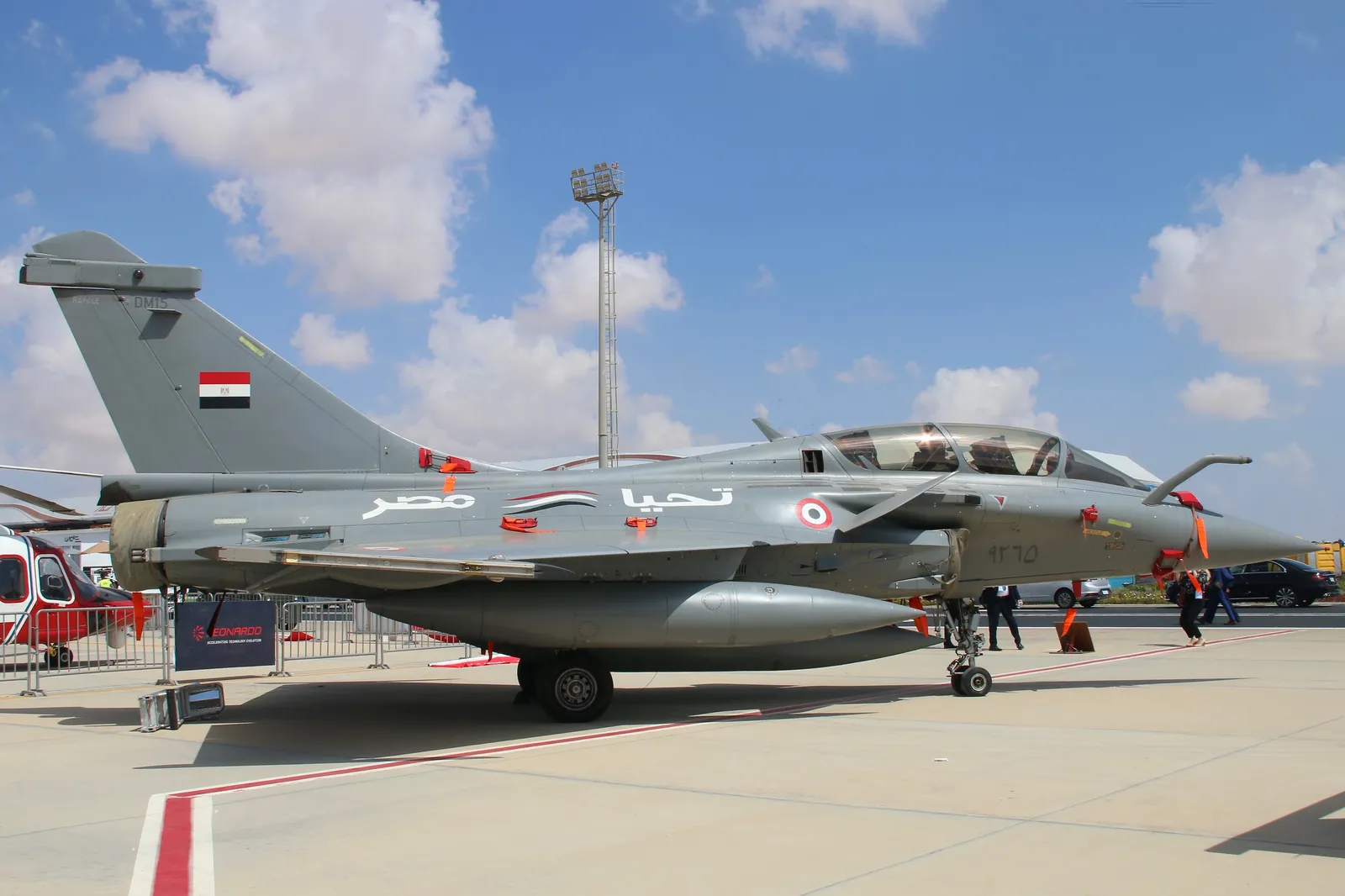
| France | Rafale (43+ delivered, 12 more due by end-2026), 2 Mistral-class LHDs, FREMM frigate | The most visible Western partner since 2015 |
| Russia | MiG-29M/M2 (45+), Ka-52 helicopters | Su-35 buy cancelled January 2022 under CAATSA pressure |
| Germany | 4 Type 209/1400mod submarines, MEKO A-200 frigates | The European leg of naval modernization |
| China | J-10C/J-31/J-20 talks reported (2024); training cooperation | No confirmed major platform contract yet |
| Italy | 2 FREMM frigates, fast-tracked | 2020-2021 package |
Source: SIPRI Arms Transfers Database and open-source defense reporting.
The Doctrine: Deliberate Diversification
Egypt’s procurement character fits in one sentence: never fully dependent on any single supplier. The partial suspension of US aid after 2013 pushed Cairo toward France and Russia; CAATSA sanctions pressure killed the Su-35; the reported China talks and the newly opened Turkish channel continue the same reflex. The doctrine lowers the entry barrier for a new supplier — while also meaning that major platform decisions are weighed against political balances, not just technical merit.
Defense Relations with Turkey: Chronology
| Date | Development |
| 2013-2023 | Political rupture; defense ties minimal |
| Feb 2024 | President Erdoğan visits Cairo — first state-level visit in 12 years |
| Sep 2024 | President el-Sisi visits Ankara; $15B trade target set |
| Late 2025 | ASELSAN opens a representative office in Cairo |
| Feb 2026 | Bilateral military framework agreement |
| Jun 2026 | Joint air force exercise |
| 13 Jul 2026 | Defense Minister Zaher signs a defense cooperation LOI with Yaşar Güler in Ankara |
| 14 Jul 2026 | Zaher signs a defense-industry cooperation LOI with SSB President Haluk Görgün; meets Baykar’s leadership |
Cooperation baskets on public record: unmanned systems, armored vehicles, warships, ammunition production and electronic warfare. Person file: Ashraf Salem Zaher explained.
Open Modernization Threads
- Fighters: F-16 munitions restrictions and fleet aging; Rafale top-ups; reported Chinese fighter talks; stated interest in Turkey’s KAAN program (no formal agreement).
- Navy: frigate/corvette fleet growth and domestic yard capacity (Alexandria Shipyard) — technical ground for MILGEM-class cooperation.
- Unmanned systems: current inventory limited; senior-level contact with Baykar established.
- Ammunition production: domestic capacity expansion, named in the LOIs.
- Air defense: integration friction across the mixed Russian-Western inventory is a chronic thread.
Possible Matches for Turkish Industry — Envanter Medya Editorial Assessment
This is Envanter Medya’s open-source editorial assessment, not confirmed sales information. The five baskets named in the LOIs map onto Turkish industry’s strongest export classes: the Baykar/TUSAŞ UAV families, the BMC-Otokar-FNSS armored ecosystem, STM’s MILGEM derivatives, MKE’s ammunition lines and ASELSAN’s electronic warfare portfolio. Egypt’s co-production requirement points toward licensed-production models with AOI and the military factories. No contract is on public record yet.
Frequently Asked Questions
How big is Egypt’s defense budget?
Officially around $5B/year; effective resources run higher with US aid and credit-financed packages.
Who is Egypt’s defense minister?
Lt. Gen. Ashraf Salem Zaher, in office since 11 February 2026.
Where does Egypt buy its weapons?
Mainly the US, France, Russia, Germany and Italy; China talks have been reported; Turkey is at the letter-of-intent stage.
What has Egypt bought from Turkey?
No disclosed delivery contract yet — a February 2026 framework agreement, two July 2026 LOIs and an ASELSAN office in Cairo.
How large is Egypt’s military?
About 440,000 active personnel — the largest armed forces in the Arab world.
Why does Egypt diversify suppliers?
The partial US aid suspension of 2013 exposed single-source risk; the portfolio has been deliberately spread ever since.
What is EDEX?
Egypt Defence Expo — Cairo’s international defense exhibition.
Sources
- SIPRI Arms Transfers Database and MENA regional analyses — import rankings, supplier distribution
- SSB and Turkish MoND statements — February 2026 framework agreement, July 2026 LOIs
- savunmasanayi.org, Anadolu Agency — Zaher’s Ankara visit
- Egyptian Ministry of Defense and SIS.gov.eg — institutional structure
- Open-source defense press (Defense News, Janes, Army Recognition) — platform programs
- Image: Egyptian Air Force Rafale DM, El Alamein 2024 — Wikimedia Commons, Colin Cook, CC BY-SA 2.0
Last updated: 17 August 2026 — this file is updated as new meetings, agreements or deliveries emerge.