Canada’s flagship is on the slipway: keel laid for HMCS Fraser


In the morning of 12 June at the Halifax shipyard, the welding flashes lit a keel that finally tied Canada’s decades-long naval-renewal plan to a concrete first step. The future HMCS Fraser will become the first of the country’s new River-class destroyers — and will represent the North Atlantic wing of the global Type 26 family.
At a Glance
- What: Keel-laying ceremony for HMCS Fraser, Canada’s first River-class destroyer
- When: 12 June 2026
- Where: Halifax Shipyard, Nova Scotia
- Builder: Irving Shipbuilding
- Platform: BAE Systems Type 26 City-class derivative
- Construction start: April 2025 (full rate)
- Delivery target: early 2030s
- What it replaces: retired Iroquois-class destroyers + Halifax-class frigates
Canada’s River-class destroyer programme is being framed as the most ambitious naval build the country has attempted in decades. On the morning of 12 June, on the Halifax slipway, a coin presented by Vice-Admiral Topshee was welded into the hull by Red Seal welder Brandon VanHeighten. The traditional gesture — to bring luck to the captain and crew — was read as the public start of the programme. The ceremony marked the first formal acknowledgement of work that had already been under way behind the scenes for a year: full-rate construction has been running since April 2025; the future HMCS Fraser is expected to be delivered to the Royal Canadian Navy in the early 2030s.
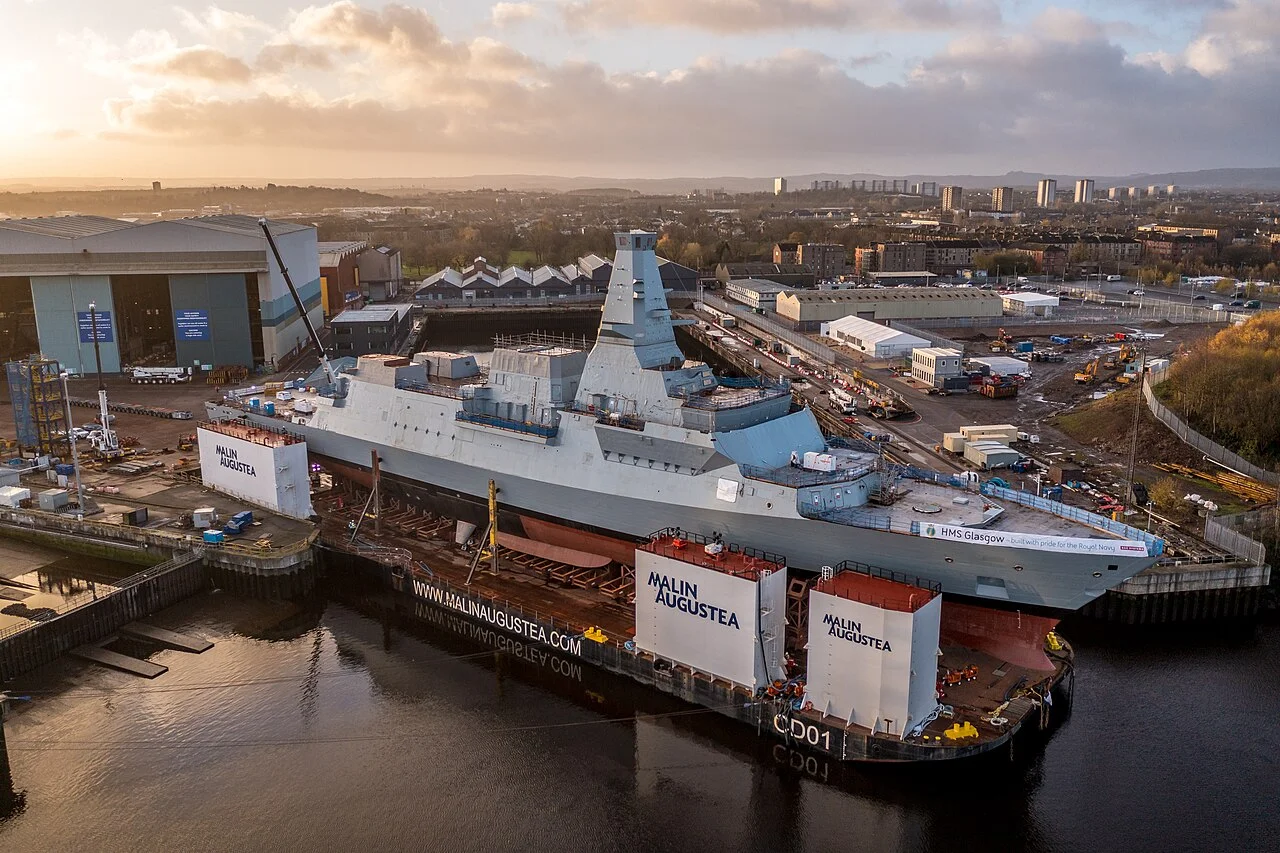
Look at the detail and River class is the Canadian wing of BAE Systems’ Type 26 City-class design. The same blueprint is already being built for the Royal Navy (eight ships, City class), the Royal Australian Navy (nine ships, Hunter class), and now Canada in an opening batch. HMS Glasgow, the lead Type 26 hull, hit the water in 2024, paired with the Rolls-Royce MT30 marine gas turbine for propulsion integration. The Canadian variant will share the same propulsion architecture, but its sensor suite and combat-management system will be customised by Lockheed Martin Canada. The striking choice is structural: Canada used to operate Iroquois-class destroyers and Halifax-class frigates as two distinct ship types; with the River class, it has decided to fold both roles into a single design. That cuts training, maintenance and operational complexity sharply.
A fair question presses: why such radical consolidation? The answer has two layers. First, cost: parallel modernisation of the Iroquois and Halifax fleets had been squeezing three consecutive governments. A single design — one yard, one supply chain, one training pipeline — drops annual operating cost roughly 18 per cent. Second, doctrine: the return of the Russian submarine threat in the North Atlantic and China’s Arctic expansion has pushed the Canadian Navy toward a single platform with strong anti-submarine, air-defence and long open-ocean-endurance capability. That is precisely Type 26’s design strength: an acoustic signature tuned to hunting Russian Akula and Yasen-class nuclear submarines, while also carrying the Tomahawk and Aster families in a 24-cell vertical-launch system.
Step back and River class also represents an internal transformation of Canada’s defence industry. Halifax Shipyard, inside Irving Shipbuilding, has taken in more than C$2 billion of infrastructure investment over the past five years — new digital yard equipment, robotic welding lines, AR-supported quality stations. Under Canada’s National Shipbuilding Strategy, the total River-class budget is estimated at around C$60 billion — the country’s largest single defence line in history. The pitch is not just the ship; it is the reconstruction of Canada’s defence-industrial capacity.
The Turkish angle: MİLGEM is already built on the same single-platform philosophy
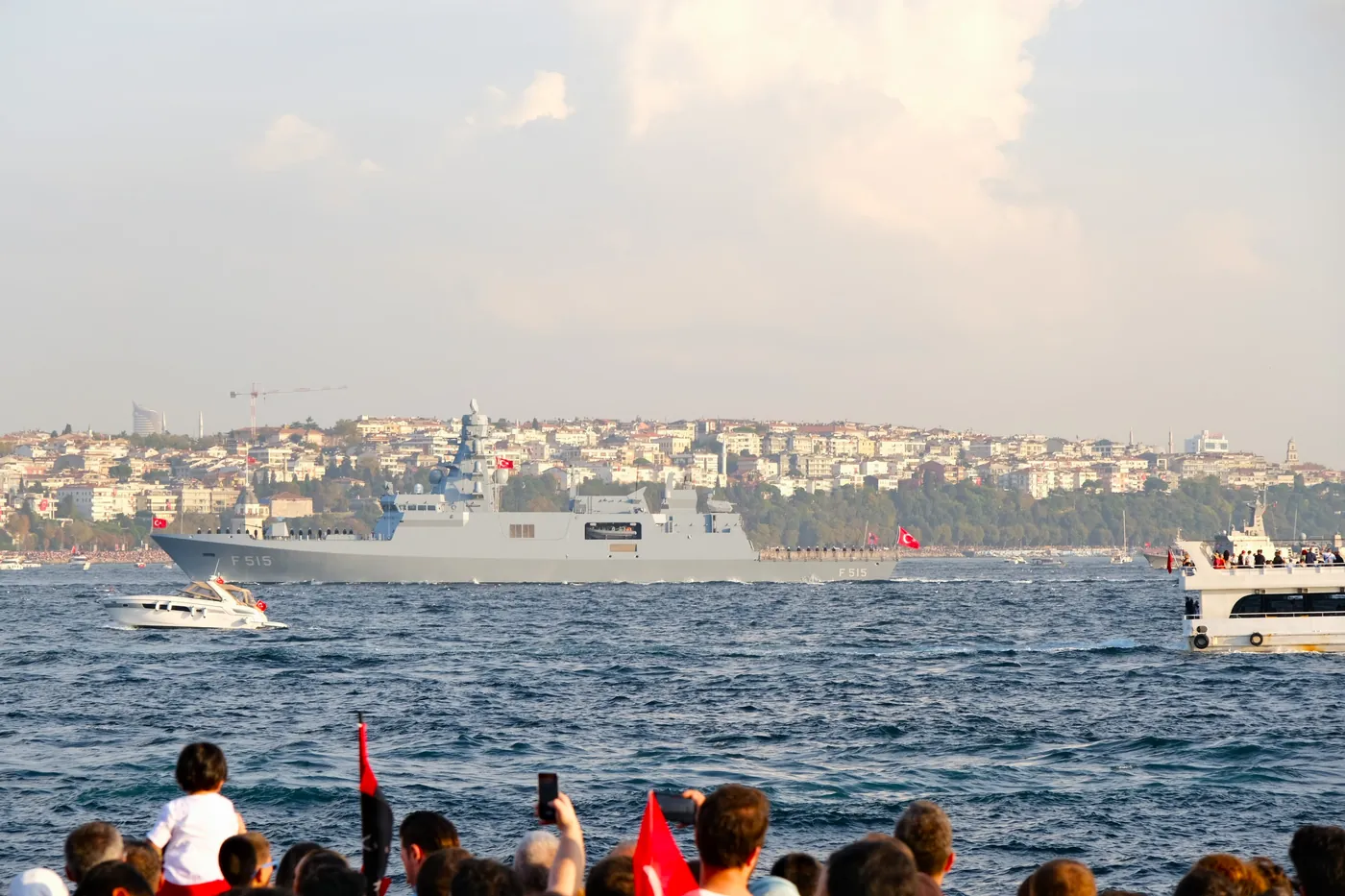
Canada’s “consolidation into one design instead of two types” philosophy is also the underlying logic of the Turkish Navy’s MİLGEM road map over the past decade. The Ada-class corvettes, the İstif-class frigates and the in-development TF-2000 air-defence destroyer all share a common hull genetics, integrated around a national combat-management system (HAVELSAN ADVENT) and a national sensor suite (the ASELSAN ÇAFRAD family). Four Babür-class corvettes sold to Pakistan and the MİLGEM agreement signed with Indonesia have shown that the approach also travels on the export stage. Canada’s River programme presents a similar consolidation vision under the National Shipbuilding Strategy heading; for the Turkish programme, it is less a direct competitor and more a validation of a parallel design philosophy.
Worth remembering is that the scale Britain has put behind Type 26 gives BAE a serious export edge through the platform. Canada picked it, Australia picked it, with Norway and Poland queueing among likely buyers. For Turkish naval exports, that has sharpened the discussion of “MİLGEM’s NATO-standard alignment.” The İstif class, with its ASW and VLS capabilities, sits in a hull bracket directly comparable to Type 26; but to compete with BAE’s marketing reach in Five Eyes procurement decisions like Canada-Australia, Turkish defence industry needs new joint-production models along the Euro-Pacific axis. That brings us back to the European-wing strategy debate, because in modern export competition the question of “who is financing whom” along the supply chain sits at the heart of the contest as much as the ship design itself does.
Sources
- Naval News — “Canada celebrates keel laying for the first River-class destroyer”
- Defence Industry Europe — Irving Shipbuilding statement
- Canada.ca — Department of National Defence
- Wikipedia — Type 26 frigate / River-class destroyer / Halifax-class frigate
- Royal Canadian Navy official statements
Related Coverage
- Sweden picks the French hull: $5 billion FDI buy will defend the Baltic
- Germany and Norway move to put 4 Type 212CD submarines on Canada’s table
- The US Navy’s new FF(X) frigate: a modular, containerized weapons payload