History of ROKETSAN: From 1988 to Turkey’s Missile Leader

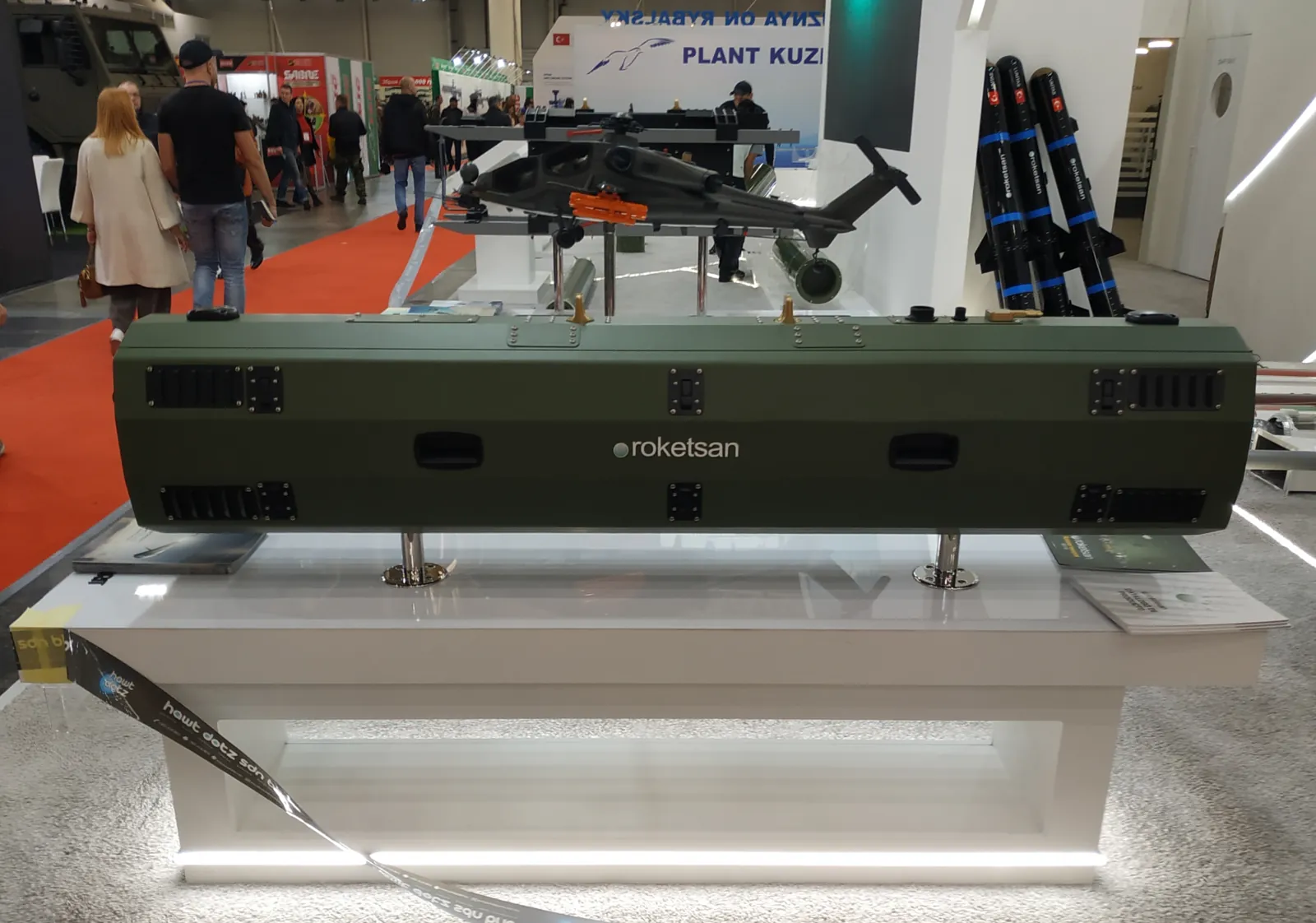
ROKETSAN was founded on 14 June 1988 in Ankara by a decision of Turkey’s Defence Industry Executive Committee, tasked with designing, developing and producing rockets and missiles domestically. Over the following decades it grew from guided rockets and anti-tank missiles into air-defence, anti-ship and ballistic systems, becoming the core of Turkey’s missile industry.
| ROKETSAN — History at a Glance | |
|---|---|
| Full name | ROKETSAN Roket Sanayii ve Ticaret A.Ş. |
| Founded | 14 June 1988, Ankara |
| Founding decision | Defence Industry Executive Committee |
| Headquarters | Ankara (Elmadağ; Lalahan, Kırıkkale) |
| CEO/GM | Murat İkinci |
| Core business | Missiles, rockets, air defence, guided munitions |
| Employees | ~5,000 (~2,000 in R&D) |
| Latest expansion | Lalahan & Kırıkkale plants, April 2026 |
When and why was ROKETSAN founded?
ROKETSAN was established on 14 June 1988 in Ankara. The company was created by a decision of the Defence Industry Executive Committee, the top body that steers Turkey’s defence procurement, with a clear mandate: to make Turkey a country that designs, develops and produces its own rockets and missiles rather than importing them.
The context matters. In the late 1980s, guided weapons were a field mastered by only a handful of nations, and Turkey depended on foreign suppliers for the precision systems its armed forces needed. Founding a dedicated national company was a strategic choice to build sovereign know-how in propulsion, warhead design, guidance and systems integration — capabilities that are difficult to acquire and easy to have cut off by an export embargo. ROKETSAN was set up as the lead organisation for that mission, and it remains a foundation-controlled company rather than a listed corporation.
From the outset the company combined manufacturing with heavy research and development. Rather than assembling foreign designs, it invested in the underlying technologies — solid-fuel and composite rocket motors, warheads, seekers and control systems — so that later products could be engineered in-house and tailored to Turkish requirements.
From founding to today
ROKETSAN’s early years were devoted to building the industrial and technical base: production facilities and test ranges at Elmadağ, east of Ankara, and the propulsion, warhead and guidance expertise that guided weapons require. During the 2000s the company moved into fielded precision systems, most visibly with the CİRİT laser-guided rocket and a family of anti-tank missiles that gave Turkish helicopters, drones and armoured vehicles a domestic guided-weapon option.
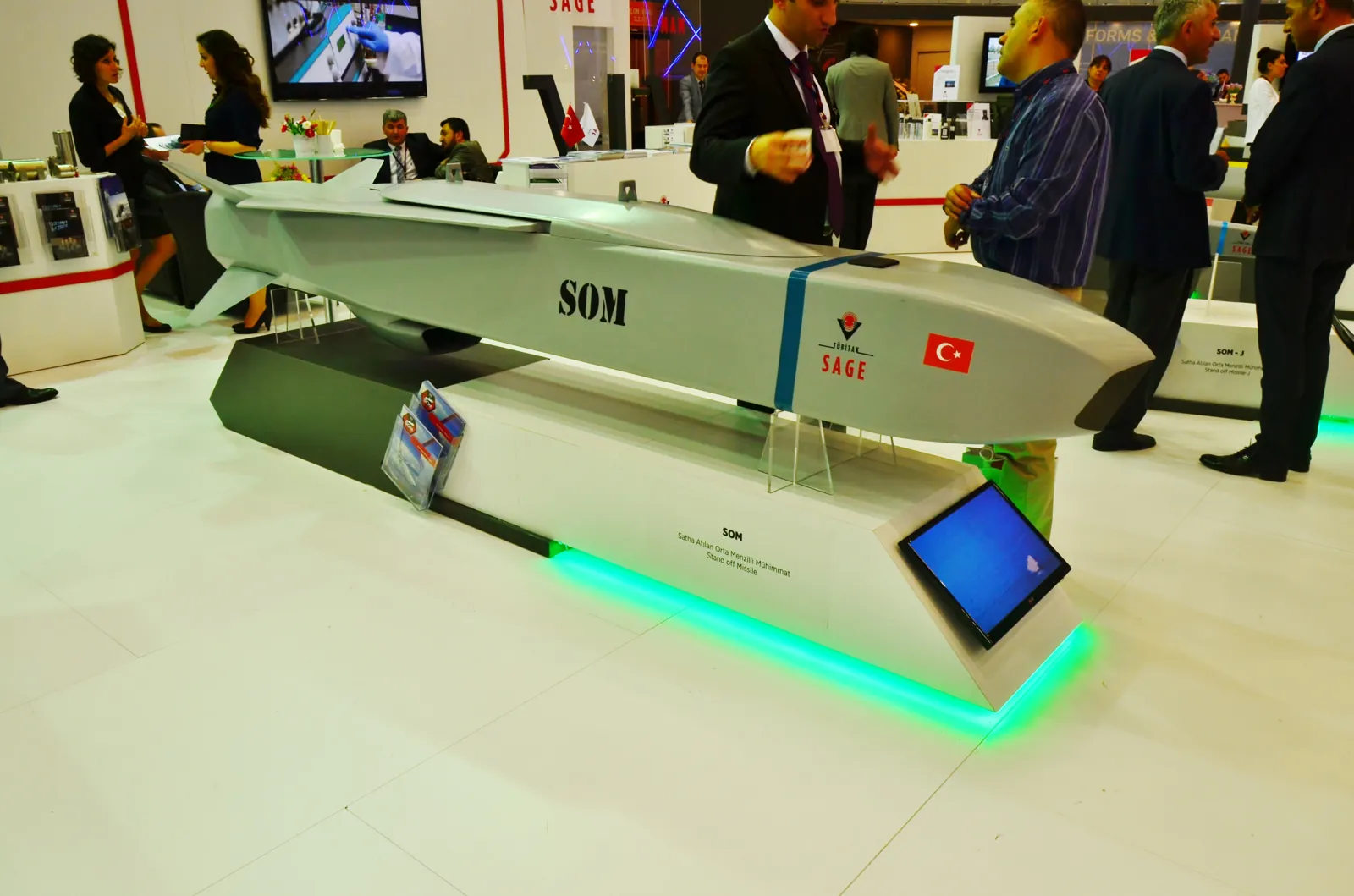
From there the portfolio widened steadily. The company advanced into air defence with the HİSAR family and, later, the longer-range SİPER programme, and into naval strike with the ATMACA anti-ship missile. In parallel it developed larger surface-to-surface systems, moving from artillery rockets toward ballistic missiles such as BORA and TAYFUN, and produced the MAM family of smart micro-munitions that became a signature payload for Turkish unmanned aircraft.
This progression — from subsystems and guided rockets toward complete air-defence, anti-ship and ballistic systems — reflects a deliberate climb up the technology ladder. Exact dates for many individual programmes have not been officially disclosed, so they are described here by general period rather than a specific year.
Recent breakthroughs
The clearest sign of how far ROKETSAN has come is its current expansion. In April 2026 the company inaugurated two major new facilities — a missile integration plant at Lalahan and a propellant production plant at Kırıkkale — with total investment exceeding $1 billion. The stated goal is to raise missile production capacity by roughly five times, a response to sharply rising demand from both the Turkish Armed Forces and export customers.
Commercially, the company has grown quickly. It reported defence revenue of about $1.55 billion for 2024 (Defense News Top 100 2025, ranked 71st worldwide), and management has stated that turnover passed $2 billion in 2025, with new contracts lifting the total order book toward roughly $10 billion. ROKETSAN has said it aims to raise exports above 50% of turnover, a shift from a largely domestic customer base toward international markets.
Where ROKETSAN stands today
Today ROKETSAN is one of the pillars of Turkey’s defence-industrial base and the country’s centre of gravity for missile and rocket technology. It employs around 5,000 people, some 2,000 of them in research and development, and is led by general manager Murat İkinci. Ownership sits with the Turkish Armed Forces Foundation (TSKGV) and partner institutions; the company is not publicly traded.
Its systems now span land, air, sea and space applications, and it works closely with other national players — drawing on ASELSAN for electronics and supplying munitions that arm platforms built by manufacturers such as TUSAŞ/TAI and Baykar. From an import-dependent starting point in 1988, ROKETSAN has become the weapons-and-effects layer of Turkey’s wider drive toward defence self-sufficiency.
Where an official founding or programme date exists, it is stated. Undated development steps are given as general periods rather than invented years, and technical values are included only where officially released. The 2025 turnover figure is based on a statement by the CEO and will be updated when an audited annual report is published.
Frequently Asked Questions
When was ROKETSAN founded?
ROKETSAN was founded on 14 June 1988 in Ankara, by a decision of Turkey’s Defence Industry Executive Committee.
Why was ROKETSAN established?
It was created to give Turkey its own capability to design, develop and produce rockets and missiles domestically, reducing dependence on foreign suppliers for guided weapons.
Who founded ROKETSAN?
It was set up by a decision of the Defence Industry Executive Committee as Turkey’s lead rocket and missile organisation, and is controlled by the Turkish Armed Forces Foundation (TSKGV).
What were ROKETSAN’s first products?
Its early work focused on rocket propulsion and guided systems; in the 2000s it fielded the CİRİT laser-guided rocket and a family of anti-tank missiles.
How has ROKETSAN grown recently?
In April 2026 it opened new plants at Lalahan and Kırıkkale with over $1 billion of investment, aiming to increase missile production capacity roughly fivefold, and reported turnover above $2 billion for 2025.
Where is ROKETSAN today?
It is one of the pillars of Turkey’s defence industry, based in Ankara with around 5,000 employees, producing missiles, air-defence systems and munitions for domestic and export markets.
Sources
- ROKETSAN official — roketsan.com.tr
- Turkish Armed Forces Foundation (TSKGV) — tskgv.org.tr
- Defense News — Top 100 Defense Companies 2025
- Anadolu Agency and Daily Sabah reporting (2026)