The Decade Ahead: Where Turkish Defence Industry Goes Next

The Decade Ahead: Where Turkish Defence Industry Goes Next
The Turkish defence industry of 2025 looks nothing like the Turkish defence industry of 2015. A reasonable forecast says the industry of 2035 will look just as different. Here is what the next decade probably brings — and where the structural risks live.
Where The Curve Is Going Up
- Combat aviation: KAAN serial production, Hürjet at volume, T929 heavy attack helicopter exports. Türkiye becomes a credible exporter of complete combat aviation suites.
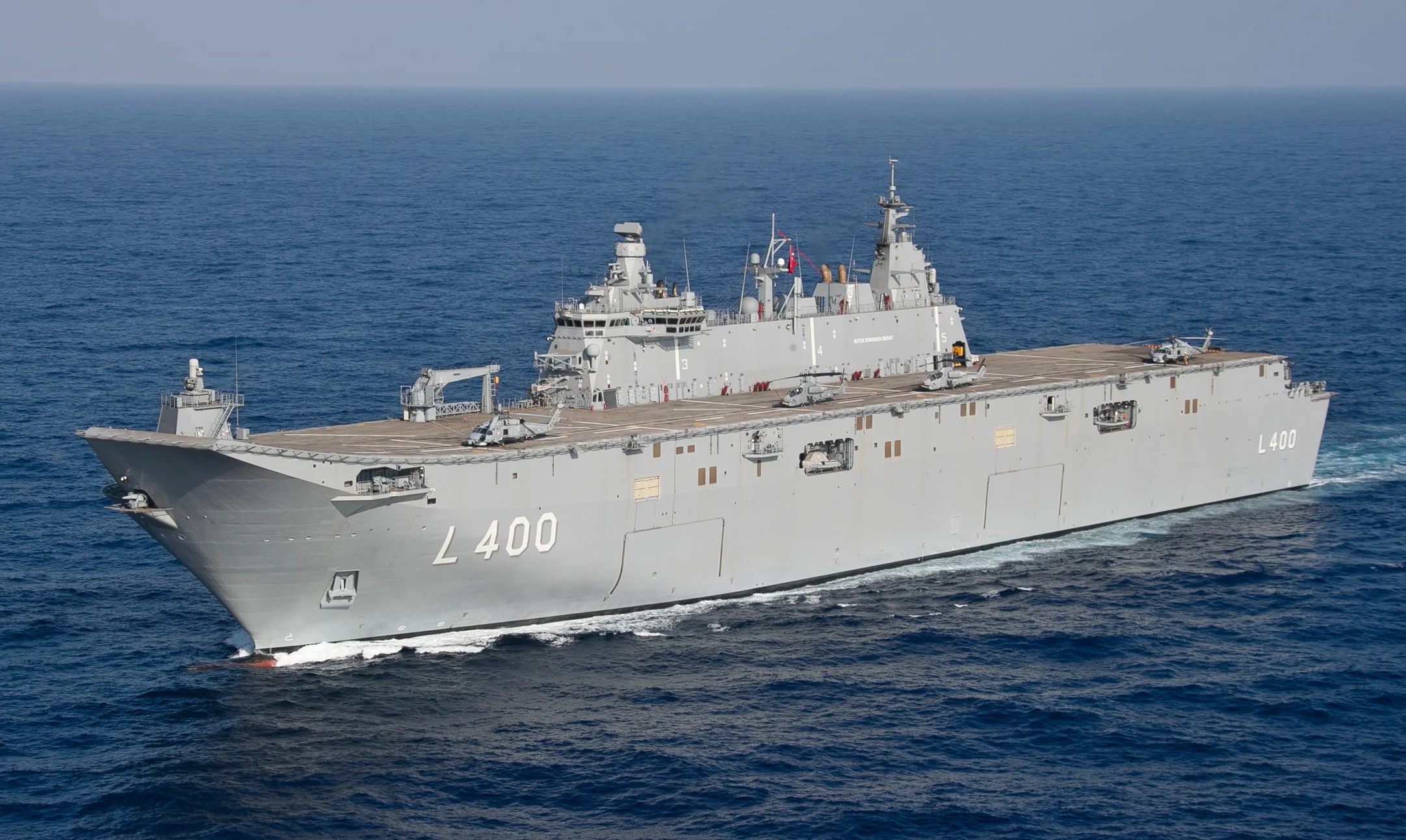
- Naval shipbuilding: MİLDEN submarine programme delivers first hulls. TF-2000 air-defence destroyer enters service. Türkiye joins the small group of countries that build entire navies from corvette to submarine.
- Missile families: SİPER Block 2 with anti-ballistic capability, hypersonic research, longer-range cruise missiles. The Steel Dome architecture becomes the exportable layered defence the U.S. and Russia have offered for decades.
- UAV / UCAV ecosystem: Kızılelma jet UCAV in operational service. ANKA-3 deliveries. MIUS family expands. Türkiye stays at the frontier of armed UAV development.
- Space: Probe Rocket programme matures into operational satellite launch. Independent earth observation constellation expands. Türkiye becomes a regional space power.
Where The Risks Live
- Engine sovereignty: KAAN’s interim F110 engine must be replaced with a domestic alternative. T929’s TS1400 is a start, but the higher-thrust fighter-class engine remains years away.
- Semiconductor supply: Defence electronics depend on global semiconductor flows that geopolitical tension can interrupt. ASELSAN’s domestic chip programme is essential but unfinished.
- Capital scale: Top-tier programmes require capital depths that Turkish industry has not yet had to manage. Going from $10B to $30B in annual exports is not a linear extrapolation.
- Talent pipeline: Engineering and management talent is the binding constraint on growth. The universities must keep up.
- Geopolitical exposure: A Türkiye that exports widely is a Türkiye that must navigate the politics of its export markets — even when those markets disagree with each other.
The Three Most Important Decisions Of The Decade
1. Engine independence by 2030. KAAN with a domestic engine is a sovereign capability. KAAN with an American engine is a hostage.
2. Capital structure of the primes. ASELSAN, TUSAŞ, Roketsan and others are scaling toward sizes where their current ownership structures may constrain them. The decisions made in the next five years about partial listings, foreign capital and joint ventures will shape what these companies can do in 2035.
3. Export discipline. Turkish defence exports work because Türkiye delivers fast and asks fewer questions. That model has limits — both political and ethical. The choices made about who Türkiye sells to over the next decade will define the country’s standing in the broader defence-supplier ecosystem.
The Bottom Line
Turkish defence industry will probably be among the world’s top eight by 2035. Whether it becomes the alternative supplier of choice for the entire Global South — or remains a specialist supplier in defined categories — depends less on technology than on the strategic, financial and political choices made over the next ten years.