SPICE 2000 Guided Bomb Kit: Technical Specs, Gaza Operations and Turkish HGK/KGK Alternatives

SPICE 2000 (Smart, Precise Impact, Cost-Effective) is a guidance and wing kit developed by Israel’s Rafael Advanced Defense Systems that converts a standard Mk-84 (2,000 lb / 907 kg) unguided bomb into a precision-guided munition. With GPS+INS mid-course guidance and scene-matching optical terminal guidance, SPICE 2000 delivers a circular error probable (CEP) below three metres at ranges exceeding 100 kilometres. It is the Israeli Air Force’s primary large-calibre precision weapon and has been central to documented controversies regarding the use of heavy munitions in densely populated areas during the 2023–2024 Gaza conflict.
Overview
SPICE belongs to a category of guided munitions known as guidance kits or “smart bomb” conversion kits. The kit attaches to an existing Mk-82, Mk-83, or Mk-84 unguided bomb — a significant cost advantage over purpose-built missiles. The bomb’s aerodynamic drag is supplemented by a deployable wing set that enables the weapon to glide significant horizontal distances after release, keeping the releasing aircraft outside most threat envelopes.
SPICE’s distinguishing technical feature is its dual-mode terminal guidance. GPS+INS provides precision throughout the mid-course phase. In the terminal phase, a scene-matching area correlator (SMAC) using either CCD or IIR sensors compares the incoming ground view against a pre-loaded reference image of the target. If GPS signal is jammed or spoofed, SMAC continues to guide the weapon independently. This redundancy makes SPICE operationally reliable in electronic warfare environments where GPS-only systems (such as JDAM) may be degraded.
SPICE Family
| Variant | Bomb | Weight | Range | Target Profile |
|---|---|---|---|---|
| SPICE 250 | Mk-81 / SDB-class | ~113 kg | ~60 km | Light structures, thin armor |
| SPICE 1000 | Mk-83 | ~454 kg | ~60–80 km | Medium structures, runways |
| SPICE 2000 | Mk-84 | ~907 kg | ~100+ km | Hardened structures, underground facilities, reinforced concrete |
Technical Specifications
| Parameter | Value |
|---|---|
| Developer | Rafael Advanced Defense Systems (Israel) |
| Type | Guidance and wing conversion kit |
| Compatible bomb | Mk-84 (2,000 lb / 907 kg) |
| Total munition weight | ~1,020 kg (with kit) |
| Range | 60–100+ km (altitude-dependent) |
| CEP | <3 metres |
| Mid-course guidance | GPS + INS |
| Terminal guidance | IIR or CCD camera + SMAC scene-matching |
| GPS-denied performance | SMAC optical guidance maintains <3 m CEP |
| Target types | Hardened concrete, underground facilities, command bunkers, major infrastructure |
| Explosive fill (Mk-84) | ~430 kg TNT equivalent |
| Blast radius | Large; 300+ metre lethal radius in open terrain |
| Platforms | F-16I, F-15I (Israel); Tornado (Germany); NATO-compatible aircraft |
How It Works
Pre-flight programming: Target GPS coordinates and SMAC reference imagery are loaded into the kit’s mission computer. The pilot receives release parameters for optimal glide range.
Release: The aircraft releases the bomb at altitude and begins its egress. The wing kit deploys and the bomb begins a powered glide toward the target area.
GPS+INS mid-course phase: The bomb follows a GPS+INS guidance solution for the majority of the flight, maintaining heading and altitude profile.
SMAC terminal phase: Within the terminal approach zone, the camera-based scene matcher activates. Incoming imagery is compared against the pre-loaded reference image. The weapon makes final trajectory corrections. CEP <3 metres is achieved even in GPS-denied conditions.
Impact: The Mk-84’s ~430 kg explosive fill produces a blast and fragmentation effect designed to defeat reinforced concrete and penetrate underground structures.
Operational Use and Combat History
Israeli Air Force — General Use
SPICE 2000 has been the IAF’s standard large-calibre precision weapon since the early 2000s, employed in strikes against buildings, tunnel entrances, and command infrastructure in Gaza, Lebanon, and Syria. Its long range allows releasing aircraft to operate from over the Mediterranean without entering Gaza airspace.
2023–2024 Gaza Conflict — Documented Use
Following the 7 October 2023 Hamas attack, the Israeli Air Force conducted an intensive air campaign against targets in Gaza. SPICE 2000 was used in a large number of these strikes. Israeli military stated that primary targets included Hamas tunnel networks, command centres, and weapons storage facilities.
The UN Office for the Coordination of Humanitarian Affairs (OCHA), the UN Expert Panel, Amnesty International, and Human Rights Watch documented the extensive use of 2,000-pound-class guided munitions in Gaza, including in and adjacent to residential areas. HRW analysts, working with independent weapons investigators, assessed that certain documented strikes were consistent with SPICE 2000 delivery based on crater analysis and munition fragments.
Muwasi incident (September 2024): An airstrike on the al-Muwasi area — designated by the Israeli military as a “humanitarian zone” — was assessed by multiple investigators as involving 2,000 lb-class precision munitions. UN agencies recorded substantial civilian casualties from the strike. The Israeli military disputed the characterisation of the area as exclusively civilian.
International responses: In May 2024 the United States government temporarily suspended delivery of approximately 1,800 Mk-84 bombs and 1,700 Mk-82 bombs to Israel, citing concerns about their use in Rafah and other densely populated areas. Belgium, Spain, and the Netherlands imposed separate weapons transfer restrictions. The policy debate over whether precision guidance mitigates — or merely concentrates — harm from heavy munitions in urban environments became one of the central IHL discussions of the conflict.
Operator Countries
| Country | Variant | Platform | Status |
|---|---|---|---|
| Israel | SPICE 2000 / 1000 / 250 | F-16I, F-15I | Operational; extensive use |
| Germany | SPICE 1000 | Tornado | Operational (retiring Tornado) |
| Singapore | SPICE (variant unclear) | F-15SG | Limited / evaluation |
| India | SPICE 2000 (negotiations) | Su-30MKI / Rafale | Ongoing negotiations |
Advantages
- Cost-effective precision: Converts existing Mk-84 inventory at lower cost than purpose-built missiles; no new bomb airframe procurement required.
- Long standoff range: 100 km+ allows the releasing aircraft to remain outside most medium-range air defense envelopes.
- GPS-denied resilience: SMAC optical terminal guidance maintains sub-3-metre CEP even when GPS is jammed or spoofed.
- Hard target defeat: Mk-84’s 430 kg explosive fill is purpose-designed for reinforced concrete and underground facility penetration.
Disadvantages and Controversies
- Large blast radius — inherent civilian risk in urban environments: A 907 kg bomb with a 300+ metre open-terrain lethal radius cannot be made safe for use adjacent to civilian populations by precision guidance alone. A 3-metre CEP means the bomb lands precisely where intended; it does not limit what the blast radius does to the surrounding area.
- International humanitarian law implications: The use of 2,000 lb-class munitions in densely populated areas has been assessed by multiple UN bodies and IHL scholars as raising serious proportionality concerns under Additional Protocol I of the Geneva Conventions. The documented operational record in Gaza produced one of the broadest international legal debates over precision munitions and urban warfare since the 2003 Iraq conflict.
- Supply-chain dependency: SPICE 2000 requires Mk-84 bombs — largely US-manufactured or US-licensed. The May 2024 US delivery suspension demonstrated this dependency’s operational significance.
- Export restrictions: Israeli government approval required; politically sensitive in the post-October 2023 environment.
Competing Systems
| System | Country | Bomb | Range | Key Difference |
|---|---|---|---|---|
| JDAM (GBU-31) | USA / Boeing | Mk-84 | ~28 km | GPS only; no optical terminal; shorter range |
| JDAM-ER | USA / Boeing | Mk-82–84 | ~72 km | Wing kit added; GPS only; no SMAC |
| Paveway IV | UK / Raytheon UK | Mk-82 derivative | ~15 km | Laser + GPS; shorter range; smaller bomb |
| HAMMER | France / Safran | Mk-82 variant | ~60 km | Modular; different warhead options; smaller class |
| KGK-84 | Turkey / TÜBİTAK SAGE | Mk-84 | ~60–100 km | GPS+INS; optical terminal in development; F-16 compatible |
Turkish Counterpart and Comparison
Turkey’s TÜBİTAK SAGE has developed the HGK (Hassas Güdüm Kiti) and KGK (Kanatlı Güdüm Kiti) families as domestic SPICE equivalents. The KGK-84 addresses the Mk-84/SPICE 2000 mission segment.
| Attribute | SPICE 2000 | KGK-84 |
|---|---|---|
| Compatible bomb | Mk-84 (907 kg) | Mk-84 (907 kg) |
| Range | ~100+ km | ~60–100 km |
| Mid-course guidance | GPS + INS | GPS + INS |
| Terminal guidance | IIR/CCD SMAC (mature) | Optical terminal in development |
| CEP | <3 m | ~5–10 m (reported) |
| Platform | F-16I, F-15I, Tornado | F-16C/D/E/F; KAAN (planned) |
| Combat data | Extensive since ~2003 | Limited (border operations reports) |
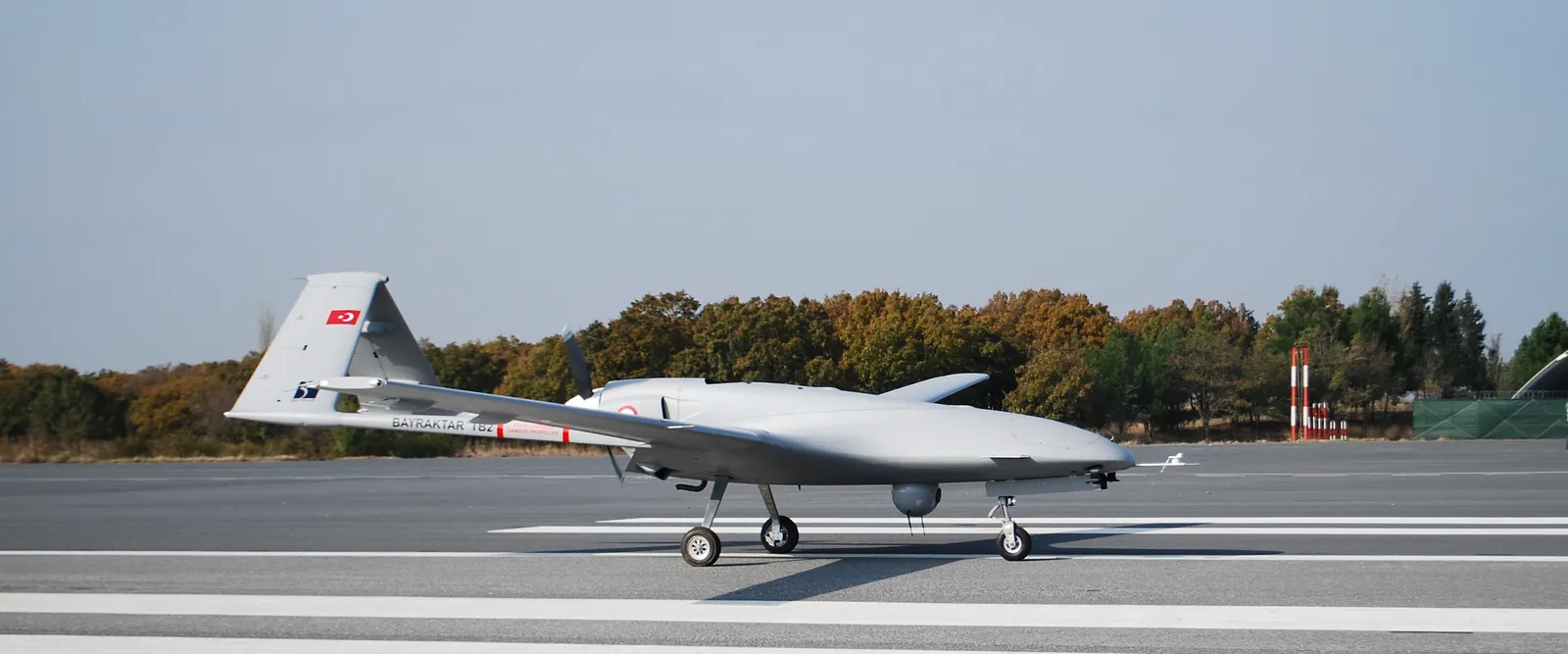
Turkey’s MAM-L (Laser Smart Micro Munition), while in a different weight class (~22 kg), has accumulated extensive combat data via Bayraktar TB2 in Syria, Libya, Nagorno-Karabakh, and Ukraine. In the precision engagement of specific point targets, MAM-L represents Turkey’s most operationally validated precision-strike capability. The large-structure, hardened-target segment that SPICE 2000 occupies remains the domain where Turkey’s domestic capability is still maturing.
Envanter Medya Analysis
SPICE 2000 is technically impressive: delivering a sub-3-metre CEP at 100+ km using optical scene-matching when GPS is jammed represents genuine engineering achievement. Its cost-effectiveness relative to purpose-built cruise missiles makes it a rational choice for air forces that need large-scale precision strike capacity at manageable per-unit costs.
However, this article cannot be written without addressing what has been documented in the public record. SPICE 2000’s guidance precision does not alter the physical consequences of detonating 430 kg of high explosive in or adjacent to populated areas. The international legal framework governing armed conflict — specifically the proportionality principle — does not ask whether a weapon is precise; it asks whether the expected civilian harm from its use is excessive relative to the anticipated military advantage. That question was raised about SPICE 2000 use in Gaza by the United Nations, by the governments of the United States, Belgium, and Spain (through their transfer restrictions), and by the International Court of Justice proceedings initiated by South Africa in 2024.
For Turkey: the parallel development of KGK-84 — a domestic Mk-84 guidance kit — reflects the same capability logic that drove SPICE 2000. The open question is whether Turkey’s export policy for such systems will be shaped by the legal and reputational risks that SPICE 2000’s operational record has demonstrated. The weapon’s precision is not in question. The context in which precision weapons are used is.