India Opens a €9 Billion Contest for 60 Transport Aircraft — and Writes the Spec Around the Himalayas

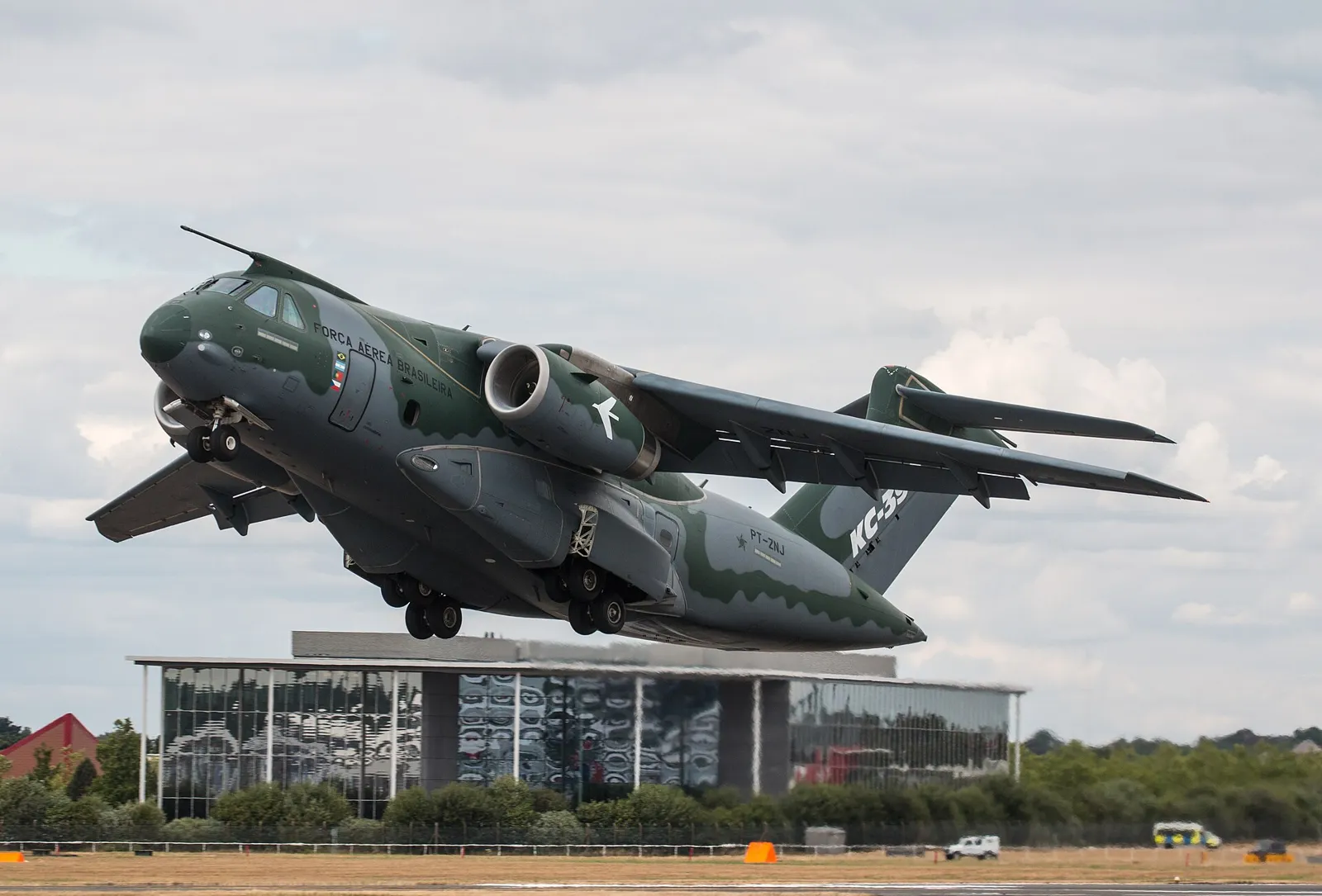
India’s Ministry of Defence issued a request for proposals on 12 August for 60 aircraft under its long-delayed Medium Transport Aircraft programme, a competition worth roughly €9 billion. The RFP follows a request for information circulated in 2023.
The Indian Air Force wants an aircraft capable of carrying between 18 and 30 tonnes and of operating from short, unprepared runways and advanced landing grounds.
A specification shaped by terrain
That last requirement is not a generic wish. India’s advanced landing grounds in Ladakh in the north and Arunachal Pradesh in the east sit at high altitude on strips that were never built for heavy transports, and the standoff along the Line of Actual Control with China has made the ability to move equipment and troops into them a strategic question rather than a logistical one.
Altitude punishes transport aircraft twice over: thinner air reduces engine thrust and lengthens the take-off run, while the payload that can be lifted off a short strip falls well below the figure quoted in a brochure. Hot-and-high performance is likely to matter more in this competition than headline capacity.
The field
- Embraer C-390 Millennium, partnered with Mahindra Defence. Jet-powered, in the 26-tonne class, and squarely inside the stated requirement.
- Lockheed Martin C-130J Super Hercules, partnered with Tata Advanced Systems. The IAF already operates the type, which brings fleet commonality and an existing support chain.
- Airbus A400M, whose 37-tonne capacity exceeds the requirement — an advantage on paper and a cost problem in practice.
- Ilyushin Il-214, with HAL reportedly weighing a partnership with Russia’s UAC, though programme maturity remains the obvious question.
The domestic content clause
The structural condition is that only 12 aircraft will be delivered complete. The remaining 48 must be assembled in India, with between 40 and 60 percent of components manufactured locally. Authorised Indian partners include Tata Advanced Systems, Hindustan Aeronautics Limited, Mahindra Defence and Adani Defence.
The template is the C-295 deal signed with Airbus in 2021, under which 16 aircraft were delivered from Spain and 40 are being assembled by Tata at Vadodara in Gujarat. India is now attempting to repeat that arrangement one aircraft class up — a considerably harder industrial proposition, since a 30-tonne airlifter carries more structural and systems complexity than a 9-tonne one.
What it fills
The IAF’s transport fleet currently runs from the C-295 at the light end through the C-130J to the Boeing C-17 Globemaster III. The MTA is meant to fill the gap in the middle — the band where most tactical airlift actually happens.
For the wider market, the contest is the most consequential medium airlift competition of the decade. Whether the C-390 can displace the C-130J in a fleet that already flies the Hercules will shape how that segment looks well beyond India.
Sources
- Indian Ministry of Defence request for proposals, 12 August 2026
- Opex360, programme details and candidate platforms