Germany’s Bundestag Budget Committee Approves 6.3 Billion Euros for Four MEKO A-200 DEU Frigates

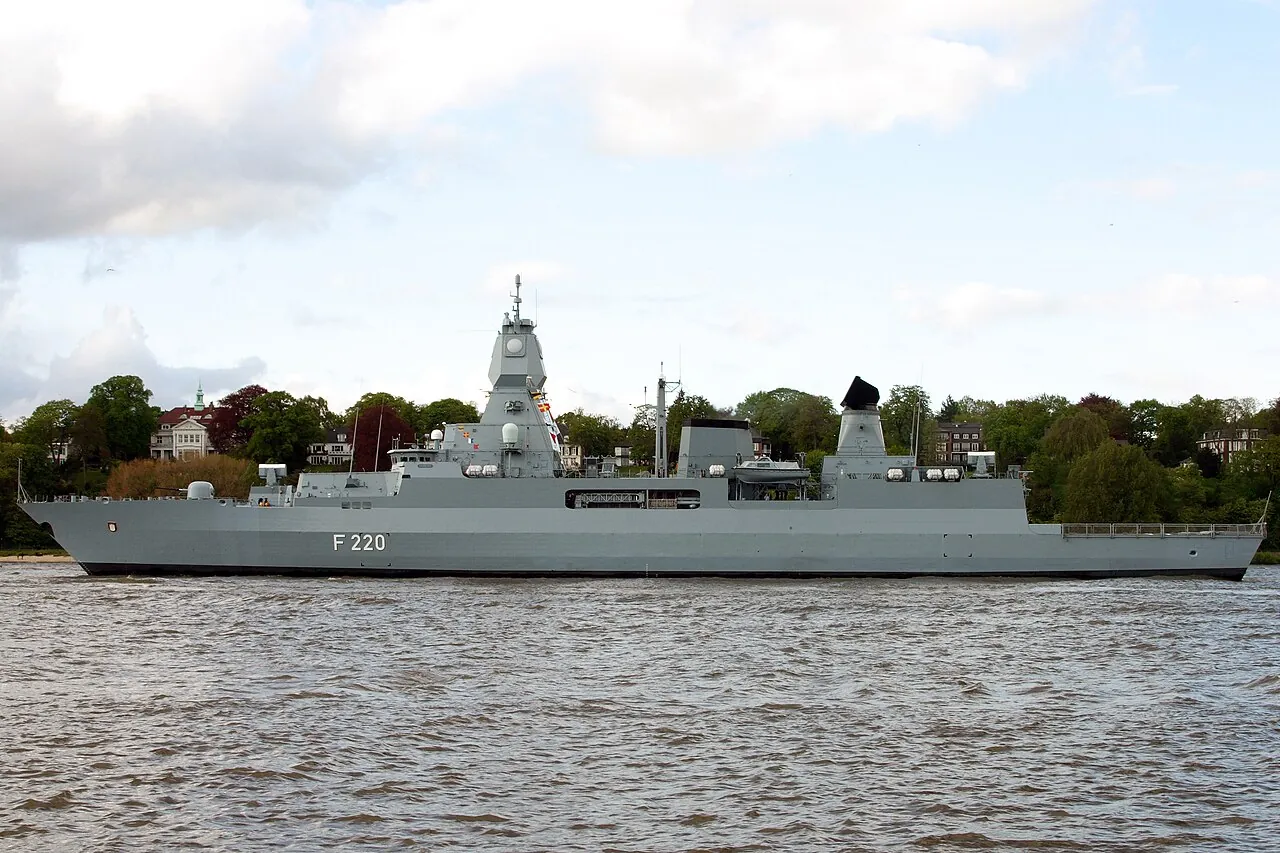
The Bundestag Budget Committee approved the procurement of four MEKO A-200 DEU-class frigates at its 8 July 2026 session. The approved package carries a total cost of 6.3 billion euros (roughly 7.2 billion dollars). The vessels will be designated the F128 class within the German Navy.
According to TKMS (thyssenkrupp Marine Systems), F128 replaces the cancelled F126 frigate programme. Compared with F126, it is positioned as a smaller, more mature-design and faster-to-deliver anti-submarine warfare (ASW) frigate. The Budget Committee also approved an option for four additional frigates, valued at approximately 5.3 billion euros (6.06 billion dollars).
The approval is not unconditional. Citing a cost increase of up to 70 percent versus initial plans, the Budget Committee attached conditions to its approval and said it wants to be kept fully informed on the programme’s progress.
| Programme | MEKO A-200 DEU / F128-class frigate |
| Approval date | 8 July 2026, Bundestag Budget Committee |
| Quantity and cost | 4 ships, 6.3 billion euros (~7.2 billion dollars) |
| Option | 4 additional ships, ~5.3 billion euros (~6.06 billion dollars) |
| Builder | TKMS (thyssenkrupp Marine Systems) |
| First delivery | December 2029 (planned) |
F128 Replaces F126: What Changed
Germany had previously cancelled its earlier F126 frigate programme. F126 envisaged a larger, more complex design, which created cost and schedule risk. According to TKMS, the German Navy chose the MEKO A-200 DEU design to secure lower cost, faster delivery and reduced technical risk.
The MEKO A-200 family is a field-proven, modular frigate platform that TKMS has previously delivered to several navies, including South Africa, Algeria and Egypt. Built on this mature design, the F128 variant is intended to preserve the German Navy’s anti-submarine warfare capability and close the gap left by F126’s cancellation on a more predictable schedule.
Conditions and Timeline
The Bundestag Budget Committee’s approval was conditional, citing a cost increase of 70 percent relative to initial plans. The committee explicitly stated it wants to be kept fully and regularly informed on the F128 programme’s progress — a sign of tighter budgetary oversight over Germany’s major naval platform programmes.
The first MEKO A-200 DEU/F128 frigate is planned for delivery to the German Navy in December 2029. Alongside the four approved ships, the committee also cleared an option for four additional frigates; if exercised, the total programme could grow to eight vessels.
| Item | Detail |
|---|---|
| Class | F128 (MEKO A-200 DEU design) |
| Approved quantity | 4 frigates |
| Approved cost | 6.3 billion euros (~7.2 billion dollars) |
| Option (4 additional ships) | ~5.3 billion euros (~6.06 billion dollars) |
| First delivery | December 2029 |
| Builder | TKMS (thyssenkrupp Marine Systems) |
In the Context of European Naval Modernisation
The F128 decision illustrates a broader trend in which large-scale European naval platform programmes are being reshaped under cost and schedule pressure. Germany’s move to cancel F126 in favour of a smaller, more mature design could serve as a reference point for other West European naval programmes facing similar difficulties.
Given NATO’s growing anti-submarine warfare requirements in the Atlantic and North Sea, the timely delivery of F128 frigates also matters for the alliance. TKMS’s choice of the field-proven MEKO A-200 platform is meant to keep the delivery schedule relatively predictable.
Why It Matters for Turkey
Germany’s decision to cancel the larger, more complex F126 programme in favour of a smaller, more mature and faster-to-deliver MEKO A-200 DEU-based design mirrors the approach Turkey’s naval defence industry has followed for years. Turkey built its MİLGEM/Istanbul-class frigate programme on a similar philosophy — modular design, proven subsystems and a predictable delivery schedule — and Germany’s current course validates that approach once again.
The export of the MİLGEM platform to countries such as Pakistan, Ukraine and Nigeria demonstrates that Turkish shipyards and STM hold a competitive position internationally in modular frigate/corvette design. The 70 percent cost overrun and outright cancellation Germany experienced with F126 highlight the advantage of Turkey’s consortium-based, scalable and cost-disciplined development model compared with Western Europe’s large single-programme approach.
Within the framework of NATO’s growing anti-submarine warfare requirements in the Atlantic and the Black Sea, Turkey’s MİLGEM/Istanbul-class ships and their indigenous sensor/weapon integration contribute to the alliance’s overall ASW capacity. Germany’s renewed reliance on the MEKO family shows that this product line remains a preferred reference design in Europe, while underscoring the strategic value of Turkey sustaining its own national frigate/corvette line with similar maturity and cost discipline.
Frequently Asked Questions
What is the F128 frigate?
It is Germany’s new anti-submarine warfare frigate class based on the MEKO A-200 DEU design, replacing the cancelled F126 programme.
How much was approved?
The Bundestag Budget Committee approved procurement of four frigates for 6.3 billion euros (about 7.2 billion dollars).
Will additional ships be procured?
An option for four additional frigates, valued at approximately 5.3 billion euros (6.06 billion dollars), was also approved.
When will the first ship be delivered?
The first MEKO A-200 DEU/F128 frigate is planned for delivery in December 2029.
Why was the approval conditional?
Because costs rose by up to 70 percent versus initial plans, the Budget Committee attached conditions requiring full updates on the programme’s progress.
Bottom Line
By replacing the cancelled F126 programme with the smaller, faster-to-deliver F128 based on the MEKO A-200 DEU design, Germany aims to preserve its anti-submarine warfare capability. The Bundestag’s conditional approval and the 70 percent cost increase reflect tightening budgetary oversight of major naval platform programmes across Europe.
Sources
- Army Recognition — birincil kaynak
- TKMS — resmî açıklama — üretici, resmî
- Naval News — doğrulama