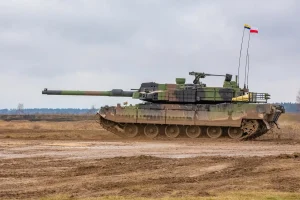
FNSS KAPLAN-20 vs BAE CV90: Full Technical Comparison (2026)
Summary Not Found.
Turkey’s FNSS KAPLAN-20 and Sweden’s BAE Systems CV90 sit in different weight brackets of the tracked infantry fighting vehicle market, yet both compete for the same procurement budgets across NATO and partner nations. The CV90 is a combat-proven, continuously upgraded benchmark now in its 1,000-horsepower MkIV form, fielded by four NATO allies. The KAPLAN-20 is a lighter, air-transportable next-generation platform offered with generous technology transfer. This analysis weighs proven maturity against deployability and cost with honest scoring.
The CV90 is the firepower benchmark of its class. Across its variants it has mounted 30 mm, 35 mm and 40 mm Bofors autocannons, and the new MkIV D-series turret family is modular enough to take 30/40-, 35/50- or even 120 mm main guns, with integrated weapon pods for anti-tank guided missiles and machine guns. Decades of operational fielding mean its fire-control, ammunition handling and turret integration are thoroughly mature, and the platform routinely integrates programmable air-burst ammunition.
The KAPLAN-20 fields the FNSS TEBER 30/35 remotely-operated turret, typically with a 30 mm cannon and the option of stabilised optics and ATGM integration. It is a modern, capable turret on a lighter hull, well suited to medium-intensity operations and rapid-reaction forces. However, the CV90’s heavier chassis tolerates larger calibres and heavier turrets that the 20-tonne KAPLAN cannot match at the top end, so in raw scalable firepower and proven lethality the CV90 retains a clear edge.
Protection and Survivability
The CV90’s survivability has been validated in combat, most visibly in Ukraine, where its crew protection and recoverability earned a strong reputation. Its modular armour scales to high STANAG levels, and the heavier MkIV hull provides substantial growth margin for add-on armour, active protection systems and mine protection. This combat feedback loop, refined over three decades and seven operators, is something newer designs cannot replicate quickly.
The KAPLAN-20 is engineered with a modular protection architecture against mine, RPG and kinetic-energy threats, and its lighter weight class is a deliberate trade for strategic and tactical mobility rather than maximum armour. It offers solid, tailorable protection for its bracket, but at roughly 20 tonnes it has less absolute armour mass and growth potential than a 37-tonne CV90, and it lacks the CV90’s extensive real-world survivability record. For its weight class the KAPLAN is well protected; in absolute terms the CV90 leads.
Mobility and Deployability
Here the KAPLAN-20 turns the comparison around. At roughly 20 tonnes with a 22-25 hp/tonne power-to-weight ratio, it is markedly easier to airlift, ship and move across civilian bridges and soft terrain. For expeditionary forces, rapid-reaction units and operators with constrained logistics or amphibious geography, this lighter footprint is a genuine operational advantage that the heavier CV90 cannot offer.
The CV90 MkIV answers the weight penalty with brute power: a Scania diesel delivering up to 1,000 horsepower and an upgraded X300 transmission keep a 37-tonne vehicle agile, with road speeds around 70 km/h and excellent cross-country performance. Its tracked mobility in snow and rough terrain is legendary in Nordic service. But strategic transportability and bridge/infrastructure access favour the lighter KAPLAN, so the two split this category by mission profile.
Cost, Exports and NATO Fit
The CV90 is the established NATO-aligned choice, with 1,280-plus vehicles in 15 variants sold to seven nations including four NATO allies, and fresh MkIV wins in Slovakia and Czechia. Its value lies in interoperability, a deep multinational support base and combat pedigree. It is, however, a premium-priced, heavy platform whose acquisition and through-life costs sit well above the medium-weight bracket, which constrains buyers with tighter budgets.
The KAPLAN-20’s appeal is affordability, deployability and industrial openness. FNSS is known for technology transfer and local co-production, as demonstrated by the related KAPLAN Medium Tank developed with Indonesia’s Pindad under the MMWT programme. For NATO partners and export customers seeking to industrialise part of the build at a lower price point, the KAPLAN offers a flexible, sovereignty-friendly package. On installed user base and prestige the CV90 dominates; on cost-per-capability and offset potential the KAPLAN is highly competitive.
Operating Nations
System
Operators
FNSS KAPLAN-20
Turkey; Indonesia (KAPLAN MT/family via Pindad MMWT); marketed across Southeast Asia and the Middle East
BAE Systems CV90
Sweden, Norway, Netherlands, Finland, Denmark, Estonia, Switzerland, Czechia, Slovakia (1,280+ vehicles, four NATO allies)
Verdict
On current evidence the BAE Systems CV90 holds the overall advantage through its combat-proven survivability, scalable heavy firepower, continuous modernisation and large NATO-aligned user base (total 66/100). The FNSS KAPLAN-20 sits behind in maturity and installed base but counters with a far lighter, air-transportable footprint, lower acquisition and life-cycle cost, and generous technology-transfer terms (total 54/100). From a NATO and export perspective the choice is mission-driven: the CV90 is the premium, interoperable, combat-tested benchmark for high-intensity warfare, while the KAPLAN-20 is the affordable, deployable, offset-friendly option for medium-weight and expeditionary requirements.
Frequently Asked Questions
Which is better, the KAPLAN-20 or the CV90?
In absolute terms the BAE Systems CV90 is superior: it is combat-proven, carries heavier and more scalable firepower, and is fielded by seven nations including four NATO allies with continuous MkIV upgrades. The FNSS KAPLAN-20 is highly competitive in its lighter 20-tonne class thanks to air-transportability, lower cost and technology transfer, making it well suited to expeditionary forces and budget-conscious buyers.
Why is the CV90 heavier than the KAPLAN-20?
The CV90 MkIV reaches up to 37 tonnes because it is built for high-intensity warfare with heavy armour, large-calibre turret options up to 120 mm and substantial growth margin for active protection. The KAPLAN-20 is deliberately around 20 tonnes to maximise strategic airlift, bridge access and tactical mobility, trading absolute armour mass for deployability.
Is the CV90 combat-proven?
Yes. The CV90 has seen extensive operational use, most notably in Ukraine, where it earned a strong reputation for crew protection and recoverability. With more than 1,280 vehicles in 15 variants across seven nations and three decades of Nordic and NATO service, it has a far deeper combat and operational record than newer competitors.
Does the KAPLAN-20 offer technology transfer?
Yes. FNSS is well known for local co-production and technology transfer. The related KAPLAN Medium Tank was developed jointly with Indonesia’s Pindad under the Modern Medium Weight Tank (MMWT) programme. This industrial openness is a key selling point for NATO partners and export customers seeking to build part of the fleet domestically.
Which suits NATO and partner procurement best?
It depends on budget and mission. For high-intensity, fully interoperable NATO operations with ample funding, the CV90 is the premium benchmark. For partners prioritising lower cost, strategic deployability and local industrialisation, the KAPLAN-20 offers a competitive medium-weight alternative with attractive offset terms.