The Five Technologies Reshaping Defense by 2030

Global military spending surged to $2.718 trillion in 2024 — a 9.4 percent increase in a single year — and the competition driving those numbers is not about quantity of tanks or fighter jets. It is about five technology clusters that are quietly rewriting the rules of warfare before most publics have registered their existence. Artificial intelligence and autonomy, hypersonic weapons, cyber warfare, space-based defense systems, and quantum technologies each represent a structural shift in how militaries fight, not merely an incremental improvement in existing platforms. Together, they constitute the most consequential wave of military-technical change since the nuclear age.
Executive Summary
Five technology domains — AI and autonomy, hypersonic weapons, cyber and electronic warfare, space defense, and quantum technologies — are converging toward operational maturity by 2030. NATO formally identified nine Emerging and Disruptive Technology priority areas in its 2022 Strategic Concept. Global defense budgets are responding: hypersonics alone commanded a $6.9 billion US request in fiscal year 2025. For mid-tier defense powers, including Turkey, the challenge is not merely acquiring these technologies but identifying where indigenous development creates durable competitive advantage.
Key findings: China leads in operational hypersonic systems with the DF-17 and DF-27 while the US LRHW program has repeatedly slipped its schedule. Fifty-one nations signed the Political Declaration on Responsible Military Use of AI by 2024. Cyber warfare is a permanent feature of peer-competitor conflict, as Ukraine has demonstrated. Turkey holds five companies in the SIPRI global top 100 — ASELSAN at rank 47 and Baykar at 73 — and STM’s autonomous loitering munitions represent one of the most closely watched operational AI deployments in the world.
Why It Matters
The significance of this technological moment lies in its simultaneity. In previous eras of military-technical competition, a dominant power could respond to one disruptive technology while consolidating advantage in others. The current environment offers no such sequencing. A state that falls behind in AI-enabled targeting may find its hypersonic investment blunted by adversary quantum sensing. A state that invests heavily in space-based surveillance may discover those assets are the first casualties of a conflict prosecuted through cyber and directed-energy means.
The interconnection between these domains is not accidental. It reflects a broader shift in warfare toward multi-domain operations — the simultaneous exploitation of vulnerabilities across land, sea, air, space, and cyberspace in timeframes measured in seconds rather than days. Technologies that enable that speed and simultaneity are, by definition, strategic multipliers. Conversely, a military that lacks them faces an asymmetric disadvantage that cannot be offset by larger formations or heavier equipment.
The economic dimension is equally significant. SIPRI data confirms that the United States spent $916 billion on defense in 2024, China $314 billion, and Russia $149 billion. A disproportionate share of marginal defense spending in all three major powers is now directed at the five technology clusters analyzed in this feature. The global industrial base is realigning accordingly, with defense-technology firms displacing traditional prime contractors in contract awards and valuations.
Current State of Defense Technology
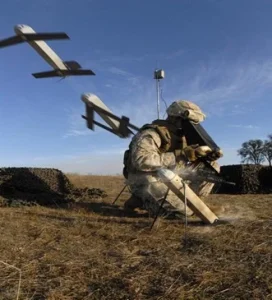
The 2020s have already delivered several proof-of-concept moments. Ukraine demonstrated that commercial drone swarms, networked with satellite imagery and AI-enabled targeting, could contest armored formations that would have appeared overwhelming by Cold War metrics. The Nagorno-Karabakh conflict showed that loitering munitions could neutralize air defense systems costing orders of magnitude more to procure. US and allied forces have conducted exercises involving AI-assisted battle management that reduce sensor-to-shooter timelines from minutes to seconds.
Yet the current state is better described as early operational rather than mature. Most deployments remain limited in scale, doctrine has not caught up with capability, and the organizational structures required to exploit these technologies at scale are still being built. The 2022 update to DoD Directive 3000.09 illustrates the tension: it does not ban autonomous lethal systems, requires senior review by multiple undersecretaries and the Vice Chairman of the Joint Chiefs, and contains no “human in the loop” requirement — reflecting a decision to preserve accountability without foreclosing operational autonomy.
Global Trends
1. AI and Autonomy: From Concept to Combat Edge
The US Replicator Initiative, announced by Deputy Secretary of Defense Kathleen Hicks in August 2023, set the ambition at fielding thousands of attritable autonomous systems within 18 to 24 months. The initiative was subsequently restructured, reflecting organizational friction inherent in novel procurement, but its underlying logic — that swarms of expendable autonomous platforms can impose asymmetric costs on near-peer adversaries — has become embedded in US planning documents across the services.
Fifty-one nations signed the Political Declaration on Responsible Military Use of AI by 2024, establishing norms around transparency, accountability, and the preservation of human judgment in lethal decisions. At the operational level, AI is delivering value where sensor data volume exceeds human cognitive capacity: ISR platforms generate petabytes of imagery that AI systems can analyze at speeds no human analyst can match. Electronic warfare systems use machine learning to identify and jam adversary radar waveforms in real time. The challenge is not whether AI adds value but how to integrate it into command structures while preserving meaningful human oversight at the strategic level.
2. Hypersonics: The New Strategic Calculus
China’s DF-17, equipped with the DF-ZF hypersonic glide vehicle, is assessed as operational with a range of approximately 1,800 to 2,500 kilometers. The DF-27, with a reported range of 5,000 to 8,000 kilometers, extends the threat envelope to Hawaii, Guam, and Alaska, fundamentally complicating US extended deterrence in the Indo-Pacific. The United States has approximately 60 active hypersonic programs and allocated $6.9 billion in FY2025, but the primary ground-launched system — LRHW Dark Eagle — missed its FY2023 delivery target, with the GAO projecting initial operational capability to FY2025.
That gap reflects genuine structural disadvantage. NASIC analyst Jeffrey McCormick told Congress in March 2024 that China’s sustained, two-decade investment in hypersonic wind tunnel capacity represents a foundation that no accelerated US procurement program can quickly replicate. The implication is that even with dramatically increased funding, the United States faces a structural testing lag. Hypersonic proliferation also compresses crisis decision timelines, increases the premium on pre-delegation of launch authority, and interacts dangerously with AI-enabled targeting: a state that can identify a target through AI-processed intelligence and reach it via hypersonic strike may act faster than any adversary response cycle.
3. Cyber Warfare: The Permanent Gray Zone
SIPRI Yearbook 2023 documented the cyber dimension of the Ukraine conflict in forensic detail, identifying attacks that targeted defense ministries, armed forces, agriculture, finance, telecommunications, and energy infrastructure. That breadth is the defining feature of modern cyber warfare: it does not respect boundaries between military and civilian systems, and its effects can be as consequential as kinetic strikes at a fraction of the cost. Ukraine also demonstrated defensive cyber operations: rapid cloud migration of government data, combined with Western technology company assistance, significantly limited the damage from Russian attacks designed to paralyze state functions.
Major NATO nations now treat cyberspace as a warfare domain equivalent to land, sea, and air. The conceptual challenge that remains is escalation management — cyber operations can be conducted below the threshold of armed conflict, but their effects can be indistinguishable from physical sabotage, creating ambiguity about when a response is proportionate and what form it should take. That ambiguity, from an adversary’s perspective, is a feature rather than a bug.
4. Space Defense: Contested Battlespace
China and Russia have demonstrated direct-ascent anti-satellite weapons capable of destroying low-Earth-orbit satellites. Co-orbital systems — satellites capable of approaching, inspecting, and potentially disabling other satellites — are being deployed by multiple actors. Electronic jamming of GPS and satellite communications has become routine in contested environments. The United States Space Force, established in 2019, is the institutional acknowledgment that passive reliance on space superiority is no longer tenable. Modern military operations depend on satellite positioning, navigation, and timing for everything from precision munitions to logistics coordination. Degradation of these services would fundamentally alter tactical capability, not merely inconvenience forces.
Ukraine’s use of Starlink demonstrated that commercial satellite internet can provide resilient military communications — but also raised questions about the appropriate role of private infrastructure in national security and the vulnerability of commercial systems to adversary coercion.
5. Quantum Technologies: Long Game, Near-Term Inflection Points
Cryptographically relevant quantum computers remain a medium-term threat, but preparation must begin immediately. Intelligence services assess that adversaries are already executing “harvest now, decrypt later” strategies — collecting encrypted data today for decryption when quantum capability matures. NIST finalized its first post-quantum cryptographic standards in 2024, and defense establishments face the challenge of upgrading encryption across millions of systems. Quantum sensing is on a shorter timeline: quantum gravimeters and magnetometers can detect submarines, underground facilities, and concealed weapons with sensitivity that exceeds conventional sensors. Navigation-grade quantum inertial systems could provide precise positioning without GPS, removing a critical vulnerability in contested environments.
Technological Developments: Recent Milestones
The US Air Force Collaborative Combat Aircraft program is on track to field the first AI-piloted wingman platforms in the late 2020s — not experimental demonstrators but operational aircraft expected to fly alongside crewed fighters. The Navy’s unmanned surface vessel program has expanded substantially, with hulls conducting logistics and intelligence missions in the Indo-Pacific. In hypersonics, Australia and the US conducted successful tests of the Southern Cross Integrated Flight Research Experiment in 2023, advancing air-breathing hypersonic technology. The US Navy’s Conventional Prompt Strike program has advanced to production contracting for ship-launched hypersonic weapons on Zumwalt-class destroyers and Virginia-class submarines.
In cyber, US Cyber Command’s persistent engagement doctrine — operating forward in adversary networks to understand and contest malicious activity before it reaches US systems — has produced tangible results, including disruption of foreign influence operations and detection of adversary pre-positioning in critical infrastructure. AI is also transforming logistics: the US Air Force has piloted machine-learning systems for F-35 fleet maintenance prediction that outperform conventional scheduling by significant margins, a capability with obvious applicability to larger alliance logistics architectures.
Regional Dynamics
The Indo-Pacific is the primary driver of investment in hypersonic and space defense, reflecting the geographic realities of potential conflict with China. AUKUS Pillar II, focused on AI, quantum, and undersea systems, pools US, UK, and Australian resources to accelerate timelines. Europe’s strategic awakening, driven by Ukraine, has accelerated investment in cyber defense, electronic warfare, and AI-enabled logistics. Germany’s Zeitenwende has channeled resources into digitization; France’s programming law elevated quantum and space priorities; the European Defence Fund is directing meaningful resources toward autonomous systems.
The Middle East has become a major market for autonomous systems and electronic warfare technology, with Gulf sovereign wealth funds enabling procurement timelines that bureaucratic defense establishments cannot match. The proliferation of loitering munitions — originally dominated by Israeli suppliers but now including Turkish, Iranian, Chinese, and US products — has fundamentally changed the risk calculus for armored formations across the region. India’s Make in India defense policy is generating a significant indigenous industrial base; Indian defense procurement is the largest in the global arms import market while simultaneously moving toward greater self-sufficiency.
Turkey’s Strategic Position
Turkey’s defense-industrial trajectory over the past decade represents one of the most significant developments among NATO members. SIPRI’s December 2025 Top 100 confirms the scale: ASELSAN at rank 47 with $3.47 billion in revenue — up from rank 52 in the prior edition — and Baykar at rank 73 with $1.9 billion. Five Turkish firms appear in the global top 100, a distinction shared by only a handful of nations worldwide.
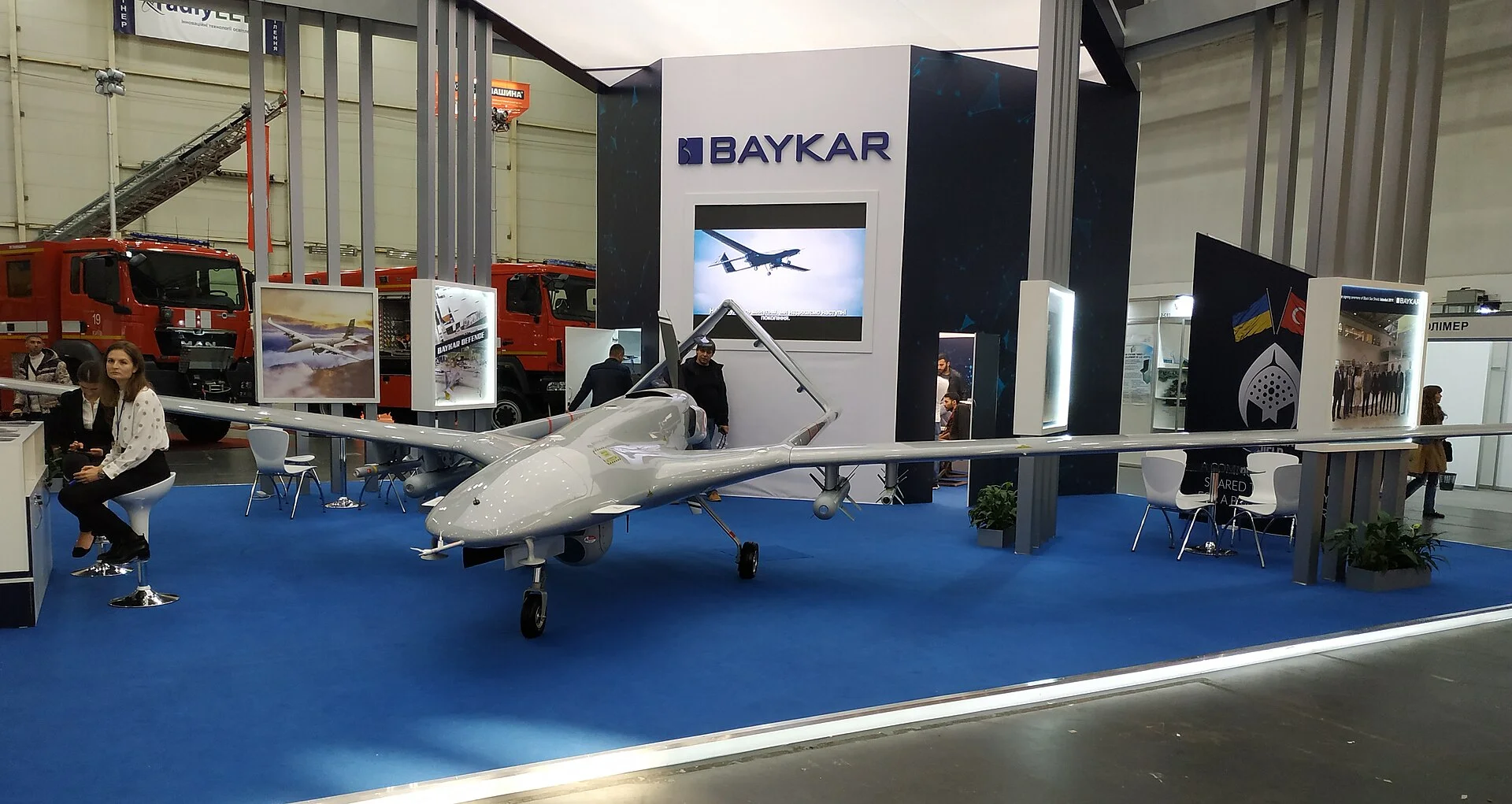
The operational validation is equally significant. The Bayraktar TB2 demonstrated in Ukraine, Libya, and Azerbaijan that a mid-altitude UAV produced outside the traditional defense-industrial superpower club could achieve decisive tactical effects in high-intensity conflict, generating export demand that has transformed Baykar’s revenue profile and positioned the platform as the reference for affordable, effective unmanned systems among second-tier militaries. STM’s contributions at the tactical autonomy edge are among the most closely watched in the global defense community: the Kargu loitering munition employs deep learning for autonomous targeting, and UN Libya Panel of Experts report S/2021/229 documented engagements that appeared to occur without active human initiation. The STM Alpagu, a fixed-wing variant optimized for high-value targets, entered Turkish Armed Forces inventory in October 2025.
The strategic challenge Turkey faces is transition from successful platform development to sustained investment in foundational technologies — AI algorithms, quantum sensing, advanced semiconductors — that will determine second-order competitive advantage. Platform development is visible and domestically resonant; foundational research is slow and diffuse in its returns. ASELSAN’s scale and electronic warfare depth position it well for the convergence of cyber, space, and AI in networked defense. Turkey’s defense export revenue target of $10 billion and a domestic industry localization rate target of 80 percent by 2033 (per Defense Industries Presidency SSB projections) are ambitious but not implausible given current trajectories.
Expert Perspectives
Jeffrey McCormick’s March 2024 congressional testimony crystallized the hypersonic challenge: China’s two-decade investment in wind tunnel infrastructure represents a testing capacity the United States cannot quickly replicate regardless of funding levels. That assessment has driven US interest in air-launched hypersonic platforms that use aircraft as first-stage accelerators — reducing dependence on ground test infrastructure — and in digital engineering approaches that substitute simulation for physical test requirements.
Within defense establishments, a genuine intellectual confrontation is underway between two schools of thought on autonomy. One school, dominant in US Air Force and Navy planning, argues that attritable autonomous systems can overwhelm adversary defenses through mass, accepting that human oversight at the individual engagement level is operationally impractical when a thousand platforms are executing simultaneous missions. The competing school argues that autonomous lethality without meaningful human control creates unacceptable escalation risks and practical vulnerability to adversarial deception — an AI system trained to identify enemy vehicles can be spoofed by an adversary who understands its training data. CSIS analysis of the DoD AI policy landscape confirms that this tension has produced policy language carefully calibrated to preserve both positions without fully resolving the underlying disagreement.
Tables
Table 1: Global Defense Spending (2024)
| Country | Budget (USD) | Global Share | YoY Change |
|---|---|---|---|
| United States | $916 billion | ~33.7% | +5.7% |
| China | $314 billion | ~11.5% | +7.4% |
| Russia | $149 billion | ~5.5% | +38% |
| Global Total | $2.718 trillion | 100% | +9.4% |
Source: SIPRI Military Expenditure Database 2024
Table 2: Turkish Defense Companies in SIPRI Global Top 100 (December 2025)
| Company | Global Rank | Revenue | Key Domain |
|---|---|---|---|
| ASELSAN | 47 | $3.47 billion | Electronics, EW, Communications |
| Baykar | 73 | $1.90 billion | Unmanned Aerial Systems |
| Roketsan | 78 | $1.70 billion | Missiles, Rockets |
| STM | 82 | $1.52 billion | Autonomous Systems, Naval |
| TAI | 91 | $1.31 billion | Aircraft, Helicopters |
Source: SIPRI Arms Industry Database, December 2025
Table 3: Hypersonic Weapons — Operational Status (2025)
| System | Country | Range | Status |
|---|---|---|---|
| DF-17 / DF-ZF | China | 1,800–2,500 km | Operational |
| DF-27 | China | 5,000–8,000 km | Operational |
| Kinzhal | Russia | ~2,000 km | Operational |
| LRHW / Dark Eagle | United States | ~2,775 km | Development (IOC FY2025 target) |
| Conventional Prompt Strike | United States | >1,000 km | Early production |
Sources: CRS R45811; CSIS Missile Threat Database; NASIC assessments
Timeline: 2025–2030
- 2025: US LRHW targets IOC. NIST post-quantum standards enter federal implementation. STM Alpagu fully integrated into Turkish Armed Forces doctrine.
- 2026: US Collaborative Combat Aircraft low-rate initial production decision. European Defence Fund autonomy programs reach prototype phase. China expands DF-27 operational deployment.
- 2027: AUKUS Pillar II first bilateral quantum and undersea technology transfers. NATO AI interoperability framework reaches binding implementation guidance.
- 2028: Multiple US hypersonic programs converging toward fielding across Army, Navy, Air Force. Quantum key distribution satellite networks approach initial operational utility.
- 2029–2030: AI-enabled battle management in operational deployment with major powers. Space domain awareness approaching maturity. Turkey targets $10B defense exports and 80% localization rate.
2030 Projections
By 2030, the military-technical landscape will be defined by the degree to which these five technologies have been integrated into coherent operational architectures rather than deployed as isolated capabilities. The United States is likely to maintain overall technological breadth, given the scale of its investment portfolio, but the gap with China in specific areas — hypersonic testing infrastructure, quantum communications deployment, autonomous swarm numbers — may persist. For Turkey, the 2030 horizon offers a realistic opportunity to consolidate a position as the leading defense-industrial power among NATO’s second tier, a market maker in unmanned systems and a credible exporter of electronic warfare and command-and-control technology.
Risks
The proliferation of autonomous weapons creates escalation risks that existing arms control frameworks are not equipped to manage. A crisis involving autonomous systems operating at machine speed may not afford the hours and days of deliberation that resolved the Cuban Missile Crisis. The “harvest now, decrypt later” quantum threat means classified communications transmitted today may be compromised within a decade. Space conflict carries first-strike incentives that could trigger broader escalation. Industrial base concentration — particularly in the US hypersonic supply chain and in global semiconductor fabrication — represents a structural vulnerability that sustained industrial policy has not yet adequately addressed.
Opportunities
The autonomous systems market is experiencing early-adopter dynamics where dominant designs have not yet emerged and first-mover advantages in doctrine and export relationships remain available. Turkey’s position, anchored by Baykar’s commercial success and STM’s doctrinal experimentation, is one of the most favorable of any non-superpower. Quantum sensing applications for navigation and underground detection are approaching commercialization on a timeline where serious national investment programs launched today can yield operational capability within the decade. The cyber domain’s lower barrier to entry — dependent on human capital more than industrial capacity — creates opportunities for states with strong technical talent pipelines to achieve asymmetric capability at manageable cost.
Conclusion
The five technologies analyzed in this feature are not independent trends. They are interdependent elements of a single structural transformation in military power. The defense establishments that understand this interdependence — and invest, organize, and plan accordingly — will hold strategic advantage in 2030 and beyond. Those that treat each domain as a separate acquisition program risk producing capabilities that are individually impressive but operationally inferior to integrated systems fielded by more coherent competitors.
For Turkey, the strategic moment is both promising and demanding. Five companies in the SIPRI global top 100, operational autonomous systems in Turkish Armed Forces inventory, and a UAV platform whose battlefield record has reshaped the global market — these are assets that most nations cannot match. Translating that foundation into durable advantage through 2030 requires clarity about where to compete, where to partner, and where to lead. The five technologies analyzed here are the terrain on which that competition will be decided.
References
- SIPRI Military Expenditure Database, 2024 figures (published 2025)
- SIPRI Arms Industry Database, Top 100 Defense Companies, December 2025
- SIPRI Yearbook 2023, Chapter 11: Cyber Warfare
- NATO 2022 Strategic Concept — EDT Priority Areas. nato.int
- US DoD Directive 3000.09, Autonomous Weapon Systems (2023 update). CSIS analysis: csis.org
- CRS Report R45811: Hypersonic Weapons — Background and Issues for Congress (2025)
- GAO: Hypersonic Weapons Program Assessment, FY2025
- Replicator Initiative, Deputy Secretary Hicks, August 2023
- Political Declaration on Responsible Military Use of AI (2024)
- McCormick, J. (NASIC). Congressional Testimony, March 2024
- UN Security Council Panel of Experts on Libya, S/2021/229
- NIST Post-Quantum Cryptographic Standards, 2024
- CSIS Missile Threat Database. missilethreat.csis.org