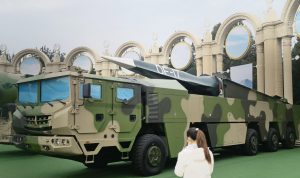
What Is a Scramjet? The Engine for Hypersonic Flight


# What Is a Scramjet? The Engine for Hypersonic Flight
Quick answer: A scramjet (Supersonic Combustion Ramjet) is an engine with no moving parts that works only at very high speeds (Mach 4+). It uses the air rushing in from the front as both fuel and compressor, making it the most efficient engine ever built for hypersonic flight.
Why Normal Jet Engines Can’t Go Hypersonic
A standard turbojet uses spinning turbines to suck in air, compress it, mix with fuel, burn it, and push hot gas out the back. But at Mach 3+, the air comes in so fast it would shatter the turbine blades. That’s why no airliner or fighter has a turbojet faster than Mach 3.3 (SR-71).
The Ramjet — One Step Below Scramjet
A ramjet has no spinning parts either. It uses the speed of the aircraft itself to compress incoming air against a shaped inlet (like ramming air into a funnel). It works at Mach 2–5.
| Engine | Mach Range | Spinning Parts |
|---|---|---|
| Turbojet | 0–3.3 | Yes (turbine + compressor) |
| Turbofan | 0–2 | Yes |
| Ramjet | 2–5 | No |
| Scramjet | 5–15 | No |
In a ramjet, the air is slowed to subsonic inside the engine before fuel is burned. This works up to ~Mach 5. Above that, slowing supersonic air to subsonic creates too much heat (8,000°C+).
The Scramjet — Burning at Supersonic Speed
A scramjet keeps the air supersonic the whole way through — even during combustion. Burning fuel in supersonic airflow is incredibly hard because:
- Fuel and air pass through the engine in milliseconds
- Mixing must happen instantly
- The flame can’t be blown out
- Pressure spikes can shatter the engine
Engineers compare it to “lighting a match in a hurricane and keeping it lit.” But when it works, the engine produces massive thrust with simple geometry.
Famous Scramjet Vehicles
| Vehicle | Country | Max Speed | Status |
|---|---|---|---|
| X-15 | USA | Mach 6.7 | (rocket, not scramjet but related) |
| X-43A | USA | Mach 9.6 | First successful scramjet flight (2004) |
| X-51 Waverider | USA | Mach 5.1 | First sustained scramjet flight (~3.5 min, 2013) |
| HAWC | USA | Mach 5+ | Tested 2021, operational concept |
| 3M22 Zircon | Russia | Mach 8 | Operational |
| BrahMos-II | India/Russia | Mach 7 planned | In development |
| HCM | China | Mach 5+ | Testing |
How a Scramjet Works (Simple)
- 1. Inlet: Shaped to compress incoming Mach 6+ air using shock waves
- 2. Combustor: Fuel (usually hydrogen or hydrocarbon JP-7) injected and ignited in supersonic flow
- 3. Nozzle: Hot gas expands and accelerates, producing thrust
There are zero rotating parts. The whole engine is essentially a carefully shaped pipe.
Why Scramjets Can’t Start from Standstill
A scramjet only works above Mach 4. Below that speed, there isn’t enough air being rammed in to support combustion. So scramjet vehicles need:
- 1. A rocket booster to push them up to Mach 4–5 first
- 2. Air drop from a fast-flying mothership
- 3. A combined-cycle engine (turbojet → ramjet → scramjet, like the planned SR-72)
This is the biggest design challenge. The scramjet by itself is useless on the ground.
What Fuel Do Scramjets Use?
- Hydrogen — extremely efficient, but bulky and dangerous
- JP-7 — heavy hydrocarbon, easier to store (used in X-51)
- Endothermic fuels — special fuels that absorb engine heat to cool the engine while burning
A key innovation in modern scramjets: the fuel itself flows through the engine walls before combustion, cooling them. This is called regenerative cooling.
Heating Problem at Mach 6+
At Mach 6, the air entering the engine reaches 1,500°C just from compression — before any fuel burns. The engine walls would melt without:
- Active fuel cooling (running cool fuel through wall passages)
- Ceramic-matrix composites (CMC) that survive 1,800°C+
- Carbon-carbon composites
This material science is what makes scramjets so expensive.
Why Scramjets Matter for the Future
- Hypersonic missiles (Zircon, HAWC) use them for long-range strike
- Hypersonic airliners (theoretical, e.g., Boom Mach 5 concepts) might one day cross oceans in 2 hours
- Space access — combined-cycle engines could replace rockets for some launches
- Spy planes — SR-72 concept aims for Mach 6 reconnaissance
A Kid-Friendly Analogy
Imagine a ramjet as a funnel-shaped wind tunnel where you light a candle in the slow middle section. Now imagine doing the same trick — but the wind is so fast it would normally blow out a torch. You have to invent special burners that keep burning in a hurricane. That’s the scramjet.
It’s basically lighting a fire inside a fire-hose blast.
A Brief Scramjet History
- 1950s — Theoretical work begins
- 1964 — First successful scramjet test (ground-based)
- 1991 — Soviet Kholod (Cold) first scramjet flight (Mach 5.7, 28 sec)
- 2004 — NASA X-43A reaches Mach 9.6, world record for jet-powered flight
- 2013 — X-51 Waverider, 210 seconds of scramjet flight at Mach 5
- 2021 — US HAWC successful test
- 2022+ — Russian Zircon operationally deployed
Image Suggestions
- 1. Featured: X-43A scramjet vehicle in flight
- 2. Cutaway: inlet → combustor → nozzle (no moving parts)
- 3. Schlieren of supersonic combustion
- 4. SR-72 artist concept
- 5. Engine type chart (turbojet → ramjet → scramjet)
Related Articles
- What is a hypersonic missile?
- What is a hypersonic glide vehicle?
- What is a ramjet?
- What is Mach number?
- What is the SR-72 / SR-71?