US Navy Doubles E-130J ‘Doomsday Plane’ Test Fleet Under $1.13 Billion Northrop Grumman Contract

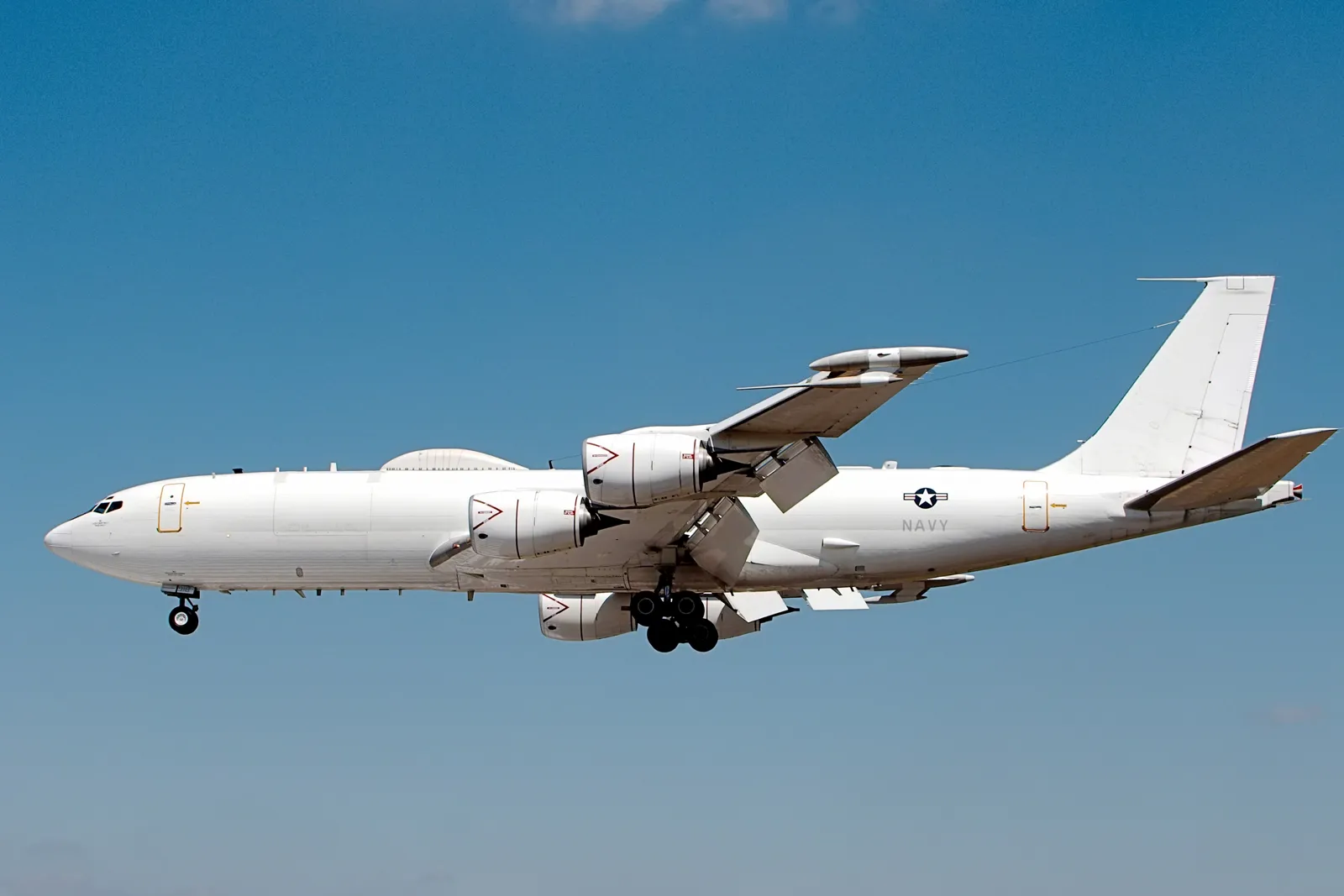
The US Navy has exercised a $1.13 billion contract option with Northrop Grumman for three more E-130J Phoenix II test aircraft, doubling the number of development airframes for its next airborne nuclear communications platform to six. The award, announced on 25-26 November 2026, keeps alive one of the most sensitive programmes in the US nuclear command-and-control system: the replacement for the E-6B Mercury “doomsday plane” that relays orders to ballistic missile submarines.
What the contract covers
The option funds the design, development and delivery of three system demonstration test aircraft and an initial supply of spare parts. At award, the Navy committed $4.18 million in fiscal 2027 research and development money, with the remainder to be funded over time. Work is expected to be completed by January 2030 and will be spread across Melbourne, Florida (35 percent), Marietta, Georgia (23 percent) and Richardson, Texas (15 percent), among other sites.
The TACAMO mission
TACAMO, short for “Take Charge and Move Out”, is the Navy’s airborne link to its nuclear-armed submarines. The aircraft trail very long antennas to transmit very low frequency messages that can reach submerged boats, and they are designed to keep working even during a nuclear conflict. The mission is currently flown by 16 Boeing E-6B Mercury aircraft, based on the 707 airliner, which are approaching the end of their service lives.
The E-130J is built on Lockheed Martin’s stretched C-130J-30 Super Hercules airframe and carries a very low frequency communications system from Collins Aerospace. Northrop Grumman is prime contractor and systems integrator, with Collins and Lockheed Martin as major subcontractors.
| Milestone | Detail |
|---|---|
| Dec 2024 | $3.46 billion development contract, 3 aircraft, options for more |
| Mar 2026 | $225.1 million for training systems |
| 15 Oct 2026 | First C-130J-30 airframe delivered to the Navy in Marietta |
| Nov 2026 | $1.13 billion option, test fleet grows to 6 |
Schedule pressure
The programme has moved quickly by defence standards, but auditors have raised concerns. A GAO report dated 2 July 2026 said the low-rate production decision had slipped by about a year and that integration risks had “morphed into realities”. The programme office says the E-130J is on track, although GAO noted it had not provided supporting documentation. The planned date for operational service is classified.
Analysis: why a turboprop replaces a jet
Swapping a four-engine jet for a turboprop may look like a step back, but it brings advantages. The C-130J is in production, widely supported and cheaper to operate, and it can use shorter runways, which helps the Navy disperse aircraft in a crisis. Doubling the test fleet should let flight testing run in parallel rather than in sequence, reducing the risk of a gap as the E-6B fleet ages. For the US nuclear triad, the submarine leg depends on reliable communications, so this is a programme Washington cannot afford to let slip much further.
Why is the E-6B called a “doomsday plane”?
Because it is designed to keep nuclear command links working during and after a nuclear attack.
How many E-130Js are under contract now?
Six test aircraft, with options in the original contract for up to six production aircraft.