Savronik mesh radio vs Silvus and Persistent MPU5

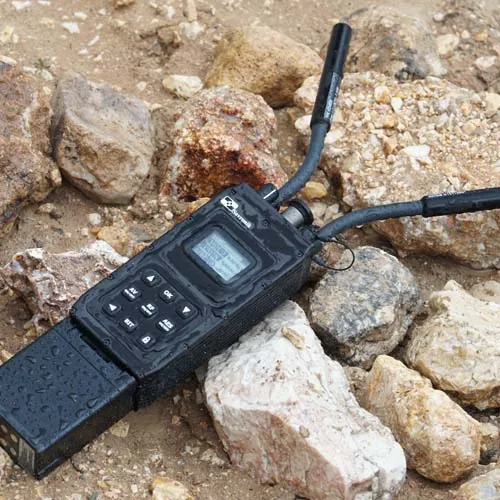
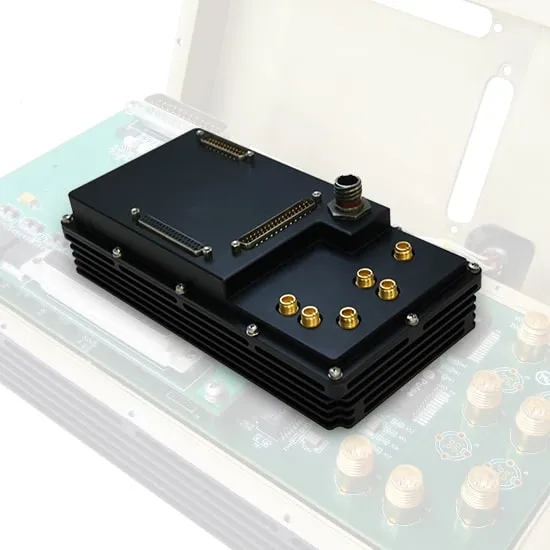
Quick answer: The Savronik Mobile Mesh Network Radio sits in the same product class as the StreamCaster 4400 from US manufacturer Silvus Technologies and the MPU5 from Persistent Systems in the tactical MANET (mobile ad-hoc network) market. All three offer MIMO antenna architecture, a self-healing network structure and encrypted video, voice and data transfer. The main difference lies in what is disclosed: the US manufacturers publish throughput and power figures, while Savronik does not officially disclose range or data rate. This file compares the three products solely on manufacturer statements.
Scope of the comparison
Tactical mesh radios establish infrastructure-free, multi-hop networks between soldiers, vehicles and unmanned systems. The Silvus StreamCaster family and the Persistent Systems MPU5 are among the better-known products in this class worldwide; both are sold to the US Army and allied users. The Savronik product is the result of an indigenous development effort tracing back to the KAIS contract signed with the Presidency of Defence Industries (SSB) in 2015; the product itself is examined in the Mobile Mesh Network Radio file.
Comparison on manufacturer statements
| Feature | Savronik Mobile Mesh Network Radio | Silvus StreamCaster 4400 | Persistent Systems MPU5 |
|---|---|---|---|
| MIMO architecture | MIMO-based (configuration not disclosed) | 4×4 MIMO | 3×3 MIMO |
| Frequency | L-S and C band | 300 MHz – 6 GHz options depending on model | Bands varying by module (S, L, C options) |
| Data rate | Not officially disclosed (“high-speed data”) | Up to 100 Mbps | Theoretically above 100 Mbps |
| Encryption | Built-in crypto (details not disclosed) | AES-256 option (manufacturer documents) | CTR-AES-256, SHA-256 HMAC |
| Sealing | IP-68, MIL-STD-810G | IP68 | MIL-STD-810G (manufacturer statement) |
| Network structure | Automatic relay, self-healing mesh | MN-MIMO waveform, self-healing mesh | Wave Relay MANET, no master node, unlimited hops |
| Video and voice | Built-in video and voice encoder | Video transmission support | Built-in H.264 encoding, 1080p30 |
| Positioning | GPS and map-based interface | GPS support | Integrated GPS, Android-based end-user computer |
The values in the table were compiled from the three manufacturers’ own publications; no independent benchmark test is publicly available.
Savronik’s position: strengths and gaps
Disclosed strengths: a multi-carrier waveform; a claim of “longer range than comparable products” in environments such as maritime, urban, forest and tunnel settings; built-in encoders that remove the need for external units; and waterproofing to a depth of 10 metres. Indigenous design is a separate parameter for public buyers in terms of supply security and independence from export licences.
Items left open: throughput, range, the number of simultaneous nodes, crypto certification and price have not been disclosed. While the certification processes of the US competitors, such as FIPS and CSfC, are documented, the crypto approval status of the Savronik product has not been officially disclosed. The “longer range” claim is a manufacturer statement and has not been verified by independent testing.
Which criteria decide a procurement?
A technical table alone does not settle the choice of a MANET radio. Public buyers typically look at four headings: compliance with the national frequency plan, certification by the crypto approval authority, interoperability with the existing radio inventory, and life-cycle support. Savronik addresses interoperability among these through the SavroLINK gateway; crypto approval and frequency allocation are processes that depend on the authorities of the buyer country. For US-origin products, export licence timelines and end-user restrictions also enter the calculation.
Market context
In the MANET radio market, the choice is shaped by the frequency plan, national crypto requirements and platform integration. In Türkiye, ASELSAN is the main supplier in tactical radio, but in the mesh radio segment Savronik’s SSB-backed development creates a second domestic source. In export markets the product may be considered by buyers seeking an alternative that is not subject to the US export control regime (ITAR); that scenario is consistent with the company’s export strategy, though no publicly available mesh radio export record exists. The company’s communications portfolio as a whole is covered in the data link file.

Frequently asked questions
Is the Savronik mesh radio as fast as the Silvus or MPU5?
Not known. Savronik does not disclose a data rate; Silvus gives up to 100 Mbps and Persistent Systems a theoretical figure above 100 Mbps. No independent comparative test has been published.
What do the three products have in common?
MIMO architecture, a self-healing mesh network, encrypted communications, IP-68 or MIL-STD-810G environmental resistance and video transmission are present in all three.
What is Savronik’s advantage?
Indigenous design and supply security; a development history resting on an SSB contract; an integrated solution with built-in encoders. Claims of performance superiority have not been independently verified.
Can these products be used interchangeably?
Because they use different waveforms they cannot form a network with one another; the choice is made according to platform and crypto requirements.
Are prices known?
None of the three manufacturers publishes list prices, and public tender records are not broken down by product.
Sources and verification note
- Savronik — Mobile Mesh Network Radio — https://www.savronik.com.tr/cozumlerimiz/haberlesme-sistemleri/mobil-mesh-ag-radyosu/ (Accessed: August 12, 2026)
- Savronik — History (2015 KAIS contract) — https://www.savronik.com.tr/tarihce/ (Accessed: August 12, 2026)
- Silvus Technologies — StreamCaster 4400 product page and technical documents — https://silvustechnologies.com/products/streamcaster-4400-enhanced/ (Accessed: August 12, 2026)
- Persistent Systems — MPU5 specifications — https://persistentsystems.com/mpu5-specs/ (Accessed: August 12, 2026)
- Persistent Systems — MPU5 capabilities page — https://persistentsystems.com/mpu5-capabilities/ (Accessed: August 12, 2026)
The comparison rests solely on the manufacturers’ publicly available statements; no independent performance test data was used for any product. Undisclosed values are marked as such in the table and in the text.