Finland’s Patria Signs Up a Ukrainian Drone Maker — and Moves the Production Line West

Another European defence company has gone shopping in Ukraine’s drone sector. Finland’s state-owned Patria and Ukrainian manufacturer General Cherry — formally Center of Unmanned Technologies LLC — signed a letter of intent on 23 August 2026 covering joint development of unmanned systems and the establishment of drone production in Finland.
What each side brings
General Cherry was founded in the wake of Russia’s full-scale invasion and grew through the war. Its product line runs to strike FPV drones, fibre-optic guided drones, interceptor drones for engaging aerial targets, and fixed-wing UAVs. Its best known product is the combat-proven Bullet interceptor.
Patria is known across Europe primarily for armoured vehicles, though it carries unmanned-systems and integration experience as well. The logic of the deal lies in that asymmetry. The Ukrainian side brings three years of design experience validated in an actual war and a culture of fast iteration. The Finnish side brings serial production infrastructure, quality management, access to NATO procurement pipelines and a customer base in Western Europe.
Why interceptor drones are the hot item
The interceptor sits at the centre of this partnership, and the reason is arithmetic. Shahed-type one-way attack drones cost tens of thousands of dollars apiece. Shooting them down with air-defence missiles costing hundreds of thousands — sometimes millions — is a cost curve no defender can sustain indefinitely.
An interceptor drone inverts that. Catching an incoming attack drone with another cheap unmanned aircraft moves the exchange ratio back in the defender’s favour. Ukraine has effectively run this as an open competition across dozens of manufacturers. European states, after a run of drone incursions into their own airspace, have arrived at the same requirement by a shorter and less painful route.
Part of a pattern
This agreement does not stand alone. The number of European firms setting up joint production, licensed manufacturing or equity partnerships with Ukrainian drone makers has risen sharply over the past year. The traffic moves both ways: the manufacturer at war gains a secure production line outside the range of the fighting, and the host country gets an accelerated transfer of hard-won knowledge about drone warfare.
Finland’s position gives the deal extra weight. The country shares a land border with Russia of more than 1,300 kilometres, joined NATO in 2023 and has been expanding both defence spending and industrial capacity since. Producing Ukrainian-derived drone technology on Finnish soil is a concrete step in that expansion.
Turning battlefield tempo into factory output
The hard part is cultural. Ukrainian drone makers are fast because the war made them fast: small batches, frequent revisions, feedback arriving directly from the front. Western European military procurement runs on a different clock — certification, traceability, supply chain audit, configuration management. Getting a product into NATO inventory means freezing and validating a design. Reconciling those two rhythms is the real test facing every one of these partnerships.
Component supply is the second obstacle. Motors, cameras, batteries and flight controllers for small drones come largely from the civil electronics supply chain, and that chain’s centre of gravity sits in Asia. Setting up production in Europe means solving secure sourcing for those parts, not merely relocating the assembly bench. The growing share of EU defence-industrial funding directed at component independence reflects exactly this realisation.
The agreement is a letter of intent, not a binding supply contract. Production volumes, site and schedule have not been announced.
Sources
- Patria Group official press release, 23-24 August 2026
- General Cherry / Center of Unmanned Technologies LLC corporate information
- Defense News, EDR Magazine, Militarnyi, 24 August 2026
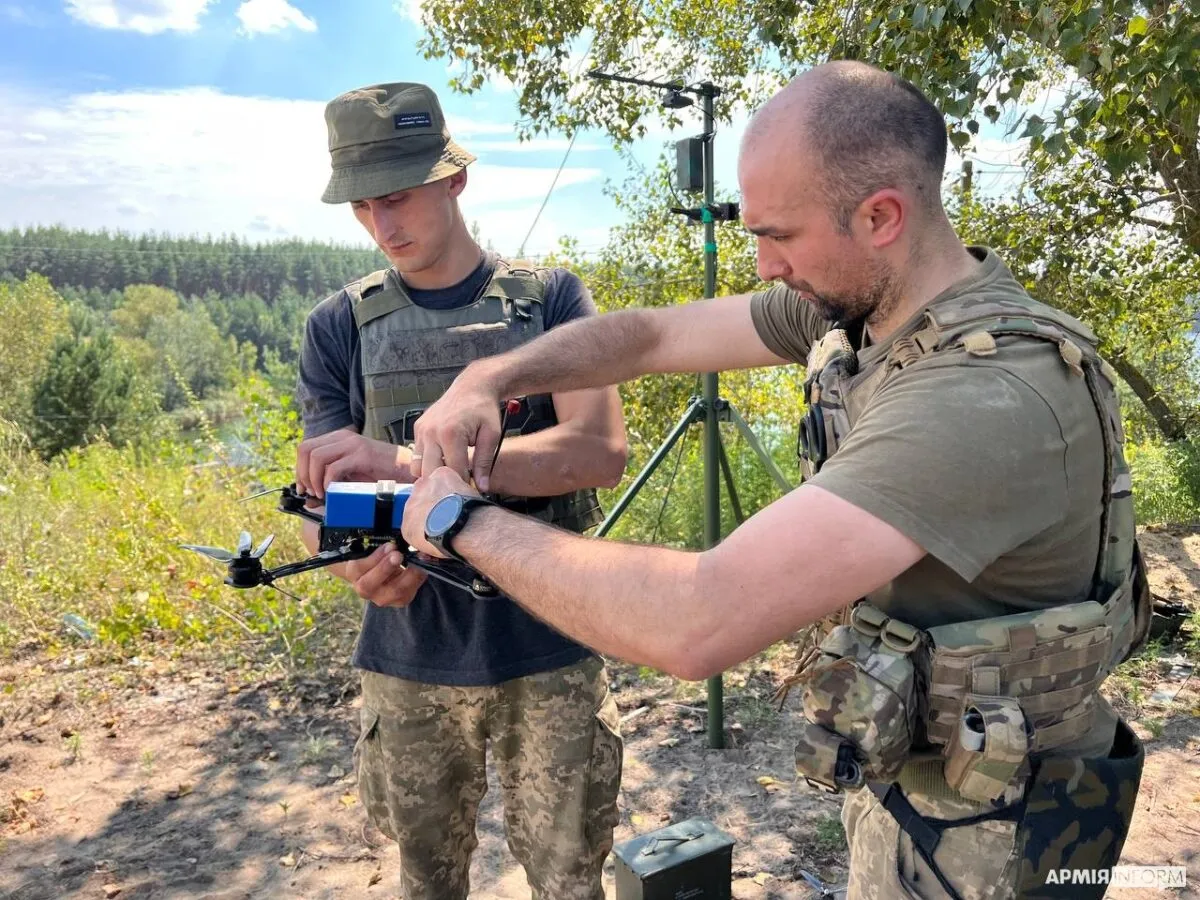
Image note: the cover photograph shows a Ukrainian-built FPV interceptor drone and is used as a representative image.