NATO Masses Unusually Large Air Package Near Kaliningrad: AWACS, F-35s and an Electronic Warfare Jet Take Part
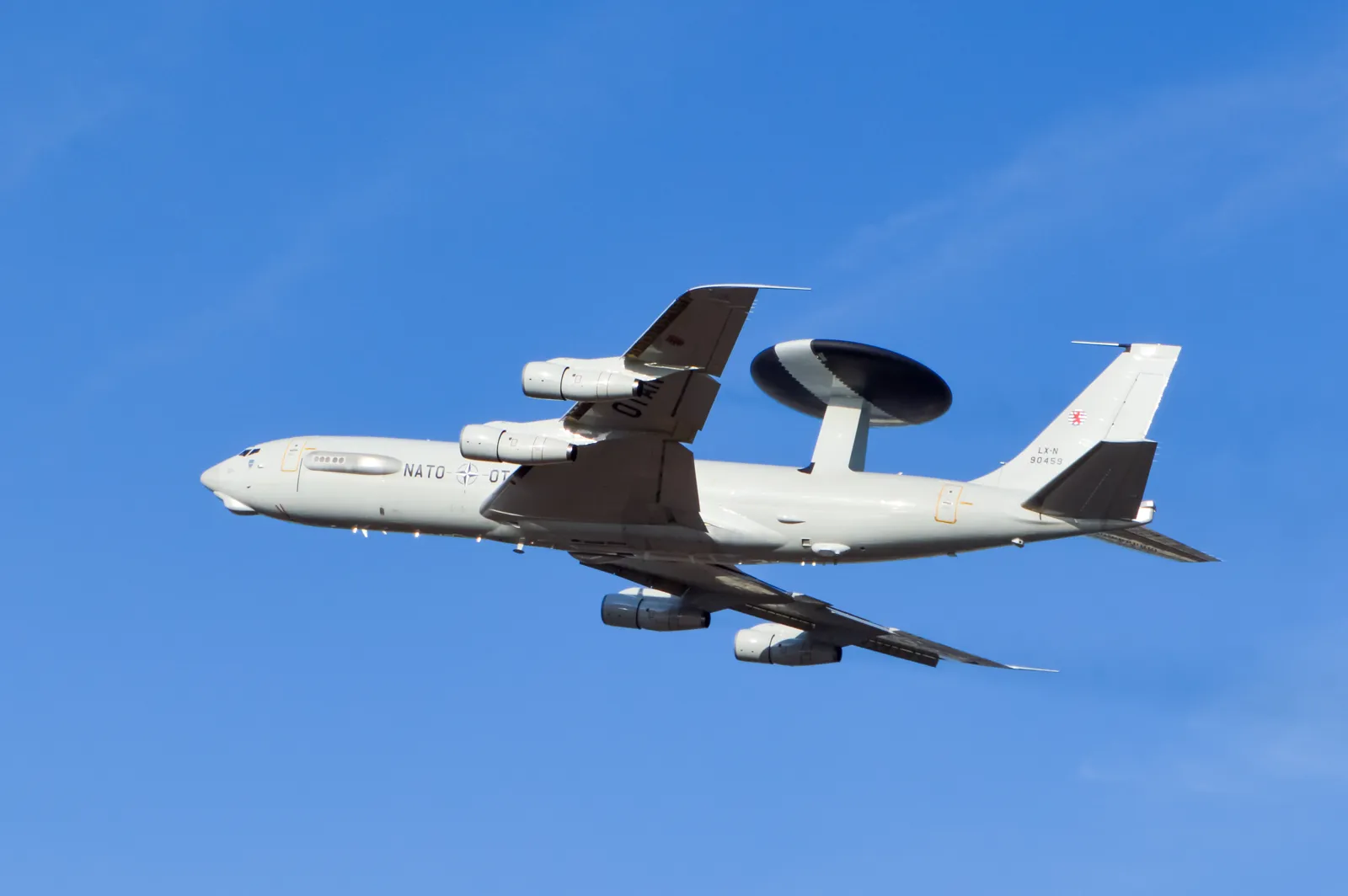
On August 18, 2026, NATO assembled an unusually large and diverse air package over Poland and the Baltic Sea, close to Russia’s Kaliningrad exclave. The operation involved F-35 fighters, KC-135 tankers, a NATO E-3A AWACS airborne early warning aircraft, a US Army ARTEMIS intelligence-surveillance-reconnaissance jet, and a US Air Force EA-37B Compass Call electronic warfare aircraft redirected from operations near Iran.
At a Glance
- The operation took place on August 18, 2026, over Poland and the Baltic Sea.
- Participating platforms: F-35s, KC-135 tankers, a NATO E-3A AWACS, a US Army ARTEMIS ISR aircraft, and an EA-37B Compass Call.
- The EA-37B flew patrol patterns for roughly two hours, with its orbit extending toward the Baltic approaches to Kaliningrad.
- The ARTEMIS aircraft operated an independent ISR mission further east.
- The move coincided with increased Russian naval activity in the Baltic, including reports of hypersonic-armed warships and possible drone cargo shipments.
- Analysts stress the flights align with NATO’s regional contingency planning but should not be read as a signal of imminent action.
Background
NATO’s E-3A AWACS provided airborne command and control over northern Poland while the EA-37B’s orbit pushed toward Kaliningrad’s Baltic approaches. Large, multi-platform packages of this scale are uncommon on NATO’s eastern flank; analysts read the operation’s size and mix of assets as a response to weeks of growing Russian naval presence in the Baltic Sea — including vessels reportedly carrying hypersonic weapons and possible drone cargo. The alliance’s Baltic contingency plans center on suppressing long-range missile systems and air defenses, and the operation is being read within that framework as both intelligence collection and a deterrence signal. The redirection of the EA-37B — a platform normally tasked against Iran — also illustrates how the US is prioritizing its limited electronic warfare capacity across competing theaters.
Regional Impact
As NATO’s second-largest army and air force by size, Turkey remains a direct stakeholder in efforts to reinforce the alliance’s eastern flank. Intensive air operations of this kind in the Baltic serve as practical stress tests for NATO’s Integrated Air and Missile Defense System (NATINAMDS), of which Turkey’s early-warning radars and the missile-defense radar site at Kürecik form part. Turkey’s F-16 fleet, and the KAAN fighter entering service in the coming years, are also counted among the assets contributing to the alliance’s collective air deterrence — making operations like this one in the Baltic a reference point for how NATO seeks to maintain simultaneous deterrence across multiple fronts.
FAQ
Was this a named exercise? No; analysts describe it as an ad hoc air operation for intelligence collection and deterrence rather than a scheduled exercise.
Why did the EA-37B Compass Call draw attention? The jet is normally tasked near Iran; its redirection to the Baltic shows how the US is reallocating its limited electronic warfare platforms to prioritized theaters.
What do Russia’s Baltic naval movements involve? Reports point to hypersonic-armed vessels and possible drone cargo shipments, though these details remain unconfirmed officially.
Sources
- ITA Military Radar, “NATO massed a large air package near Kaliningrad in an unusually complex Baltic operation,” August 18, 2026