Rakuten Teams With Helsing to Bring the HX-2 Strike Drone to Japan
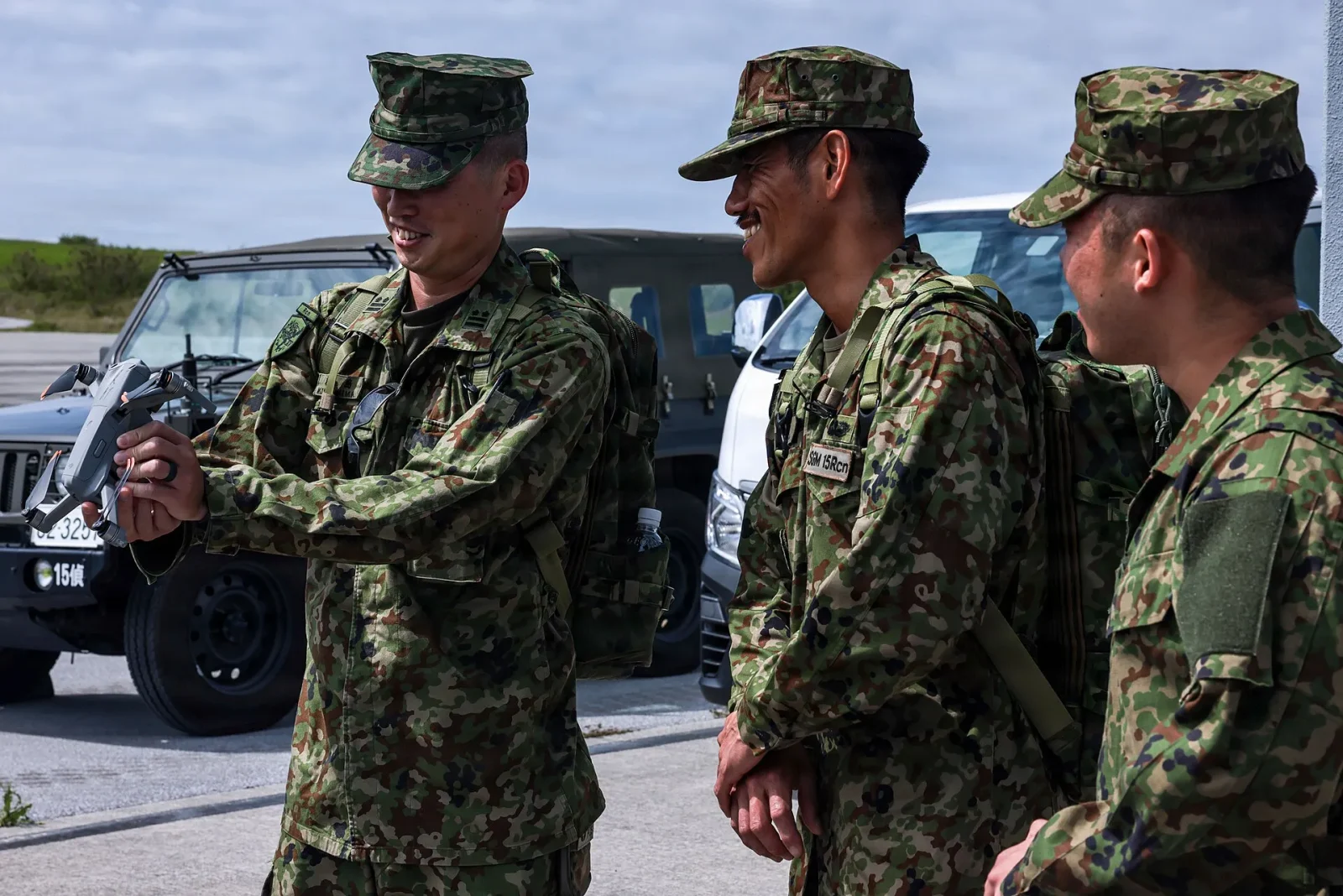
Japanese technology group Rakuten has partnered with German defence company Helsing to offer AI-enabled tactical strike drones to Japan’s Ground Self-Defense Force. The agreement centres on Helsing’s HX-2, and field trials of the system in Japan are scheduled to run through late September.
At a Glance
- Status label: Official partnership announcement — but no order or purchase commitment has been disclosed.
- Parties: Rakuten Group (Japan) and Helsing (Munich, Germany).
- Product: HX-2 — an electrically propelled X-wing precision munition.
- Intended user: Japan Ground Self-Defense Force.
- Rakuten’s role: Local liaison, helping Helsing navigate Japan’s domestic procurement systems.
- Timeline: Field trials run through late September.
- Not disclosed: Quantities, pricing, manufacturing location, or any binding commitment.
Background
Helsing began as a software and artificial-intelligence company before moving into hardware with its HX family of strike drones. The HX-2 is described as an electrically propelled X-wing precision munition. The company’s central claim is reduced dependence on a continuous data link during target acquisition and terminal guidance — meaning a better chance of completing a mission in a heavily jammed electromagnetic environment.
Rakuten’s contribution is institutional rather than technical. Japan’s defence procurement processes are long and procedural, and foreign suppliers generally need a domestic partner to work through them. Rakuten’s stated role is to represent Helsing inside that system and manage the process. That is an unusual direction for a company rooted in e-commerce and financial technology, and a concrete example of Japanese civilian tech moving toward the defence sector.
The timing is not accidental. Japan is expanding its defence budget in stages and running a broad modernisation programme spanning counter-drone systems through to long-range strike. The country recently opened an interceptor-drone tender that drew 38 bidders. Against that backdrop, the HX-2 trials should be read as part of Tokyo’s search for cheap, mass-producible strike systems.
It is worth keeping the limits of the announcement clear. What has been disclosed is a market-entry arrangement and an ongoing test campaign, not a procurement decision. No quantities, prices, production location or binding commitment were released.
Why It Matters
Japan opening up to strike drones and loitering munitions is a direct competitive question for Turkish defence industry. Turkey has both product depth in this segment — loitering munitions and small strike platforms such as KARGU, ALPAGU and KEMANKEŞ — and a body of operational reference built on field use. But procurement diplomacy and local partnership structures weigh as heavily as technical performance in Japanese decisions, and the model Helsing built with Rakuten answers exactly that requirement.
The practical lesson is that offering the product on its own is not enough in the Asia-Pacific market. Moving with a local industrial or technology partner has become the primary way of lowering the entry barrier in countries with dense procurement regulation. Turkey’s co-production and localisation-based relationships in markets such as Indonesia and Malaysia are working examples of the same logic.
FAQ
Has Japan bought the HX-2?
No. Field trials are under way; no order or contract has been announced.
What is the HX-2?
An AI-enabled, electrically propelled X-wing precision munition developed by Helsing.
Is Rakuten becoming a defence manufacturer?
No. In this partnership Rakuten acts as local liaison and procurement intermediary, not as a producer.
When do the trials end?
They are scheduled to run through late September.
Sources
- The Defense Post — “Rakuten, Helsing to Sell AI Strike Drones to Japan”, 20 August 2026