KAAN P1 Prototype Completes Refined Taxi Trials Ahead of First Flight

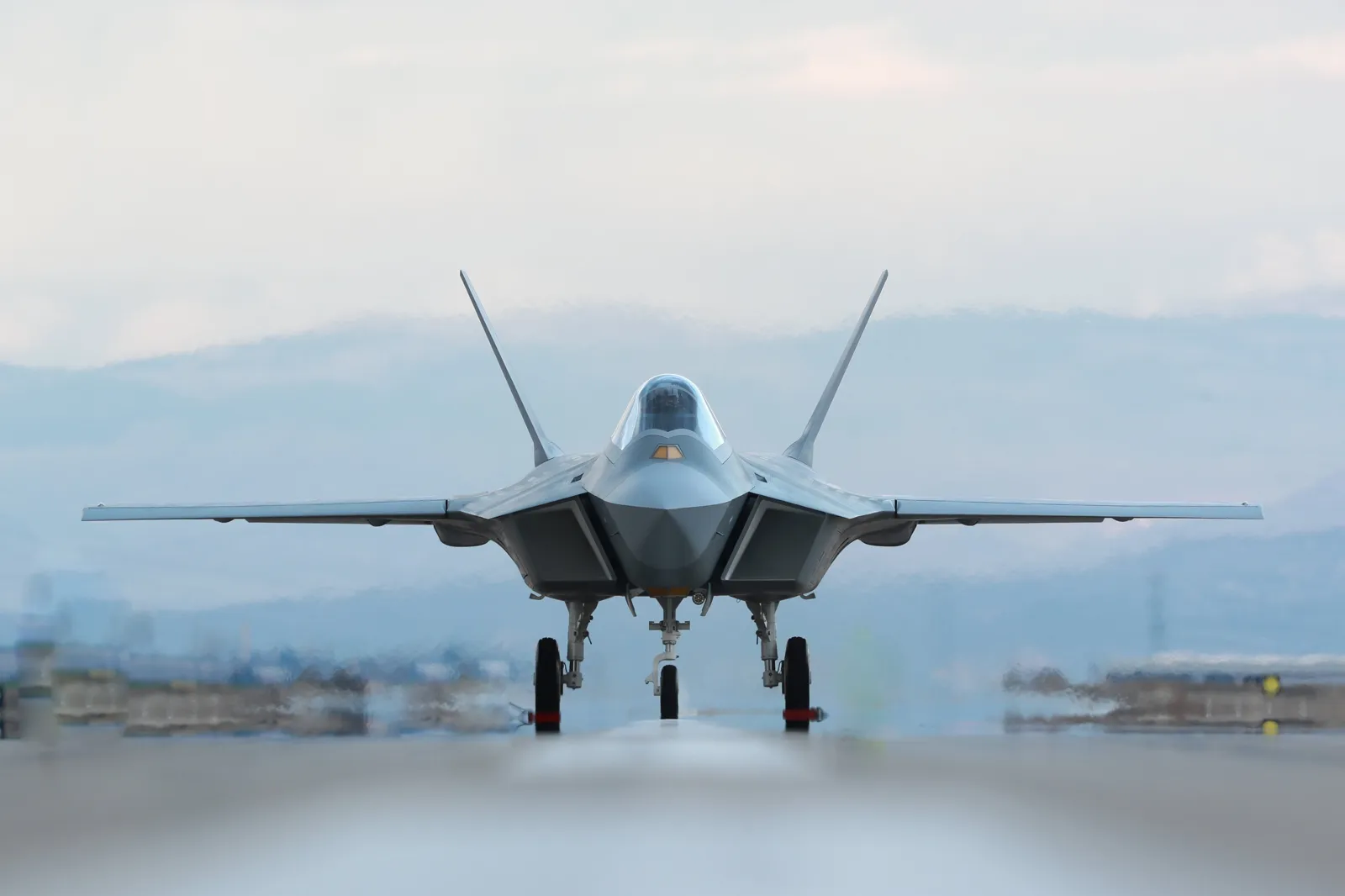
Türkiye’s second KAAN fighter prototype, P1, has completed refined low-speed taxi trials at Turkish Aerospace’s Ankara facility, carrying a system architecture closer to the production standard as the programme edges toward its first flight.
At a Glance
- Footage released on July 31 showed KAAN P1 taxiing under its own power on the TUSAŞ runway in Ankara.
- Compared with the P0 demonstrator that first flew in February 2024, P1 carries more mature avionics, sensor integration and aerodynamic refinements closer to the intended serial-production configuration.
- The aircraft has not yet received its final paint scheme; the trials focused on ground systems, braking, steering and handling at varying speeds.
- A maiden flight for P1 is expected in the coming months, with the P2 prototype set to join the test campaign afterward.
- Turkish Aerospace’s engine subsidiary TEI is racing to mature the indigenous TF-35000 engine as a long-term replacement for the US-made General Electric F110 currently powering the jet.
Background
KAAN, formerly known as the National Combat Aircraft (MMU/TF-X), is Türkiye’s flagship fifth-generation fighter effort, led by Turkish Aerospace with major contractors including Roketsan, Aselsan, TÜBİTAK SAGE and Kale Aviation. The P0 demonstrator’s first flight in February 2024 proved out the programme’s basic flight characteristics; P1 is a different animal, built to validate the cockpit interface, radar and avionics integration, and external stores configuration that will define the production jet. Taxi trials are among the most safety-critical pre-flight milestones, exercising brakes, landing-gear loads, ground handling and pilot workflow under real conditions. The released imagery drew wide coverage across the international defence press, reinforcing KAAN’s status as Türkiye’s most ambitious aerospace programme.
What It Means for Türkiye
KAAN sits at the centre of Türkiye’s strategy to close the air-power gap left by its 2019 removal from the F-35 programme over the S-400 purchase. Reaching concrete milestones like taxi trials demonstrates both Turkish Aerospace’s engineering maturity and progress toward reducing dependence on foreign supply chains. Continued reliance on the F110 keeps TEI’s TF-35000 engine programme a strategic priority — an indigenous engine would also remove a key US export-control chokepoint on future KAAN sales abroad. Talks with Indonesia over co-production and export underline that KAAN is being positioned not just for the Turkish Air Force but as a regional export product. A successful first flight would place Türkiye among a small group of nations developing a fifth-generation fighter independently.
FAQ
What separates KAAN P1 from P0?
P1 carries avionics, sensors and airframe integration closer to the eventual production standard, whereas P0 was a technology demonstrator validating basic flight performance.
When will KAAN fly for the first time?
Turkish Aerospace is targeting a first flight for P1 later in 2026, though no official date has been confirmed.
What engine does KAAN use?
Currently the US-made General Electric F110; the indigenous TEI TF-35000 is being developed for future production blocks.
Sources
- The Aviationist, “Second Prototype of Turkey’s Kaan Begins Taxi Trials,” August 1, 2026
- Quwa Group, “KAAN P1 Runs Its First Taxi Test as Türkiye Races to Replace Its US Engine”
- TURDEF, “KAAN P1 Prototype with Refinements Performs Taxi Test”