5. What is a 5th Generation Fighter Jet? What is the Difference from Traditional Fighter Jets?

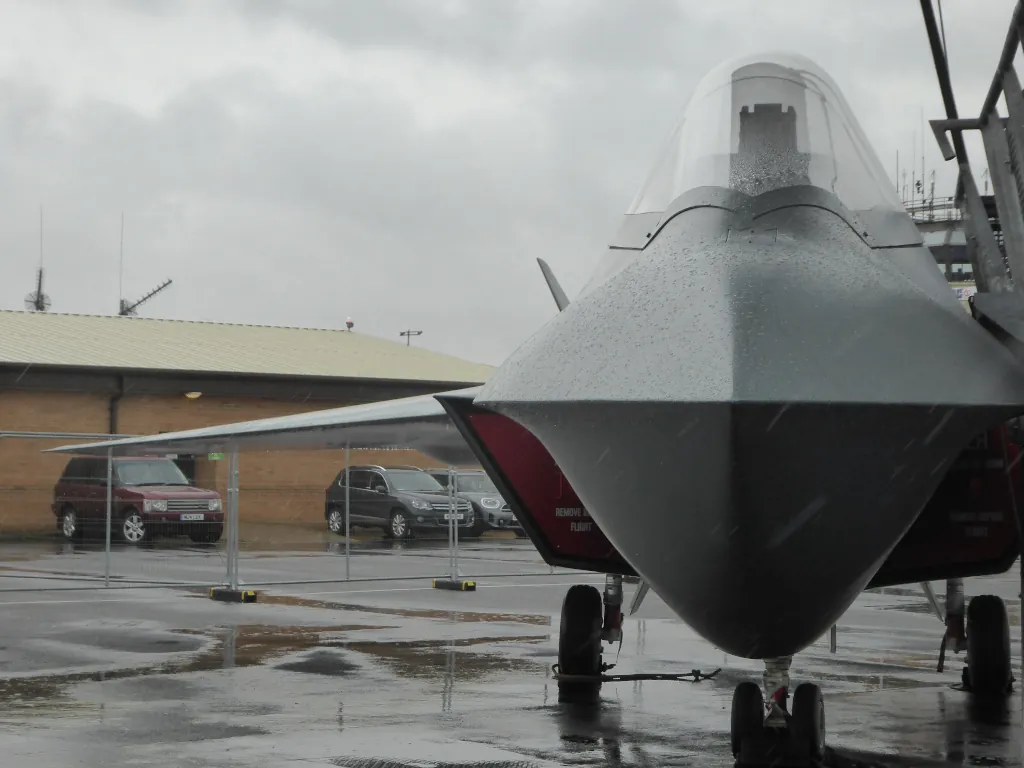
It is invisible on radar screens, exceeds the speed of sound, operates connected to a data network, and finishes its opponent before that opponent sees you — this is why the fifth-generation fighter jet is referred to as a game changer in combat aviation.
What is a 5th Generation Aircraft?
A 5th generation fighter jet defines a class of combat aircraft that offers the most current and comprehensive capabilities in the evolution of aviation technology. Aircraft generations are an informal but widely used classification framework in the industry to periodize the technological leaps that have occurred since World War II. In this framework, 1st generation jet aircraft (F-86 Sabre, MiG-15), 2nd generation supersonic aircraft (F-104 Starfighter), 3rd generation multirole aircraft (F-4 Phantom), 4th generation advanced avionics platforms (F-16, MiG-29), and 4th generation+ transition aircraft (F/A-18 Super Hornet, Rafale) are listed.
The 5th generation is the pinnacle of this series. According to the standard definition, for an aircraft to be considered 5th generation, it must present all of the following features together: low observability (stealth — systematic reduction of radar, infrared, and acoustic signatures), Active Electronically Scanned Array (AESA), supersonic cruise (flying above the speed of sound without using afterburners), high maneuverability (vector thrust or aerodynamic design), advanced sensor fusion, and network-centric warfare architecture (real-time data sharing with other platforms, sensors, and command centers).
How Does It Work?
The superiority of the 5th generation aircraft arises not from a single technology but from the integrated design of multiple systems.
Stealth: Instead of reflecting radar waves directly back in the incoming direction, they are dispersed at different angles. For this, sharp-angled surfaces, internal weapon bays (carrying weapons without protruding), radar-absorbing material (RAM) coatings, and the concealment of engine fan blades are used together. The goal of stealth is not to destroy the target; it is to dramatically shorten the detection range of the opponent’s radar. The RCS value of the F-22 is reported to be as small as that of a metallic object the size of a pinhead.
AESA Radar: Unlike traditional mechanically scanned radar, AESA electronically steers the beam thanks to thousands of independent T/R (transmit/receive) modules on a fixed antenna plane. This occurs at a speed of one millionth of a second; thus, the aircraft can operate in multiple frequencies and modes simultaneously. AESA can also perform electronic jamming and passive listening (electronic intelligence) functions.
Supercruise: Conventional aircraft use afterburners to reach supersonic speeds; this requires high fuel consumption and increases the infrared signature. In supercruise, however, speeds above Mach 1 can be sustained solely with dry engine power. The F-22 has been reported to reach Mach 1.82 without using afterburners.
Sensor Fusion and Situational Awareness: The aircraft’s radar, IRST, ESM (electronic support measure), and datalink systems are transformed into a single integrated situational picture. The pilot sees a unified tactical picture instead of interpreting separate screens. This dramatically accelerates the decision-making cycle.
Network-Centric Integration: The aircraft exchanges real-time data with AWACS, naval units, ground forces, and other aircraft. This allows one platform to engage a target detected by another platform; the aircraft functions not as a separate sensor and weapon platform, but as a node in the network.
What is it Used For?
- Aerial Superiority: Destroying enemy aircraft at long ranges with long-range missiles without being seen or detected by radar.
- Deep Strike: Penetrating high-value targets (command centers, air defense systems) under radar cover with stealth protection.
- Suppression and Destruction (SEAD/DEAD): Suppressing or destroying enemy air defense systems.
- Force Multiplier: Providing guidance and targeting information to 4th generation aircraft through network integration.
- Deterrence: Its mere presence complicates the operational planning of the other side.
Examples in Turkey
Turkey has followed both mandatory and optional routes in its journey towards 5th generation aircraft.
F-35 Program and Exit: Turkey was among the founding partners of the F-35 program. Turkish defense industry companies (such as ROKETSAN, ALP Aviation, Turkish Aerospace) were included in the F-35 supply chain. However, after Turkey purchased the Russian-made S-400 air defense system in 2019, the U.S. removed Turkey from the F-35 program. This decision accelerated Turkey’s need to develop its own national combat aircraft.
KAAN: The center of Turkey’s 5th generation journey is now KAAN. The aircraft completed its first flight on February 21, 2023, and the development process continues unabated. While KAAN possesses some 5th generation features (stealth design elements, planned AESA, internal weapons bay concept), it will require further development stages to achieve full 5th generation certification.
ASELSAN AESA Development: KAAN’s AESA radar is being developed by ASELSAN. This project constitutes a critical technological step for Turkey’s 5th generation air combat capabilities.
TEI TF6000 Engine: The development of a domestic engine with a suitable thrust-to-weight ratio for supersonic cruising capability is a critical element that will complete KAAN’s 5th generation character.
Examples Worldwide
| Country | Aircraft | Operational Year | Highlighted 5th Generation Feature |
|---|---|---|---|
| USA | F-22 Raptor | 2005 | Full stealth + supersonic cruise; the most advanced air superiority aircraft |
| USA | F-35A/B/C Lightning II | 2015 | Multirole; wide country usage, advanced sensor fusion |
| Russia | Su-57 Felon | 2020 | IRST integration, multimode radar; limited operational capacity |
| China | J-20 Chengdu | 2017 | Internal weapons bay, embedded sensors; rapid mass production |
| China | J-35 (FC-31) | 2024 | Dual-engine naval variant; aircraft carrier operations |
| Turkey | KAAN | 2028 (target) | Domestic engine/radar target; MUM-T; SOM weapon package |
| Japan / UK / Italy | GCAP | 2035 (target) | Bridge to 6th generation; laser weapon integration plan |
| France / Germany / Spain | FCAS | 2040 (target) | Combat aircraft concept as a drone swarm command center |
Advantages
- The stealth feature significantly increases operational survival rates by being detected late or not at all by enemy radar.
- AESA radar allows for simultaneous operation in multiple modes, keeping a step ahead of the competitor.
- Supersonic cruise accelerates repositioning and target pursuit/evading processes.
- Sensor fusion enables the pilot to make decisions faster and more reliably; cognitive load is reduced.
- Network-centric architecture transforms a single aircraft into a sensor and weapon platform for the entire battlefield network.
- The internal weapons bay maintains operational flexibility while preserving the stealth profile.
Disadvantages
- The unit and operating costs are extremely high; the lifetime cost of the F-35 approaches $400 million per aircraft.
- The stealth coating (RAM) is extremely sensitive; it requires maintenance-intensive logistical infrastructure.
- The capacity of the internal weapons bay is more limited compared to external hardpoints.
- Software and avionics updates are critical; systemic software vulnerabilities can create serious operational security risks.
- The development time is very long; the F-35 took about 20 years from the initial concept to operational deployment.
- Technological complexity requires highly specialized personnel for training and maintenance.
Frequently Asked Questions
What is the main difference from 4th generation aircraft?
4th generation+ aircraft (Rafale, Eurofighter, F/A-18 Super Hornet) are highly capable platforms and can carry AESA radar, modern avionics, and advanced munitions. However, their design does not prioritize stealth; their RCS values are much higher compared to 5th generation and they are more easily detected by advanced air defense systems. The critical difference of the 5th generation is that stealth is integrated into the design from the beginning, which reflects in the operational concept architecture.
Are stealth aircraft completely invisible?
No. Stealth means “low observability,” not “invisibility.” Powerful, long-wavelength (UHF/VHF band) radars can detect stealth aircraft; however, these radars have serious limitations in terms of accuracy and portability. Additionally, IRST and acoustic sensors can also be used against stealth aircraft. The goal of stealth is to shorten the detection range, thereby ensuring staying outside the range of attack missiles.
When will the 6th generation aircraft arrive?
The US’s NGAD (Next Generation Air Dominance) program, the UK-Italy-Japan’s GCAP, and France-Germany-Spain’s FCAS are referred to as 6th generation projects. The prominent features of the 6th generation include drone swarm command, laser weapon integration, AI-supported decision systems, and possible unmanned versions. Operational dates are projected between 2035 and 2050.
Sources
- Defense Industry Agency (SSB) — KAAN Program — www.ssb.gov.tr
- RAND Corporation, “Understanding Fifth Generation Fighters”, 2019
- Jane’s All the World’s Aircraft — F-22, F-35, Su-57, J-20 technical profiles, 2024
- US Department of Defense, “F-35 Program Status Report”, 2024
- Flight International, “Generations of Air Power”, January 2023
- IEEE Aerospace and Electronic Systems — “AESA Radar Technology Survey”, 2022
- Lockheed Martin, F-35 and F-22 technical data sheets — www.lockheedmartin.com
- Aviation Week Intelligence Network (AWIN), “5th Gen Stealth Penetration Scenarios”, 2023