ZAHA Explained: FNSS’s Amphibious Assault Vehicle for the Marines

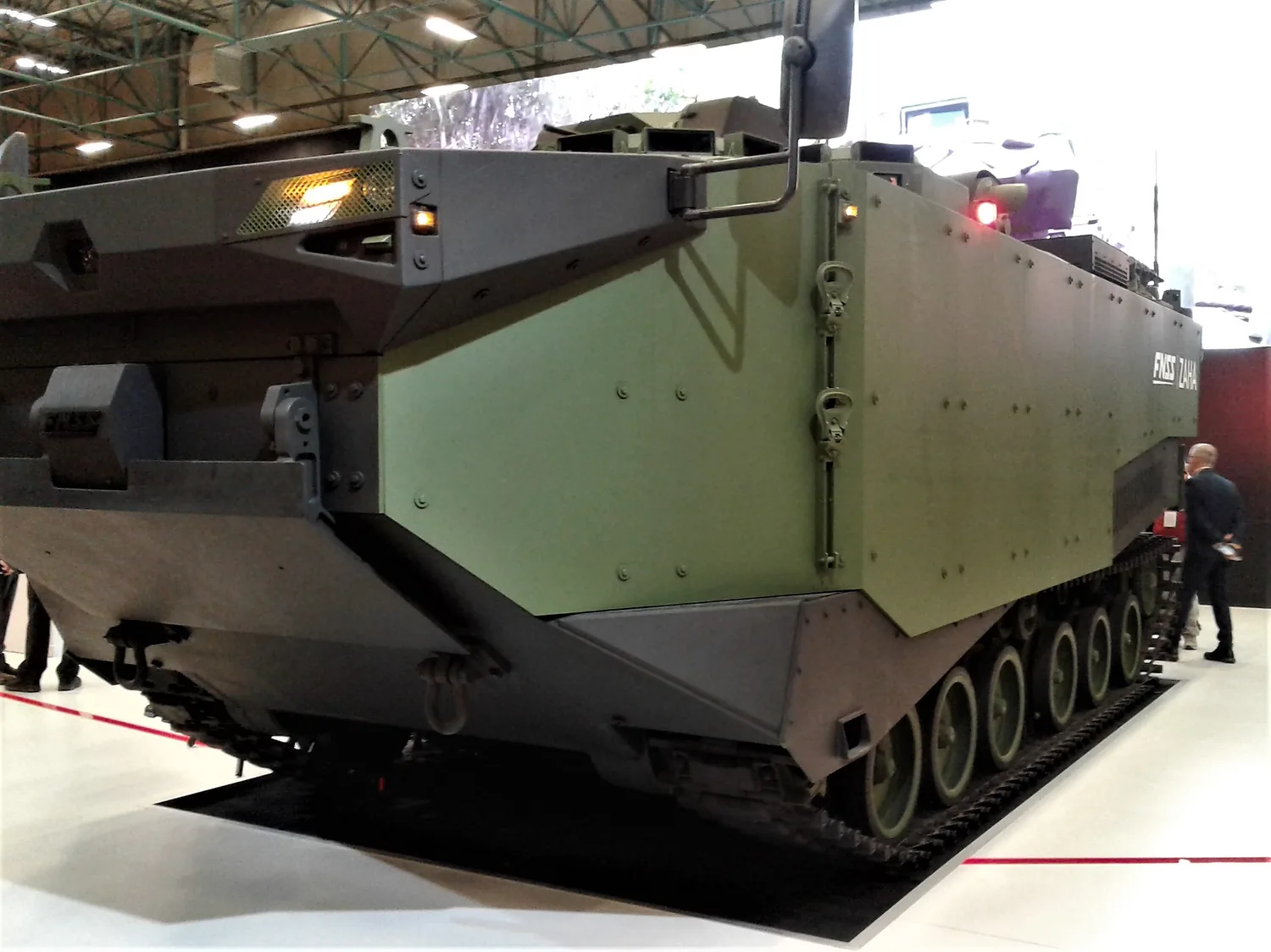
ZAHA (Marine Assault Vehicle) is a tracked, amphibious armored combat vehicle developed by FNSS for the Amphibious Marine Brigade of the Turkish Navy. Launched into the sea from landing ships and reaching shore at high water speed, ZAHA carries marines ashore under protection and then operates on land like an infantry fighting vehicle. One of the Turkish defense industry’s most original and technically demanding projects, ZAHA placed FNSS among the few manufacturers worldwide able to build in this class. This dossier compiles ZAHA’s role, capabilities, delivery process and technical data from open sources.
Frequently Asked Questions
Sources
Related Reading
ZAHA is proof that the Turkish defense industry has gained competence not only on land or in the air but in amphibious-vehicle technology, one of the most demanding engineering fields. A vehicle being able to both swim at high speed in the open sea and behave like a heavy combat vehicle on land requires a flawless harmony of hydrodynamics, materials and propulsion engineering; ZAHA is one of the rare systems to strike this balance successfully.
Amphibious operations are among the riskiest and most complex forms of military operation; those critical minutes as the landing force moves from sea to land determine the operation’s fate. ZAHA’s high water speed and armor protection directly increase marines’ survivability during this fragile transition phase, raising the chance of success.
Together with well-deck landing ships like TCG Anadolu, ZAHA forms an integrated amphibious system. The ship carries the force to the crisis zone; ZAHA lands that force safely ashore. Combining these two capabilities gives Türkiye the ability to project land power far beyond its borders, in overseas regions.
The number of countries that can produce a truly high-water-speed amphibious assault vehicle does not exceed the fingers of one hand, showing how specialized and difficult the technology is. With ZAHA, Türkiye joined this select club, gaining a strategic capability and producing an original product with high export potential.
FNSS’s deep-rooted experience in armored vehicles played a critical role in the ZAHA project. The design, production and testing experience gained on Pars, Kaplan and other vehicles laid the groundwork for completing a far more demanding project like an amphibious vehicle; this accumulation also forms the basis for future new-generation amphibious and specialized vehicles.
Maintaining and sustaining amphibious vehicles is as specialized as producing them; salt water, high mechanical loads and dual-environment use cause significant wear. The recovery and maintenance variants in the ZAHA family let the fleet operate with high readiness even in field conditions, securing operational continuity.
ZAHA’s serial production also mobilizes a broad sub-industry ecosystem; indigenous supply chains develop for water jets, armor materials, powertrains and electronic systems. This means not just a single vehicle but an entire amphibious-vehicle industry taking root in Türkiye.
In short, ZAHA is a high-strategic-value vehicle that places the Turkish Navy’s amphibious-operations doctrine on a modern footing. With its original design, high water speed and synergy with TCG Anadolu, ZAHA is becoming an indispensable part of Türkiye’s overseas power projection.
ZAHA’s development proves that the Turkish defense industry can originally produce not just serial-production vehicles but also the most difficult-to-design niche systems. Bringing hull hydrodynamics, water-jet propulsion and land mobility together in a single platform is a highly specialized engineering achievement only a few countries worldwide have managed.