Philippines Says BrahMos Deliveries on Track, Eyes Wider Cooperation with India

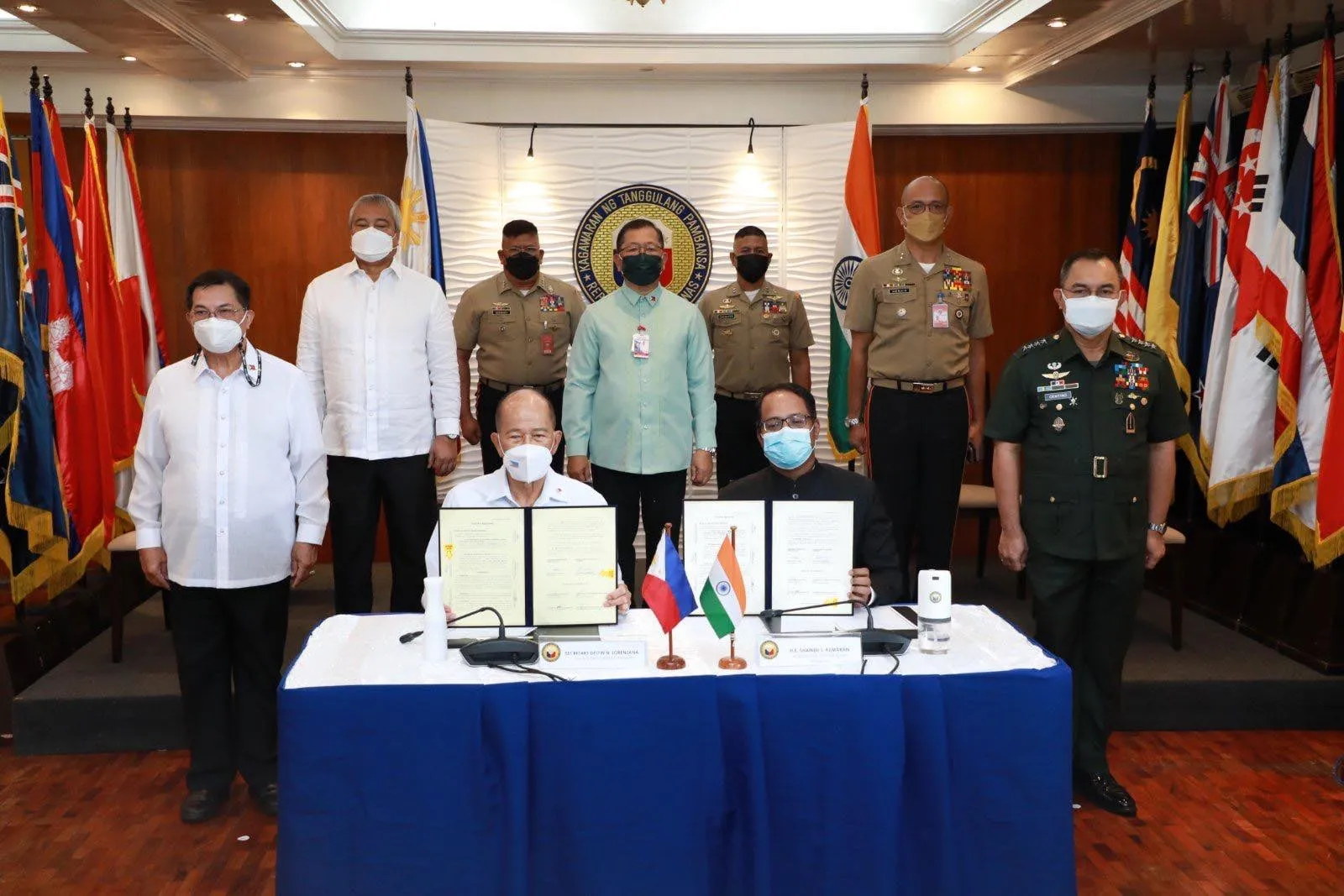
The Philippines said this week that deliveries of BrahMos supersonic cruise missile systems from India are proceeding on schedule, with Manila describing the weapons as a reliable deterrent amid ongoing tension in the South China Sea.
At a Glance
- The announcement came Wednesday, August 12, 2026, from Philippine officials confirming steady progress on BrahMos deliveries.
- Philippine Ambassador to India Josel F. Ignacio said Manila is very pleased with how the BrahMos project has unfolded.
- The remarks were made at a Southeast Asia-focused roundtable hosted by the Observer Research Foundation (ORF).
- The Philippines became BrahMos’s first export customer under a deal signed in 2022.
- According to reports circulating in the press, Manila is weighing the purchase of up to nine additional BrahMos batteries from India, though Ignacio did not confirm a firm number or timeline.
- Vietnam and Indonesia are also reported to be in talks or negotiations over BrahMos acquisitions.
Background
BrahMos is a supersonic cruise missile developed by BrahMos Aerospace, a joint venture between India’s Defence Research and Development Organisation (DRDO) and Russia’s NPO Mashinostroyeniya. Its name is a portmanteau of India’s Brahmaputra and Russia’s Moskva rivers. Launchable from land, sea and air platforms, the missile travels at roughly three times the speed of sound, giving it a prominent place among anti-ship and coastal defense systems purchased by countries in the region.
Manila signed its original BrahMos contract, worth roughly $375 million, in 2022, acquiring the coastal-based anti-ship variant. Deliveries began rolling out from 2023 and the batteries were integrated into the Philippine Marine Corps. The acquisition coincided with a period of heightened friction between Manila and Beijing over waters near Scarborough Shoal and other contested features in the South China Sea.
Ambassador Ignacio’s comments went beyond simply confirming that deliveries are proceeding smoothly. He suggested the BrahMos program has not only strengthened Philippine defense capability but also shifted how Manila views India as a long-term defense industrial partner, moving the relationship beyond a one-off transaction toward a broader cooperative footing.
Regional Impact
India’s missile sale to the Philippines is a concrete sign of a diversifying arms-supply landscape across the Indo-Pacific. Southeast Asian states that have traditionally relied on the United States, France and Russia for defense procurement are increasingly turning to mid-sized defense industrial powers such as India. Reports that Vietnam and Indonesia are also engaging with BrahMos suggest this is not an isolated case but part of a wider trend.
There is no direct Turkish angle in this particular story — the development centers squarely on the India-Philippines bilateral relationship. Still, the pattern fits a broader picture in which middle-power defense exporters, India and Turkey among them, are finding growing market opportunities in the Indo-Pacific as major powers compete for regional influence. Analysts caution that such deals do not by themselves reshape the regional balance of power, but they do expand the range of suppliers available to small and mid-sized states seeking to bolster deterrence.
FAQ
What is the BrahMos missile? It is a supersonic cruise missile jointly developed by India and Russia, capable of flying at roughly Mach 2.8-3 and launching from land, sea or air platforms.
How many BrahMos batteries does the Philippines have or plan to acquire? The Philippines received coastal-based batteries under its 2022 deal; press reports suggest up to nine additional batteries are under consideration, though no official figure has been confirmed.
How does this affect the South China Sea balance? Analysts say BrahMos gives the Philippines added coastal defense and deterrence capacity, but is not viewed as a factor that alone alters the regional military balance.