HAVELSAN, Egypt’s AOI Sign HAMZA-1 VTOL Drone Sales Deal

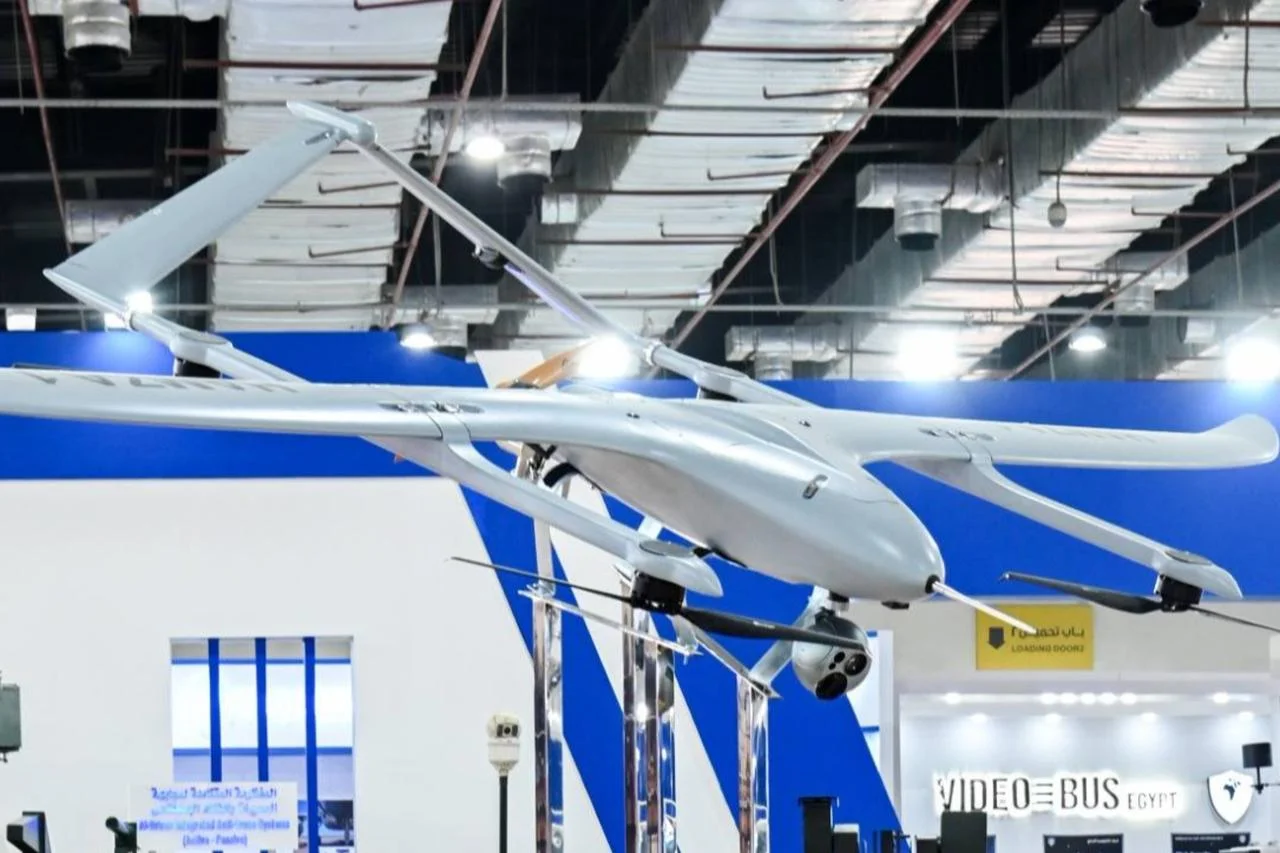
Turkish defense company HAVELSAN has signed a sales agreement with Egypt’s Arab Organization for Industrialization (AOI) covering the HAMZA-1 vertical takeoff and landing (VTOL) unmanned aerial vehicle. The deal was formalized at the El Alamein International Aviation Fair in Egypt, marking a shift from the joint-production framework the two sides had previously agreed upon into a commercial sales phase.
The HAVELSAN-AOI relationship is not new. The two organizations signed a strategic cooperation agreement on August 26, 2025, covering joint production of the HAMZA-1 inside Egypt. A first example of the system was publicly unveiled at EDEX 2025 in Cairo the following December. This week’s sales agreement represents the point at which that production framework converts into a concrete order.
HAMZA-1 is described as a VTOL platform, allowing it to operate without dependence on conventional runway infrastructure. Neither HAVELSAN nor AOI has released detailed performance figures such as range, maximum takeoff weight or endurance, and no official delivery schedule has been disclosed. Coverage from Defense Arabia framed the announcement as the transition of the partnership into a formal sales contract, while Türkiye Today linked it to Egypt’s broader push to showcase the HAVELSAN-backed drone at its exhibitions.
AOI is Egypt’s long-established state defense manufacturer, with a production portfolio spanning ground vehicles to ammunition. Its search for foreign technology partners in the UAV segment has in recent years included both Chinese and European suppliers alongside Turkish firms, and the HAMZA-1 program is one of the more visible results of that outreach with Ankara.
VTOL unmanned systems are increasingly sought for border surveillance and maritime monitoring missions where runway infrastructure is limited or unavailable. Positioning HAMZA-1 in this category aligns with Egypt’s stated interest in strengthening both land-border and coastal surveillance, though neither party has confirmed which units will operate the system or in what numbers.
The agreement builds on the broader normalization of Turkish-Egyptian relations since ties were upgraded to ambassadorial level in 2023, which has since translated into faster-moving defense industry contacts. Several other Turkish defense companies are reported to be in discussions with Egyptian counterparts, though most of those talks have not yet reached signed-contract stage, making the HAMZA-1 deal one of the more concrete outcomes so far.
The wider North African and Eastern Mediterranean market has seen growing diversification in UAV procurement, as buyers historically reliant on US and European suppliers increasingly weigh Turkish and Chinese offers built around technology transfer and local production. HAVELSAN’s arrangement with AOI fits this pattern and strengthens Turkey’s footprint in a market where localization terms, rather than price alone, increasingly shape buyer decisions.
What remains to be confirmed is the delivery timeline and unit numbers for HAMZA-1, which will determine how the agreement translates into Egypt’s operational UAV inventory. Industry observers note that comparable co-production agreements typically see first deliveries one to two years after signature, though no formal commitment has been made in this case.
Sources
- TRT Haber — “HAVELSAN ve Mısırlı kuruluş HAMZA-1 için satış anlaşması imzaladı” (10 Eylül 2026) — https://www.trthaber.com/haber/gundem/havelsan-ve-misirli-kurulus-hamza-1-icin-satis-anlasmasi-imzaladi-956407.html — used as a source for this report.
- Defense Arabia — “Havelsan and AOI sign sales agreement for HAMZA-1 UAV” (Eylül 2026) — https://english.defensearabia.com/havelsan-and-aoi-sign-sales-agreement-for-hamza-1-uav/ — used as a source for this report.
- Türkiye Today — “Egypt highlights Türkiye’s Havelsan-backed HAMZA-1 drone at EDEX exhibition” (Eylül 2026) — https://www.turkiyetoday.com/region/egypt-highlights-turkiyes-havelsan-backed-hamza-1-drone-at-edex-exhibition-3210659 — used as a source for this report.